The Panorama Route —
one of Africa's great scenic drives
A full day driving through Mpumalanga Province following one of the world's greatest scenic routes. The 16-mile Blyde River Canyon carved through red sandstone cliffs. God's Window overlooking Kruger National Park from 800 metres up. Bourke's Luck Potholes with water-carved rock formations. Spectacular viewpoint after spectacular viewpoint. A drive through landscape that feels like the earth itself is trying to show you how beautiful it can be.
The setting for one of the world's great scenic drives
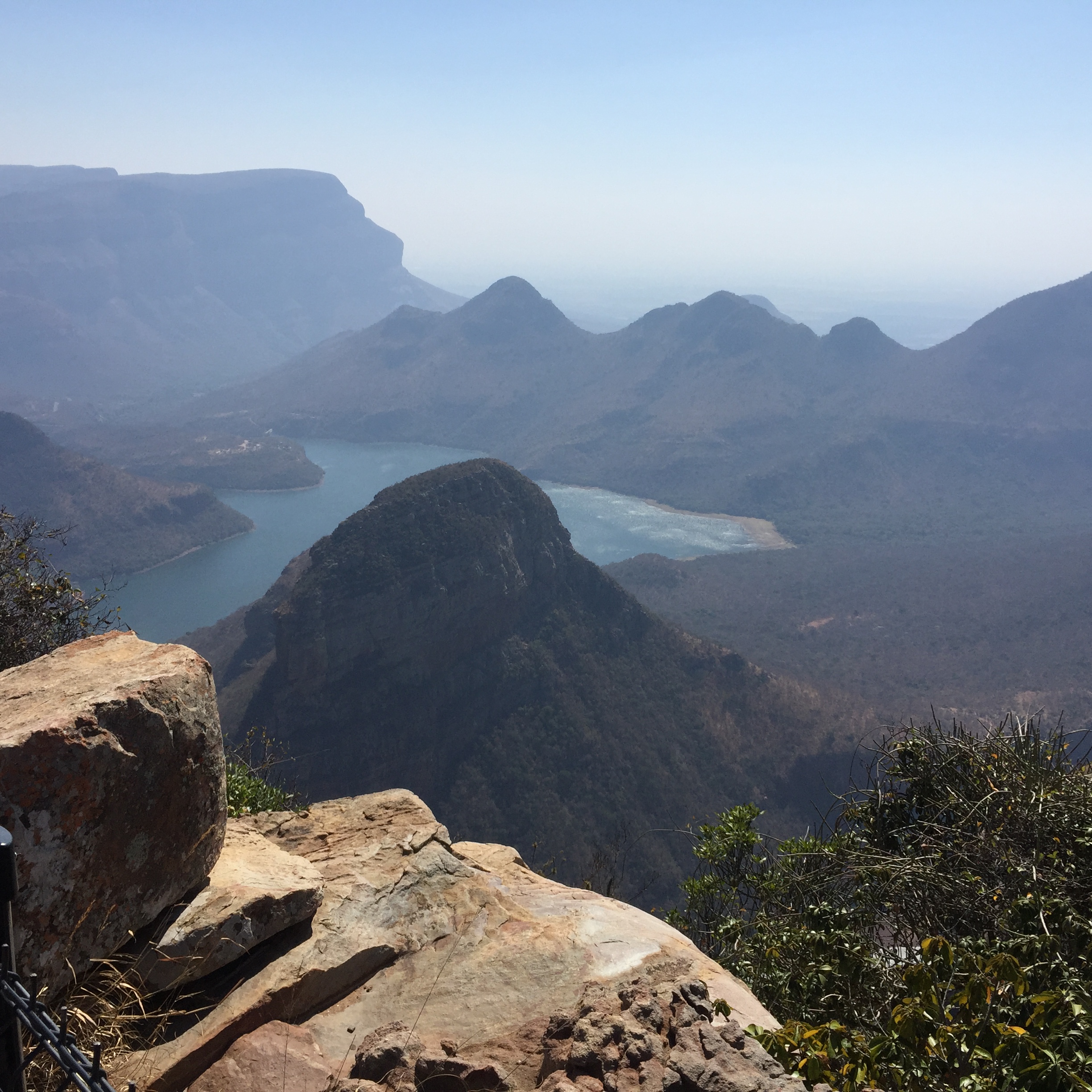
Mpumalanga means "the place where the sun rises" in Zulu — and driving through this province, you understand the name. The landscape has extraordinary dramatic beauty. Rocky outcrops rise above the landscape, viewpoints seem to appear every few kilometres, the vegetation is lush and green, and the views are genuinely world-class.
The Panorama Route traces a path through this landscape, linking together some of the most spectacular natural and geological features in South Africa. It's a route that's been consciously developed to showcase the landscape — good roads, well-marked stops, facilities at the major viewpoints — but it retains the feeling of driving through wild and genuine landscape, not a theme park version of nature.
A full day journey through breathtaking natural scenery
Blyde River Canyon — the jewel of the route
The major feature of the Panorama Route is the Blyde River Canyon — a 26-kilometre stretch of dramatic canyon cut by the Blyde River through ancient red sandstone rock. The canyon plunges 800 metres deep, creating some of the most dramatic landscape in South Africa.
The route passes multiple viewpoints along the canyon, each one revealing different perspectives on the geology and geography. The red and gold rock faces, the river winding through the valley below, the lush vegetation in the canyon, the sense of standing on top of the world looking down into this ancient gorge — it's genuinely spectacular.
The geology here tells stories millions of years old — the rock formations have been shaped by water, wind and time into landscape that feels both ancient and eternally fresh. Walking the viewpoint paths, you're literally standing on the edges of continent-shaping geological processes.
God's Window — 800 metres up with views across to Kruger
God's Window is one of the most famous viewpoints on the route — and it lives up to the hype. From 800 metres elevation, you look out across the landscape to Kruger National Park in the distance. On a clear day, the visibility is extraordinary — you can see for kilometres across the landscape, the layers of mountains and hills creating depth and perspective that's hard to capture in photographs.
The name "God's Window" comes from the way the light hits the landscape and the sense of looking down on the world from a great height. It's a place where the scale of the landscape hits you viscerally. You're standing at a great height looking down on the African landscape, and it creates a profound sense of connection with the land and sky.
Bourke's Luck Potholes — water-carved rock formations
Further along the route is Bourke's Luck Potholes — a geological phenomenon created by water erosion. Where the Treur River meets the Blyde River, the water has carved enormous circular potholes into the rock over millennia. The effect is surreal — massive circular holes in the rock, some many metres deep, all created by water moving around in the rock.
The potholes are accessible via a short walking trail, and you can peer down into the enormous circular formations and understand viscerally how powerful water erosion is over time. The rock formations are also aesthetically striking — the smooth curves of the holes contrasting with the rough rock surrounding them.
The drive itself — constantly changing landscape
Beyond the named features, the drive itself is constantly rewarding. The landscape changes repeatedly — forests giving way to open grassland, rocky outcrops appearing suddenly against the sky, small waterfalls visible from viewpoints, the vegetation constantly shifting. Every few kilometres brings a new perspective, a new vista, a new reason to stop and take in the view.
The road itself is well-maintained and takes you through landscape that feels genuinely wild while being perfectly drivable. It's one of those routes where the driving is part of the experience — not just about reaching your destination, but about the journey itself.
Personal impressions from the drive
What strikes you most about the Panorama Route is the sense of vast scale combined with intimate detail. You're seeing enormous landscapes — canyons, mountains, vast views across kilometers — but you're also noticing the details — the colour of the rock, the texture of the lichen on the boulders, the way the light hits the landscape at different times of day. It's a drive that demands your full attention and rewards that attention with constantly changing beauty.
By the end of the day, you're tired but profoundly moved. Tired because you've been driving for many hours and stopping constantly to take in views. Moved because you've spent a day in some of the most beautiful landscape on earth, and the scale and beauty of it has shifted something inside you about what the natural world is capable of.
Tips for exploring this spectacular drive
Timing and pace
- Allow a full day: This isn't a quick drive. The route is only about 60 kilometres, but you'll spend hours stopping at viewpoints, taking photographs, absorbing the landscape.
- Start early: Early light on the landscape is extraordinary. Starting in the morning lets you see the landscape as the day progresses and the light changes.
- Don't rush: This is not about ticking boxes. It's about the experience of moving through remarkable landscape. Linger at viewpoints.
What to bring
- Water and snacks: You'll be outdoors at viewpoints for hours. Bring plenty of water and some food.
- Sunscreen: The African sun is intense. High SPF is essential even if you're "just" visiting viewpoints.
- Good shoes: Many viewpoints require short walks on potentially uneven terrain.
- Camera: The Panorama Route is impossibly photogenic. Bring a good camera and sufficient battery and memory.
- Layers: At 800+ metres elevation, it can be cooler than lower areas. Bring a jacket even in summer.
Facilities
- Viewpoints are well-maintained: Most major viewpoints have facilities — parking, bathrooms, sometimes restaurants or coffee shops.
- Lunch stops: There are small towns and lodges along the route where you can stop for meals.
- Guided tours: If you prefer not to drive yourself, many companies offer guided tours of the Panorama Route.
Photography tips
- Multiple viewpoints: The same landscape looks different from different vantage points. Visit multiple lookouts if time allows.
- Time of day matters: Early morning and late afternoon light is softer and more photogenic than harsh midday sun.
- Weather changes light: Clouds, mist and rain all change how the landscape looks. A dramatic stormy sky can be more photogenic than clear sky.
Panorama Route highlights
26 kilometres of dramatic canyon cut through red sandstone 800 metres deep. One of Africa's great natural wonders.
Standing 800 metres up looking out across the landscape toward Kruger. Views that stretch for kilometers on a clear day.
Water-carved circular formations in the rock — massive holes created over millennia by the power of flowing water.
Every few kilometres the landscape transforms — forests, grasslands, rocky outcrops, waterfalls, constantly changing views.
Some of the most photogenic landscape in South Africa. Impossible not to take extraordinary photographs throughout the day.
Not just the destination — the journey through this landscape is the experience. Roads wind through stunning scenery at every turn.
Common questions about the Panorama Route
What comes next in your South Africa journey
From the Panorama Route, the journey continues to Johannesburg and Soweto — to the Apartheid Museum, Mandela's home, and the deeply moving history of South Africa.