Kruger National Park —
one of the greatest wildlife experiences on earth
A full day in an open-sided vehicle in one of Africa's most extraordinary wildlife reserves. A dawn departure to watch the African bush wake up around you. The Big Five — elephant, buffalo, lion, leopard and rhino — all possible in a single day. Larger than the state of Connecticut. Wild, untamed, utterly unforgettable. One of those days that you will replay in your mind for the rest of your life.
One of Africa's largest and greatest wildlife reserves
Kruger National Park covers nearly 20,000 square kilometres — an area larger than the state of Connecticut. For perspective: that's about the size of El Salvador, or roughly 1.5 times the size of Northern Ireland. It's vast in a way that's difficult to grasp until you're actually there, driving for hours through the park and seeing new landscape at every turn.
The park stretches nearly 400 kilometres from north to south, and about 65 kilometres from east to west. It spans diverse ecosystems — from granite hills in the south to basalt outcrops in the north, from riverside forest to open grassland, from dense bush to more open savanna. This ecological diversity is one of the reasons Kruger supports such an extraordinary concentration of wildlife.
Kruger was established as a game reserve in 1898 (by Paul Kruger, the president of the Transvaal, after whom it's named), and became a national park in 1926. It's managed as a protected area where wildlife conservation is the primary purpose, and the landscape is managed to maintain the health of the ecosystem and the wildlife populations.
A full day of open-vehicle safari — the African bush at dawn and all through the day
The pre-dawn wake-up and breakfast
The alarm goes off in darkness. Very early — typically around 5 am or earlier. You stumble out of your accommodation knowing that what's coming is one of the greatest wildlife experiences of your life. Grab a quick coffee and something light to eat, dress in layers (it's cold in the early morning in an open vehicle, even in Africa), and head to the vehicle.
Departure into the bush
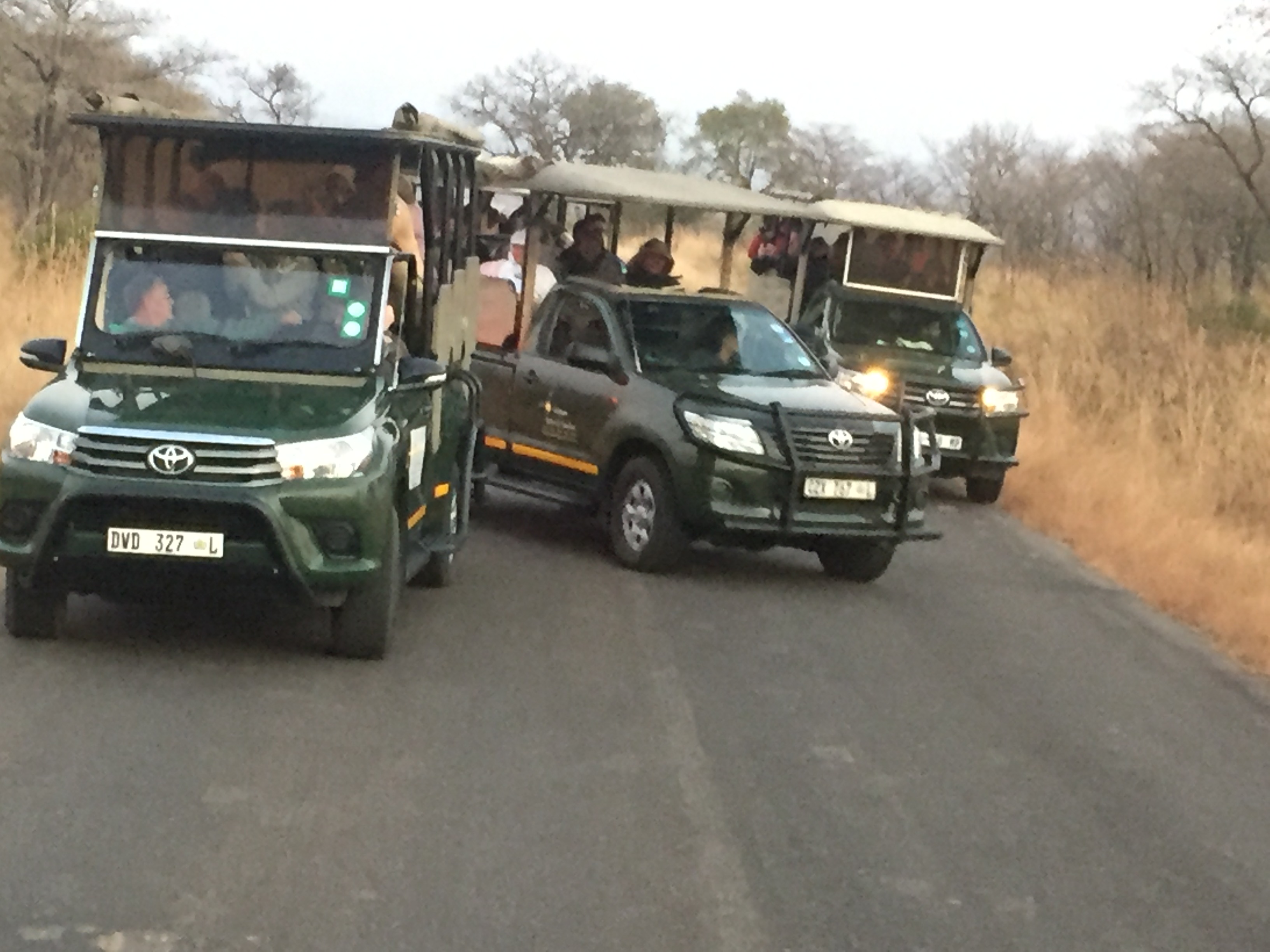
The sun hasn't risen yet. You're in an open-sided Land Rover with your guide and your fellow travellers, driving into the darkness of the African bush. The guide drives slowly, listening to the sounds of the bush, stopping when he spots something — tracks in the road, movement in the vegetation, sounds only a experienced ear can detect.
Then the sky begins to lighten. This is the most magical time — the transition from night to day in the African bush. Birds start to call, the vegetation becomes visible, animals that have been active at night begin to settle or move. The temperature gradually rises, the light turns golden and then pink and then fully bright. You're experiencing the African bush as it genuinely is — wild, unpredictable, alive.
The Big Five — what you might encounter
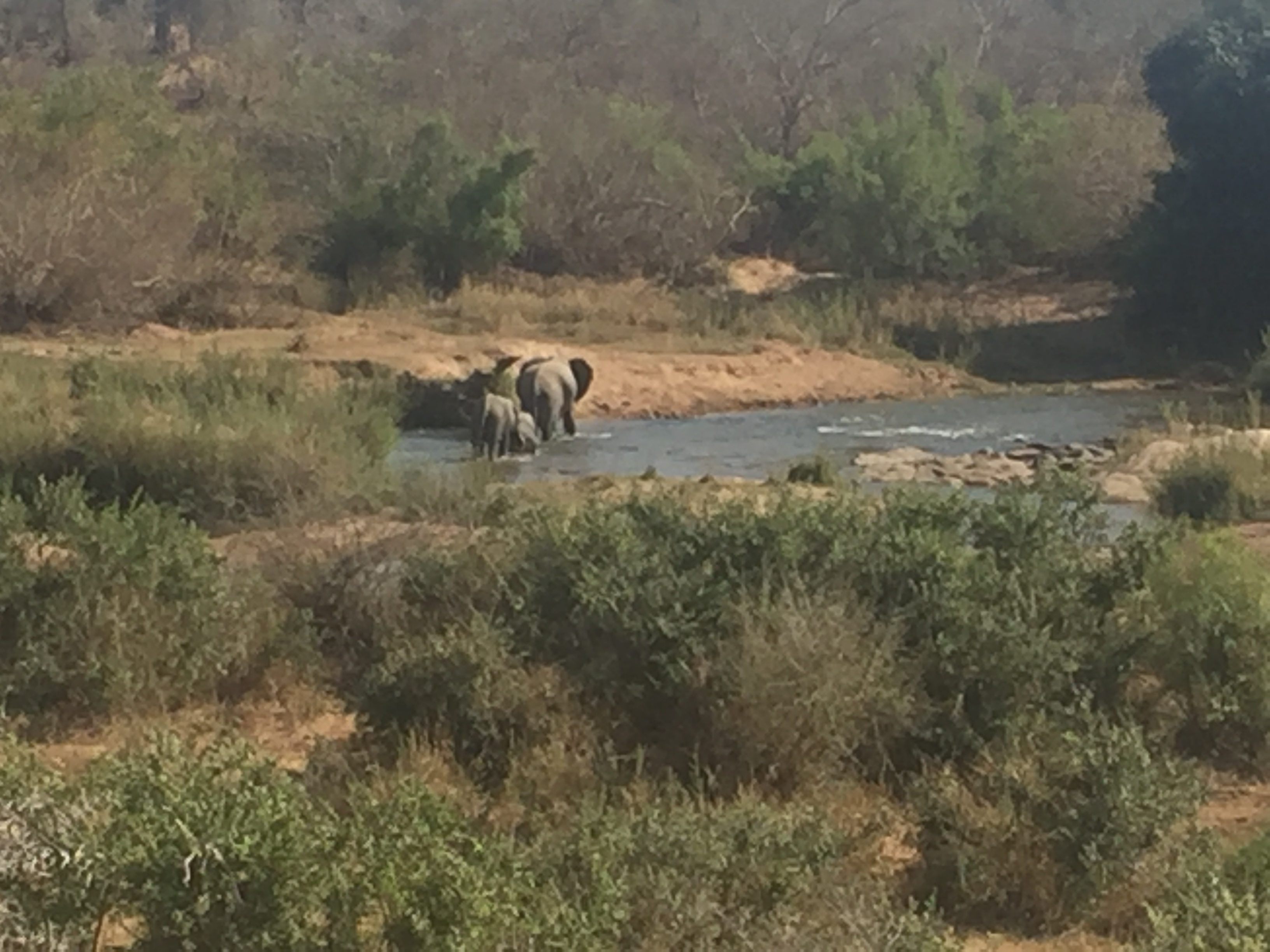
Elephant: The largest land animals on earth. You might see them moving through the landscape in small herds, or single bulls. The sheer scale hits you immediately when you see a real African elephant — they're enormous, powerful, intelligent. Watching them move with such confidence and grace for animals of that size is extraordinary.
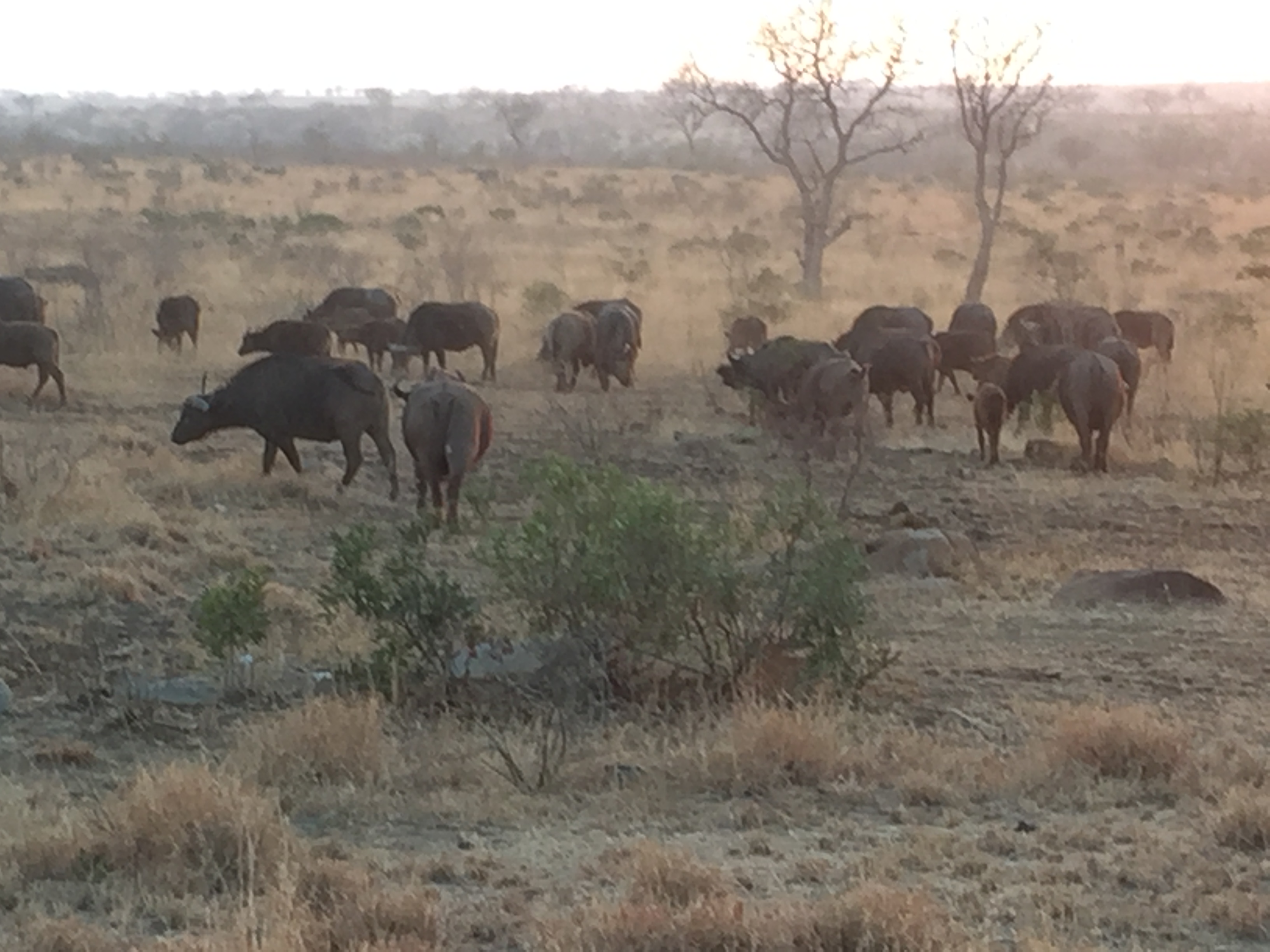
Buffalo: Powerful, dangerous, unpredictable. Buffalo herds can be enormous — we're talking hundreds or thousands of animals moving together. They move with purpose and power. An old bull buffalo is considered one of the most dangerous animals in Africa.
Lion: The apex predator. Seeing a lion in the African landscape — whether it's moving, hunting, or resting — changes something inside you. The power, the confidence, the golden colour against the landscape. Lions are remarkable animals.
Leopard: The most elusive of the Big Five. Leopards are notoriously difficult to spot — they're shy, they hunt at night, they move through trees as easily as on the ground. Seeing one is genuinely special.
Rhino: Ancient animals — they've been on earth in their current form for millions of years. Seeing them in Kruger is to watch evolutionary history preserved in the landscape. Both black rhinos (critically endangered) and white rhinos live in Kruger.
Beyond the Big Five — the extraordinary biodiversity
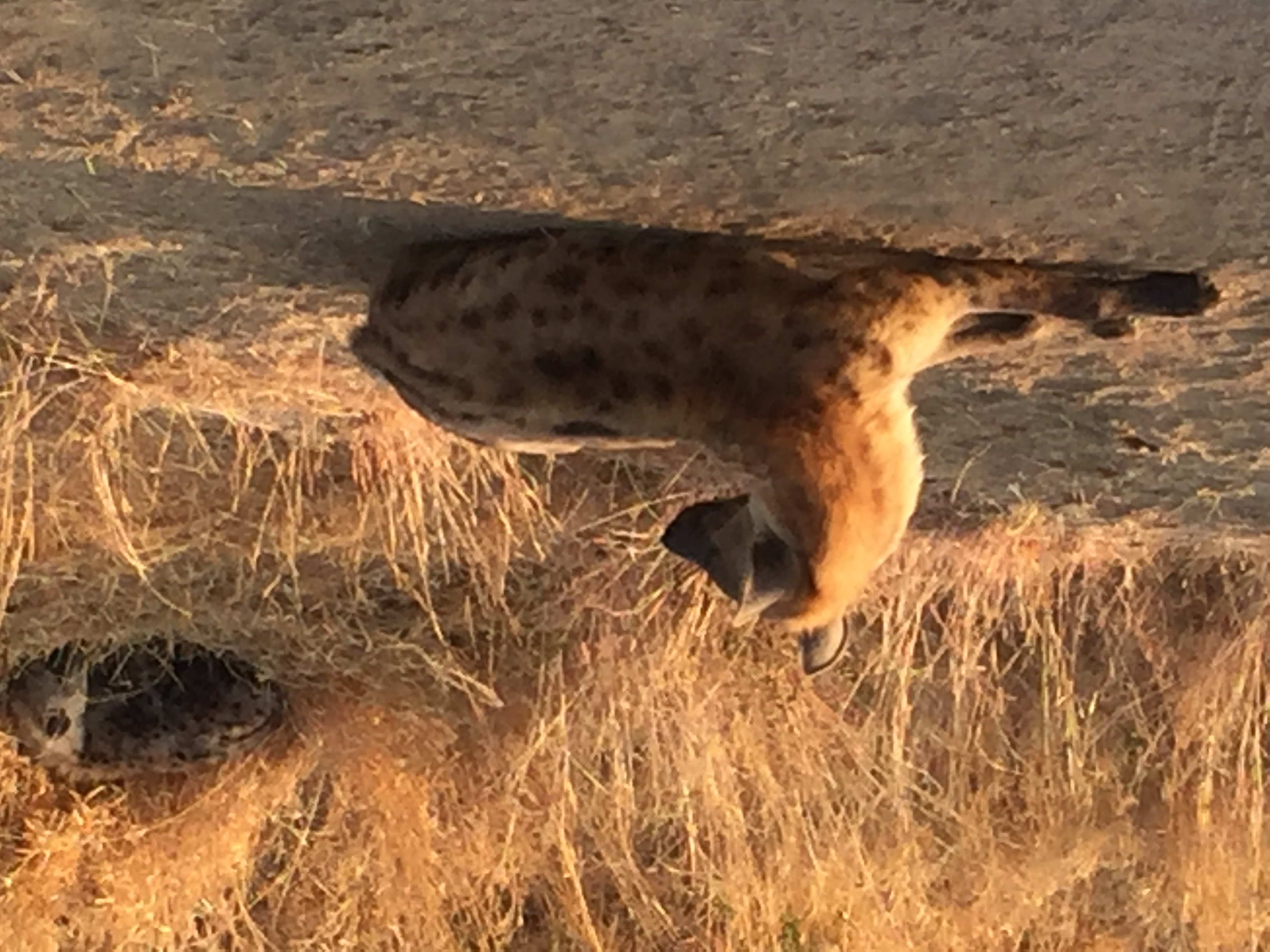
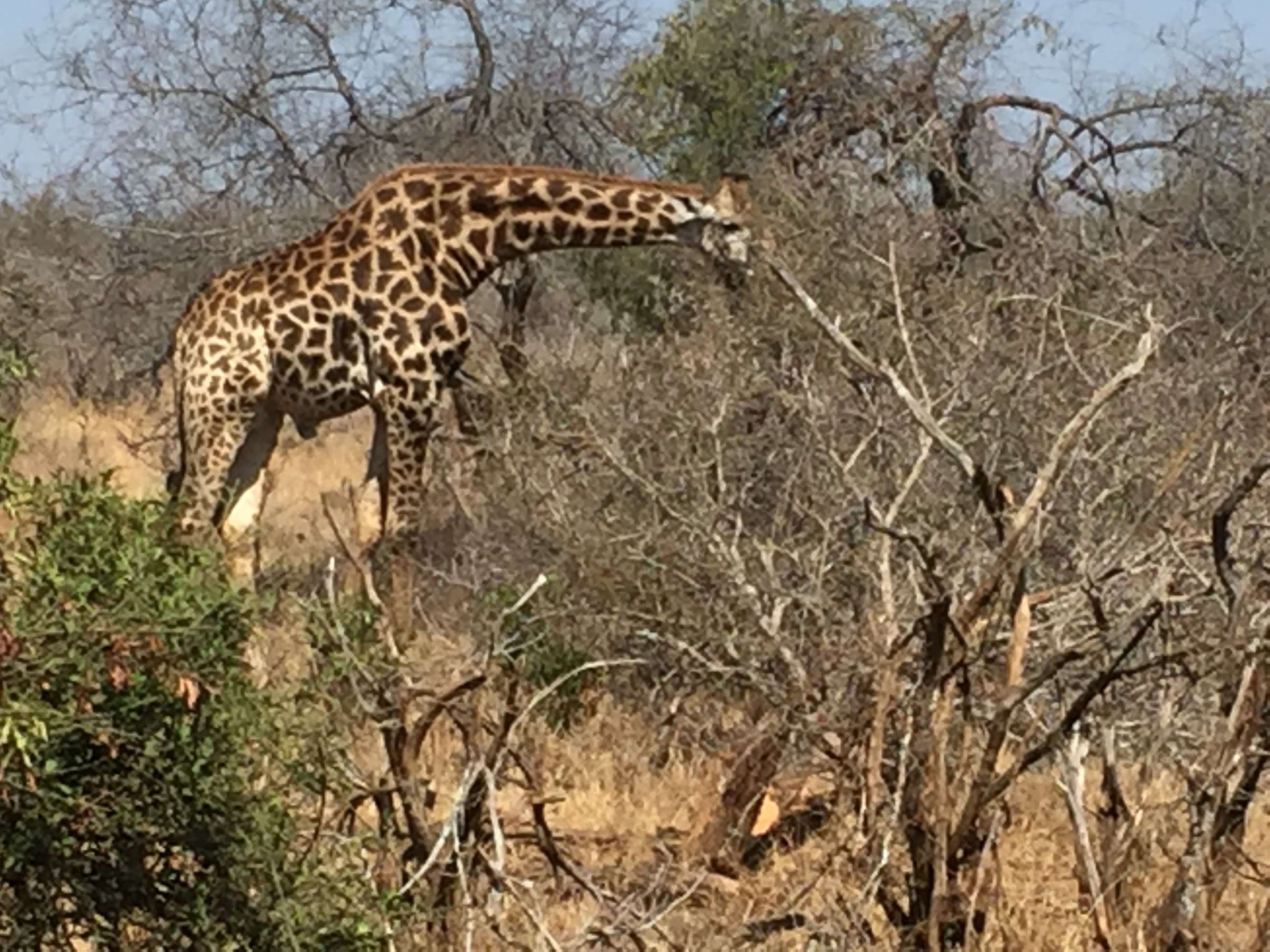
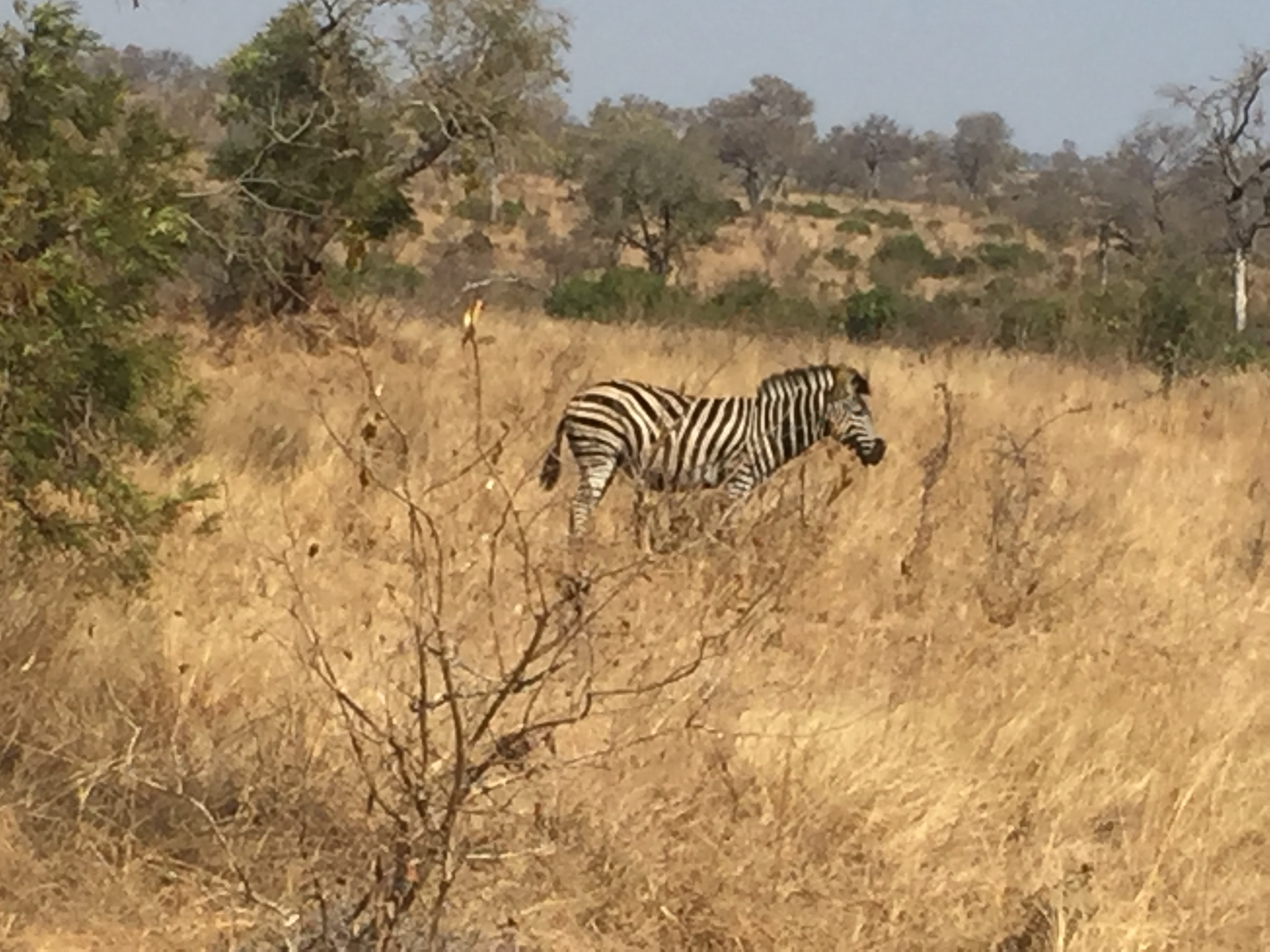
Kruger is home to over 600 species of birds, nearly 150 mammal species, hundreds of reptile and amphibian species, and an extraordinary diversity of plant life. On any game drive, you'll see giraffe, zebra, impala, kudu and dozens of other antelope species, wild dogs, hyena, warthogs, crocodiles in the rivers, hippos in waterholes, and countless bird species.
The diversity is genuinely extraordinary. Every few kilometres, the landscape changes slightly, and different animals appear. A dry riverbed might be lined with riverside forest full of different plant and animal life than the open grassland you just drove through. The ecological complexity is visible in the way the landscape is organized and the animals that inhabit each niche.
The guide as your window into the ecosystem
Your guide is exceptional. A good guide knows where animals are likely to be at different times of year, understands animal behaviour, can read the tracks in the road, can interpret animal sounds. Over the hours of the drive, the guide translates what you're seeing into understanding — why the animals are where they are, how they interact, what the ecosystem is actually doing.
The guide explains the difference between herbivores and carnivores, shows you how the food chain works, points out examples of symbiosis (like the relationship between the oxpecker bird and large herbivores), explains territorial behaviour, discusses conservation challenges. You're not just looking at animals — you're learning how the ecosystem actually works.
Stopping for lunch
Mid-day, the group stops at a lodge or rest camp for lunch — a break from the vehicle, a chance to stretch, use facilities, refuel. Lunch is usually a good meal — salads, cold meats, fresh fruit, drinks. You spend the time chatting with fellow travellers about what you've seen, comparing notes on animals spotted, processing the extraordinary morning.
Afternoon game drive and the changing light
Back into the vehicle for the afternoon drive. The landscape looks completely different in the afternoon light — golden, warm. The animals behave differently too — some are active again after sheltering from the midday heat, others are settling in for the late afternoon. The vegetation looks different, the colours shift, the whole experience has a different quality.
As the sun begins to descend toward the horizon, the light becomes increasingly extraordinary — golden hour in the African bush is like nothing else. The landscape is glowing, the shadows are long, the animals are often at their most visible as they prepare for the night.
Return to the lodge as day ends
As darkness falls, you return to the lodge, tired, exhilarated, overwhelmed by what you've experienced. A hot shower, dinner, an evening to reflect on one of the greatest days of your life. Many people find they sleep deeply and dreamlessly after a full day of game viewing in Kruger — your mind and body need the rest.
What to expect, what to bring, and what to know
What to wear
- Layers: Early mornings can be surprisingly cool in an open vehicle, even in Africa. Start with a light jacket or sweater; you can remove layers as the day warms up.
- Neutral colours: Guides recommend wearing muted colours (khaki, beige, green, brown) rather than bright colours or white, as bright colours can alert animals to your presence.
- Comfortable shoes: You'll be sitting for long periods, but if you need to get out of the vehicle or visit facilities, comfortable shoes are essential.
- Hat and sunglasses: The African sun is intense. A wide-brimmed hat is essential for protection.
What to bring
- Binoculars: Essential for seeing distant animals better. Many tours will have them available, but if you have your own, bring them.
- Camera: Kruger is impossibly photogenic. Bring a good camera and extra batteries/memory cards — the game drive lasts many hours.
- Sunscreen: High SPF is essential. The African sun is intense, and you're exposed in an open vehicle.
- Insect repellent: Malaria is present in Kruger. Consult your doctor about anti-malarial medication and use a strong repellent throughout the day.
- Water: Stay hydrated. Bring more water than you think you'll need.
- Notebook: Many people keep a record of animals spotted. It helps you process what you've seen.
Important information
- No guarantees of seeing specific animals: While Kruger has excellent wildlife viewing, there's no guarantee of seeing any particular animal. Game drives are about the experience of being in the wild, not checking boxes.
- Stay in the vehicle: This isn't optional. The open sides make you feel exposed, but you're actually quite safe. Getting out of the vehicle is not permitted except at designated areas.
- Respect the animals: You're in their home. Give animals space, stay quiet, follow your guide's instructions about distance and behaviour.
- Time management: Full-day game drives are physically demanding. The constant vigilance, the early wake-up, the intensity of the experience — you're tired by day's end. Plan accordingly.
Kruger highlights
Elephant, buffalo, lion, leopard and rhino — Africa's most legendary animals all possible in one day in one of the world's greatest game reserves.
Starting before sunrise to watch the bush wake up. The light, the sounds, the sense of being part of something ancient and wild — unforgettable.
Not closed in a bus — you're in an open vehicle with the bush surrounding you on all sides. More immersive, more thrilling, more real.
Nearly 20,000 square kilometres. An area larger than Connecticut. You drive for hours and the landscape keeps changing — it's vast in a way that's hard to grasp.
Over 600 bird species, nearly 150 mammal species, hundreds of reptiles and amphibians. Every stop reveals new animals and ecosystems.
Your guide transforms the experience from "looking at animals" to understanding how an entire ecosystem actually works. Knowledge, passion and genuine love for the bush.
🎬 Watch Our Kruger Adventure
Common questions about Kruger
What comes next in your South Africa journey
From Kruger, the journey continues to the Panorama Route through Mpumalanga — Blyde River Canyon, God's Window and Bourke's Luck Potholes — and then to Johannesburg and Soweto.