KwaZulu-Natal —
hippos, crocodiles, rhinos and the Big Five
Two transformative days exploring one of South Africa's most biodiverse regions. The St Lucia Estuary, teeming with hippos, Nile crocodiles, sea turtles and sharks. Hluhluwe-Imfolozi Game Reserve, famous for its extraordinary conservation of black and white rhinos and home to Africa's legendary Big Five. Days that shift something inside you forever.
Day 6: A game viewing cruise through an extraordinary ecosystem
After leaving Cape Town, the tour flies north to Durban and then transfers to St Lucia on the north coast of KwaZulu-Natal. St Lucia is home to an estuary of extraordinary biodiversity — one of the largest and most biodiverse estuaries in Africa.
The St Lucia Estuary is a UNESCO World Heritage Site. The estuary is a unique ecosystem where freshwater from the Mkhuze River meets the Indian Ocean, creating a brackish water environment that supports one of the highest concentrations of wildlife in South Africa. It's vast, it's wild and it feels genuinely remote even as you're cruising through it in a guided boat.
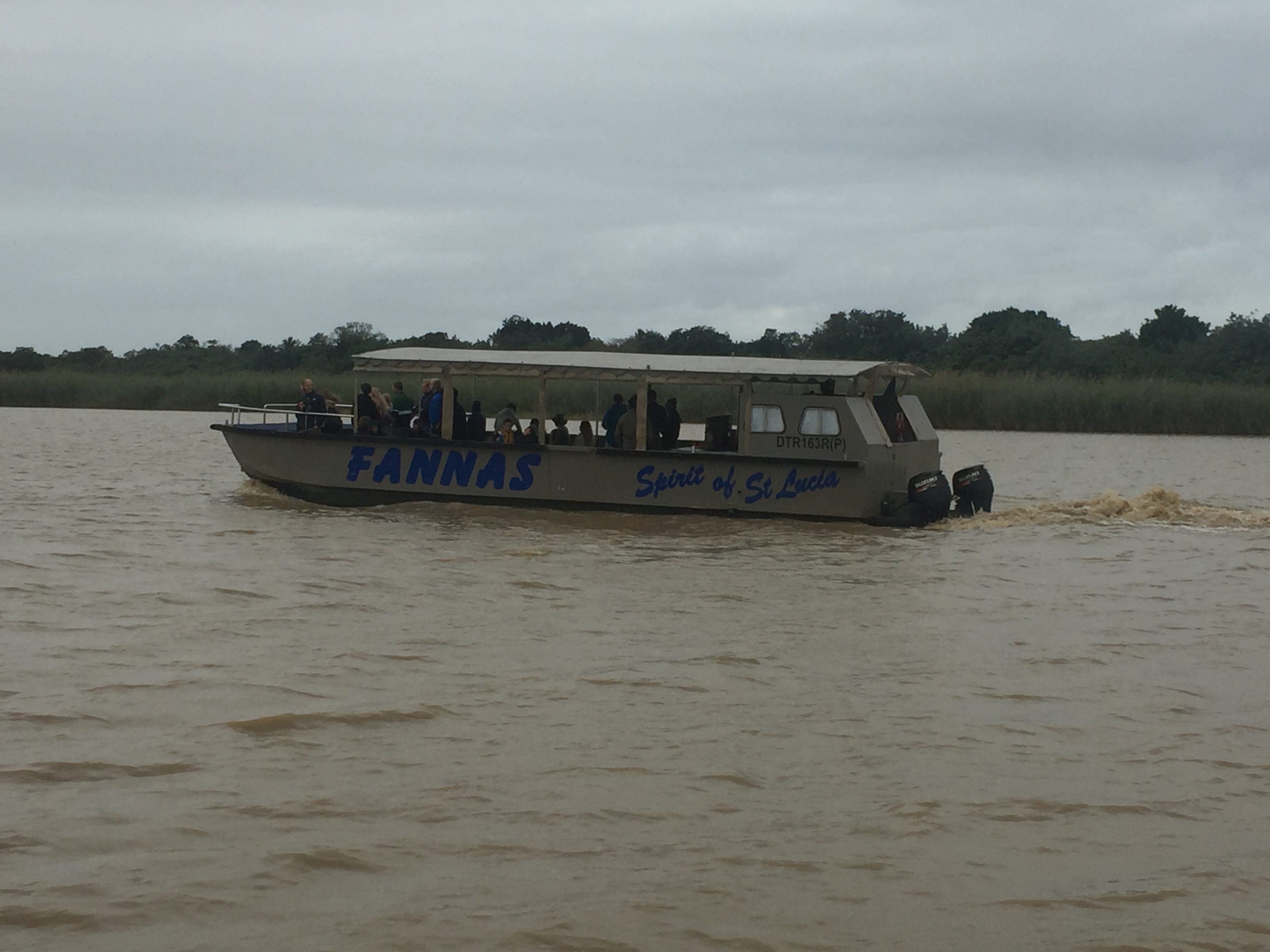
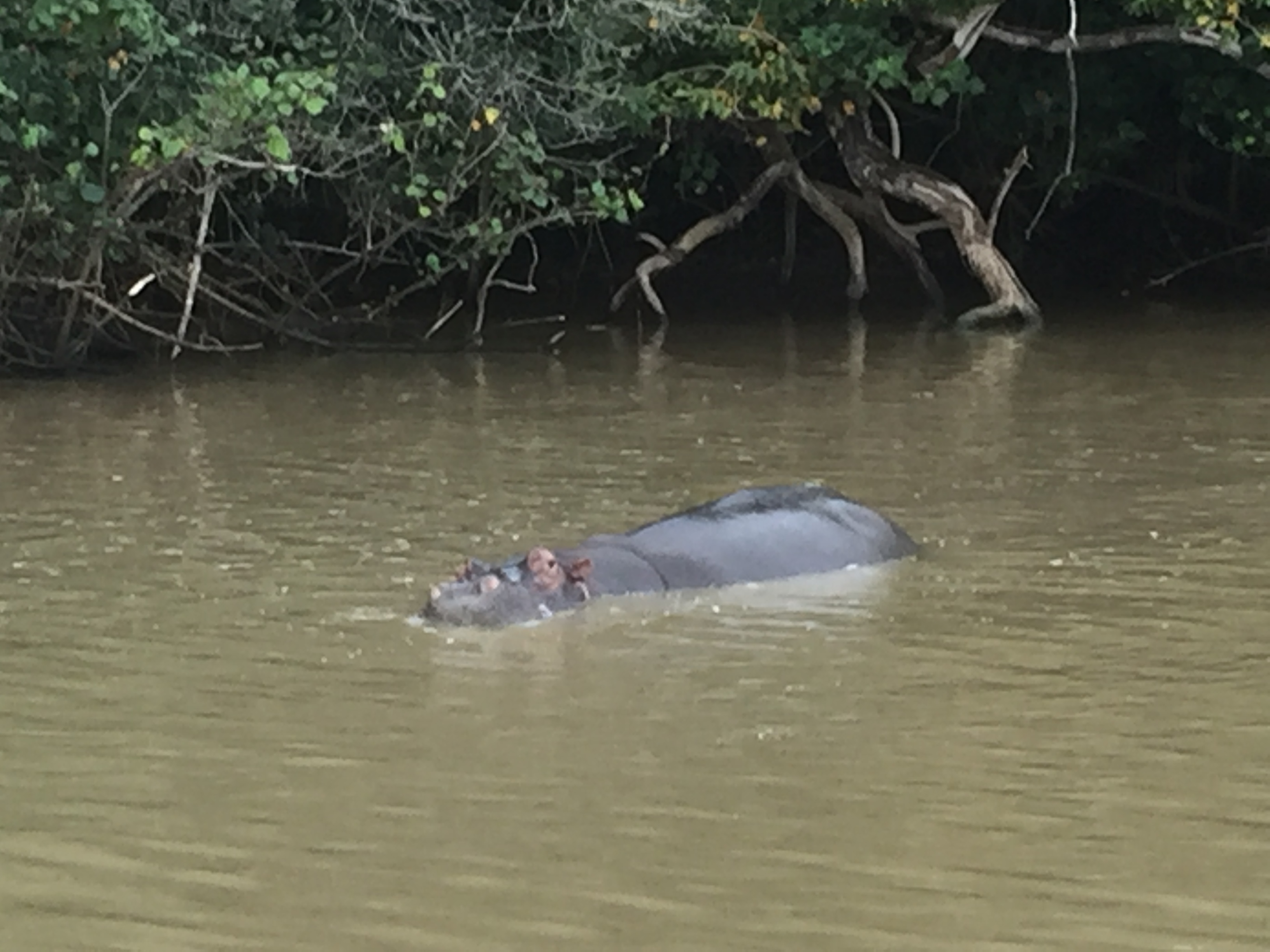
The game viewing cruise takes you into the heart of this estuary — and what you encounter is something most people will never experience in their lives. Hippopotami emerge from the water, their enormous heads rising suddenly and unexpectedly. There are hippos everywhere — singly, in pairs, in small pods. When a hippo surfaces near the boat, the sheer mass and power of the animal hits you immediately. These are dangerous animals — hippos kill more people in Africa than lions do — but seeing them in their natural habitat, going about their daily existence, is extraordinary and humbling.
Nile crocodiles basking on the banks, their ancient eyes watching the boat pass. Crocodiles can live for 60+ years and grow to massive size. The largest ones in St Lucia can reach 5-6 metres. The crocodiles here are part of the furniture of the estuary — and part of the reason hippos don't dominate completely.
The estuary also hosts sea turtles and sharks — a truly wild and diverse ecosystem. The landscape of the estuary is stunning — the water changing colour as freshwater meets salt water, the mangrove trees along the banks, the birdlife (over 400 bird species have been recorded in St Lucia), the mountains of Hluhluwe rising in the distance.
The guide narrates the ecology and history of the estuary with passion and knowledge. You understand, as the boat glides through the water, that you're moving through a living ecosystem of extraordinary complexity — and that what you're witnessing is both wild and fragile, requiring active management and protection.
Evening return to the lodge overlooking the estuary, with the sun setting over the water and the hippos settling in for the night. One of the most unusual and unforgettable wildlife experiences of the entire journey.
Day 7: An early morning game drive through South Africa's conservation masterpiece
The second day in KwaZulu-Natal focuses on Hluhluwe-Imfolozi Game Reserve — and this is where you encounter the real depth of South Africa's wildlife and conservation achievement. Hluhluwe-Imfolozi is one of the oldest game reserves in Africa (established 1895) and has one of the greatest conservation success stories on the continent.
Early morning departure for the game drive
Dawn comes early — very early. You're in an open-sided vehicle with your guide while the African bush is still waking up. The air is cool, the light is magical, and there's an electric sense of anticipation. You're about to enter one of the great wildlife experiences on earth.
The Big Five in their natural habitat
Hluhluwe is home to Africa's legendary Big Five — elephant, buffalo, lion, leopard and rhino. Each animal has a reason for its name (relating to danger to hunters rather than size), and each one represents a different aspect of the African wilderness.
Elephant: The largest land animals on earth. Seeing them in the bush — their sheer size, their intelligence visible in their eyes, their complex social structures — is humbling. Herds moving with purpose, mothers protecting calves, the dust kicked up by their movement.
Buffalo: Powerful, unpredictable, genuinely dangerous. They travel in herds and have a reputation for aggression. Seeing them in the bush feels genuinely wild and untamed.
Lion: The apex predator. Seeing a lion — whether sleeping, hunting or just moving through the landscape — changes something in you. The raw power, the confidence, the position at the top of the food chain.
Leopard: Elusive, beautiful, solitary. Leopards are notoriously difficult to spot — they're shy, they hunt at night, they move through trees as easily as on the ground. Seeing one is a genuine privilege.
Rhino: Both the black rhino and white rhino live in Hluhluwe. Rhinos are ancient animals — they've been on earth for millions of years, largely unchanged. Seeing them today feels like touching prehistory. And their presence here is part of one of conservation's greatest achievements.
Rhino conservation — a story of hope
Hluhluwe-Imfolozi is particularly renowned for the conservation of black rhinos and white rhinos. By the 1990s, both species had been hunted nearly to extinction across Africa. Black rhinos are still critically endangered — fewer than 5,000 exist in the wild. White rhinos, of which there were fewer than 100 left in 1895, have been brought back from the brink of extinction to a population of nearly 18,000 — largely thanks to conservation efforts at places like Hluhluwe.
When you see a white rhino grazing in the morning light at Hluhluwe, you're witnessing the success of decades of dedicated conservation work. You're watching animals that, within living memory, were hunted almost to total extinction now thriving in their natural habitat. It's one of the great environmental success stories — and it's happening here.
The guide will explain the conservation pressures — poaching for rhino horn continues to be a serious threat, particularly in South Africa where the poaching crisis of recent years has been devastating. But Hluhluwe represents what's possible when conservation is taken seriously, when reserves are protected and staffed, when the wildlife is valued and defended.
Other wildlife and the broader ecosystem
Beyond the Big Five, Hluhluwe hosts an extraordinary diversity of wildlife — giraffe, zebra, cheetah, hyena, countless antelope species (kudu, impala, wildebeest), wild dogs, hippos in the rivers, and over 400 bird species. Every turn in the road brings new wildlife encounters. The landscape is beautiful — grassland, savanna, riverine forest, rocky outcrops.
Your guide is your window into this world. A good guide knows where animals are likely to be at different times of year, understands animal behaviour, can explain the ecological relationships between species, can tell you which tracks belong to which animals. Over the hours of the game drive, you move from "I'm looking at animals" to understanding the actual living ecosystem you're moving through.
The emotional impact of a dawn game drive
There's something profound about a dawn game drive in an open vehicle. You're cold, you're tired (the wake-up time is brutal), you're hopeful, you're uncertain. You don't know what you'll see. And then, as the sun rises and the bush comes alive, you start to encounter the animals. And something shifts inside you. The scale of it, the wildness of it, the ancient feeling of being a small human moving through a vast ecosystem where you're not the apex predator — it changes how you think about the natural world, about conservation, about humanity's place in things.
Afternoon: Crossing into the Kingdom of Eswatini
After the game drive, lunch at the lodge, and some rest, you're transferred onwards — the afternoon drive from Hluhluwe takes you towards the border with Eswatini. The landscape changes as you drive — the mountains on the horizon, the vegetation shifting, the sense of leaving one country and entering another.
En route, there's often a stop at a traditional handicraft market where you can purchase items from local artisans — woven baskets, beadwork, wooden crafts. It's an opportunity to support local communities and take home something made by local hands.
The border crossing into Eswatini happens smoothly with the tour logistics handled by your Tour Manager. And as you cross into the Kingdom, you leave South Africa's game reserves and wildlife spectacle behind, and enter a different kind of African experience — cultural, intimate, less about wildlife and more about understanding a different country, a different culture, a different way of being.
KwaZulu-Natal highlights
Enormous, ancient, utterly wild. Watching hippos surface in the estuary from a boat is an encounter unlike anything else.
Ancient predators basking in the sun. Crocodiles can live 60+ years and grow to 5+ metres. The St Lucia Estuary teems with them.
Witnessing animals hunted nearly to extinction now thriving in their natural habitat. A conservation success story that moves you.
Elephant, buffalo, lion, leopard and rhino — Africa's most legendary animals all in one reserve. A truly extraordinary wildlife encounter.
Starting before sunrise in an open vehicle to watch the African bush come alive. One of those moments that stays with you forever.
St Lucia is one of Africa's most biodiverse estuaries — a living ecosystem of extraordinary complexity and fragile beauty.
Connecting with communities beyond the game drive
One of the most meaningful moments of the KwaZulu-Natal portion of our journey was a visit to a local school in the Hluhluwe region. Our group spent time meeting and playing with the children — a genuine human connection that sits alongside the wildlife experiences as one of those unforgettable trip memories.
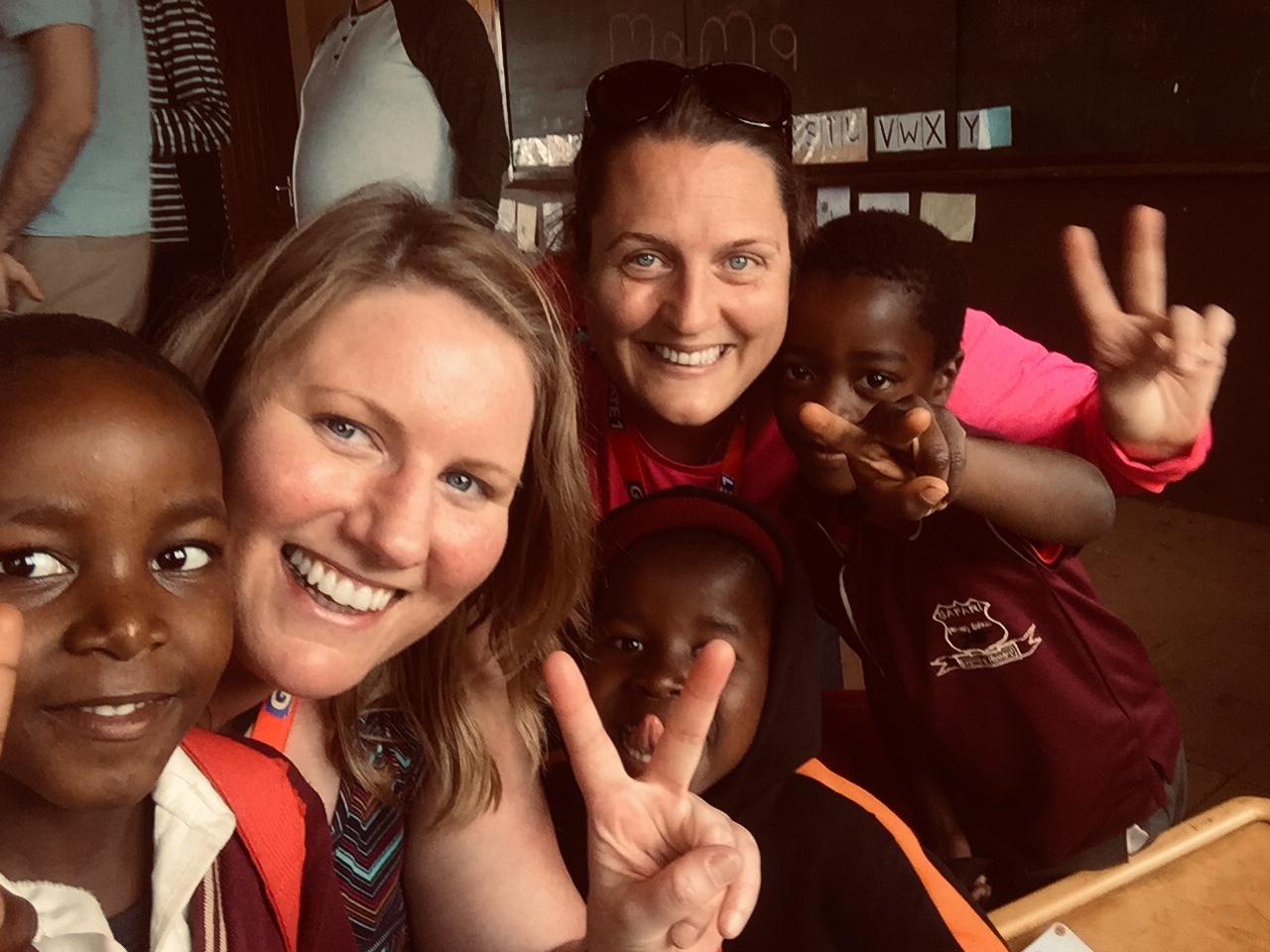
The children were curious, joyful, and full of questions. We played games, shared stories, and experienced a part of South African life that goes far beyond what tourism usually offers. It was a reminder that travel isn't just about landscapes and wildlife — it's about people, about connection, about understanding a country through genuine human encounters. Leaving the school, you carry that experience with you in a completely different way than you carry a photograph or a wildlife sighting.
Common questions about KwaZulu-Natal
What comes next in your South Africa journey
From KwaZulu-Natal, the journey continues to Eswatini for a cultural experience, then to Kruger National Park for another game drive, through the Panorama Route and finally to Johannesburg and Soweto.