Derry —
historic walled city where medieval walls, cultural heritage and contemporary life intersect
Derry is one of Ireland's most historically significant cities and the only remaining completely walled city in Ireland. The historic centre is enclosed by remarkably well-preserved early-17th-century walls built during the Plantation of Ulster. Derry's modern history is inseparable from the civil rights movement and the Troubles — the Bogside neighbourhood is central to understanding this history, documented in the People's Gallery murals and the Museum of Free Derry. Bloody Sunday in 1972 remains a defining moment in Irish history. Contemporary Derry is also shaped by culture, music, festivals and regeneration around the River Foyle. The Peace Bridge, opened in 2011, is one of the city's most recognisable modern landmarks. Derry Girls, the popular television series, introduced the city and its 1990s setting to an international audience. The city combines its historic walls and difficult modern history with a lively cultural identity and a strong relationship with the River Foyle.
Medieval settlement to modern city
Derry has a complex and layered history. The name "Derry" derives from the Irish Doire Cholmcille (Oak Grove of Colm Cille). Saint Columba established a monastery on the site in the 6th century. The city developed around this religious settlement over centuries.
The city walls were built in the early 17th century, during the Plantation of Ulster, by the Honourable The Irish Society for settlers from England and Scotland. They survive as a complete circuit around the historic core and are among the city's defining landmarks.
The city is known by both Derry and Londonderry. The legal name is Londonderry, while Derry is widely used locally and elsewhere. On Two for the Row’d, we use Derry throughout this guide.
Ireland's only remaining completely walled city
Derry's city walls are the defining feature and one of Ireland's most significant historical sites. Built between 1613 and 1618, the walls form a complete circuit of roughly 1.5 kilometres around the historic city centre and can be walked along much of their length.
Walking the walls is one of the clearest ways to understand Derry's historic layout, with views across the city and River Foyle. Allow extra time if you want to stop at interpretation points, gates and bastions.
The four original gates are Bishop's Gate, Ferryquay Gate, Butcher Gate and Shipquay Gate. Three later gates — New Gate, Castle Gate and Magazine Gate — were added afterwards. Several bastions and historic cannon also survive along the circuit.
A pivotal moment in Irish and British history
The Siege of Derry in 1689 was a significant historical event. During the Williamite–Jacobite conflict that followed the Glorious Revolution, Jacobite forces supporting James II besieged the city, which was held by supporters of William III. The siege lasted for several months in 1689 and ended when relief reached the city.
The siege remains an important and contested part of local historical memory. Visitors will encounter references to it around the walls and city, and it is best understood in the wider context of the Williamite–Jacobite conflict.
Victorian civic building and cultural venue
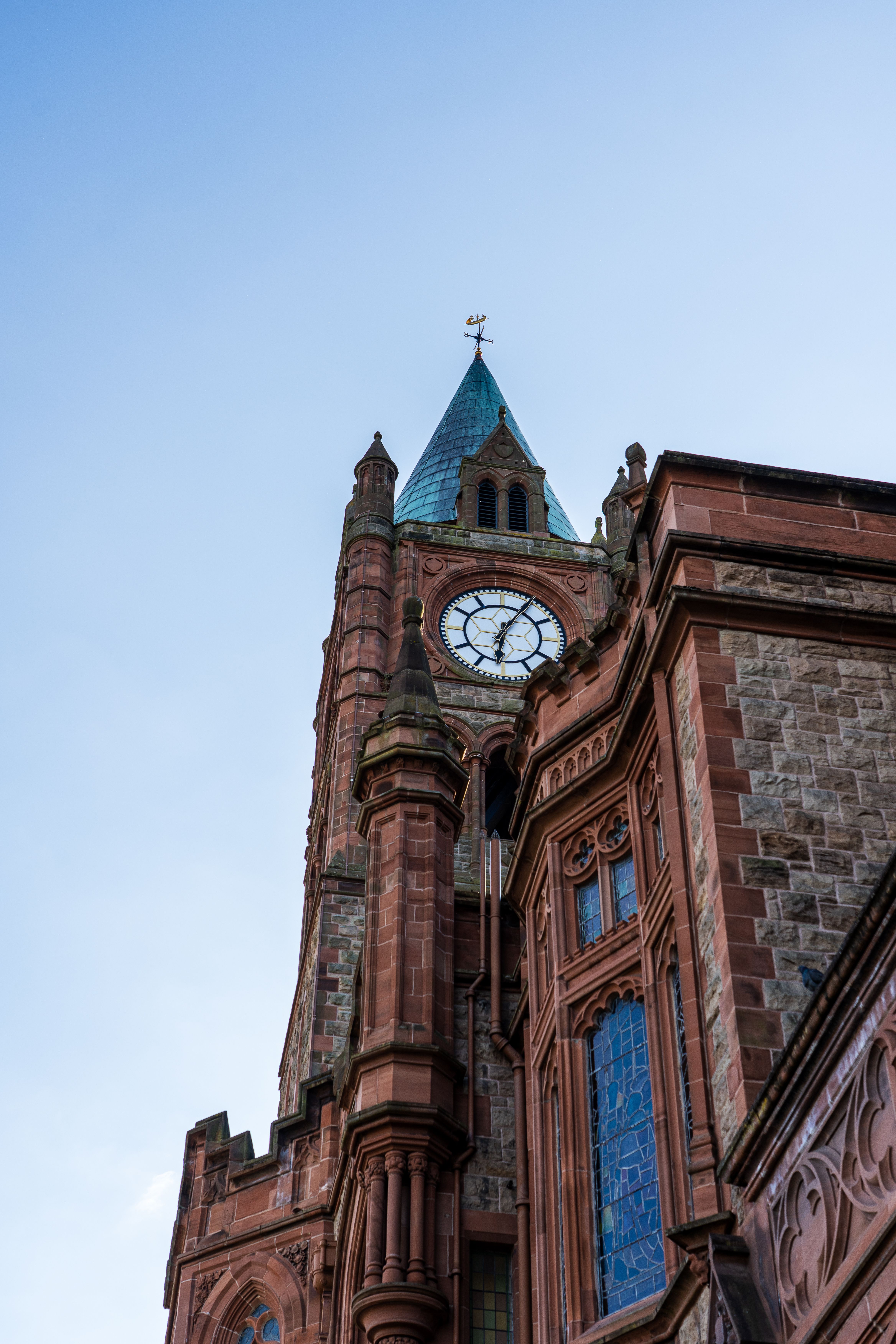
The Guildhall is a Victorian Gothic Revival building constructed in the late 19th century, sitting just outside the city walls. The building serves as a civic venue, hosting exhibitions, events and cultural activities. The architecture is impressive and reflects Victorian civic pride. The Guildhall provides interpretation of Derry's history and hosts various cultural programmes.
Civil rights movement and the Troubles
The Bogside is a neighbourhood in Derry with profound historical significance in modern Irish history. The civil rights movement of the 1960s-70s found expression in Derry. Marches, protests and activism around civil rights and housing discrimination occurred in the Bogside and city. The area became central to the political struggle in Northern Ireland.
On 30 January 1972, British soldiers opened fire during a civil-rights march in the Bogside on what became known as Bloody Sunday. Thirteen people were killed that day and another man later died from his injuries. The Saville Inquiry, published in 2010, concluded that the killings were unjustified and unjustifiable.
Understanding the Bogside requires understanding this history respectfully. The area is not primarily a tourist attraction but a living neighbourhood with real history and real grief. Visitors should approach with appropriate solemnity and respect.
Street art documenting history and resistance
The People's Gallery is a collection of murals in the Bogside created by local artists. The murals document key events in civil rights history, the Troubles and resistance to injustice. The murals are visually striking — large-scale street art covering building walls with vivid imagery and powerful messages.
Notable murals include depictions of Bloody Sunday, political figures and historical events. The murals have become one of the best-known visual records of the Bogside's recent history. They should be approached as works rooted in a living neighbourhood and in events that remain deeply personal to many families.
Documentation of civil rights and resistance
The Museum of Free Derry is a local museum documenting the civil rights movement, Bloody Sunday and the broader history of struggle in Derry. The museum is housed in a building in the heart of the Bogside. Exhibitions present historical documents, photographs, personal testimonies and artifacts from the period.
The museum provides essential context for understanding Derry's modern history. The museum can provide important context before or after exploring the Bogside and People's Gallery murals. Check current opening information before visiting.
Symbol of reconciliation and contemporary Derry
The Peace Bridge, opened in 2011, spans the River Foyle connecting the city centre with the Waterside area. The bridge was conceived as part of wider regeneration and cross-river connections between the city centre and Waterside. It has since become one of Derry's best-known modern landmarks.
The River Foyle is central to Derry's geography and character. The river flows through the valley creating Derry's location and shaping the city's development. The Foyle shapes the city's geography, and riverside routes connect a number of civic and cultural spaces. The river separates the Bogside and city centre (on the west bank) from the Waterside (on the east bank).
Television series introducing Derry to the world
Derry Girls is a popular television series set in Derry during the 1990s. The show, created by Lisa McGee, follows a group of teenagers navigating life in the city during the tail end of the Troubles. The series has been hugely successful internationally, introducing Derry and its character, humour and history to audiences around the world.
The show is affectionate toward Derry and its people while not shying away from the city's complex history. For many international viewers, Derry Girls provided their first detailed engagement with Northern Ireland and Derry specifically. The series has contributed to increased tourism to Derry as viewers want to experience the city themselves.
Various locations around Derry featured in filming. The city has embraced its connection to the show, including the large Derry Girls mural in the city centre and visitor experiences linked to the series. For fans of the series, Derry offers the opportunity to walk streets and visit locations that featured in the show.
St Columb's Cathedral
St Columb's Cathedral is a historic church within the city walls. The cathedral represents religious history and architecture in Derry. The building dates from the 17th century and reflects important periods in the city's religious and cultural life.
Derry's cultural life — music, arts and festivals
Derry has a vibrant contemporary cultural scene. Music is particularly important — the city has produced significant musicians and continues to have an active music culture. Various pubs, venues and performance spaces host live music regularly. The cultural scene reflects both traditional Irish music and contemporary genres.
Arts galleries, theatres and cultural venues exist throughout the city. The city hosts various festivals and events throughout the year celebrating music, arts, literature and culture. Halloween in Derry is particularly renowned — the city celebrates in distinctive ways with festivals, events and cultural programming (check current year's programmes as details change annually).
History and archaeology of Derry
The Tower Museum is located within the historic walls at Union Hall Place. Its long-running Story of Derry exhibition closed in March 2026 as collections began moving toward the forthcoming DNA museum at Ebrington. The Tower Museum currently includes the Derry Girls Experience and changing/preview displays, so check the current programme before visiting.
Book Derry experiences
Attractions, tours and activities across Derry.
Disclosure: If you book through these links we may earn a small commission at no extra cost to you.
Explore Derry and Northern Ireland with TourRadar
If you'd prefer to explore Derry as part of a guided tour, TourRadar has options ranging from focused Derry city tours to multi-day Northern Ireland explorations that include Derry alongside Belfast, Causeway Coast and other destinations.
Disclosure: Affiliate link — we may earn a small commission if you book.
One day in Derry
Morning: Walk the city walls for views and orientation. Start at one gate and follow the circuit, allowing time for interpretation points, gates and viewpoints.
Midday: Explore the city centre inside the walls. Visit the Guildhall or St Columb's Cathedral. Have lunch at a local cafe or restaurant.
Afternoon: Visit the Bogside — see the People's Gallery murals and walk the neighbourhood. Consider the Museum of Free Derry to understand the history. This requires respectful engagement with significant historical and personal content.
Evening: Cross the Peace Bridge for views and experience the contemporary Derry landscape. Have dinner at a restaurant with local character. Evening walk along the Foyle waterfront.
Two days in Derry
Two days lets you explore the city thoroughly — walk the walls more leisurely, spend proper time in museums, explore various neighbourhoods beyond the tourist focus, engage with the Bogside and its history comprehensively, experience live music or cultural events if available, and genuinely understand Derry as a living city rather than a historical monument. Two days also allows for day trips to nearby locations like the Causeway Coast or Donegal.
Minimum: A half-day works for walking the walls and getting a sense of the city's location and historical character. It's rushed but captures something essential.
Ideal: One full day in Derry lets you walk the walls, explore the city centre, visit the Bogside and at least one museum, and begin to understand Derry's complex history. A day feels satisfying without constant rushing.
Extended: Two nights or more in Derry lets you explore thoroughly, engage seriously with the civil rights history, experience the city's contemporary cultural life (potentially catching live music or cultural events), day trip to nearby attractions, and genuinely know Derry beyond tourist highlights.
Derry as a base for exploring the northwest
Causeway Coast: Our Causeway Coast guide covers Giant's Causeway, the Dark Hedges, Ballintoy Harbour and other north-coast stops.
Donegal: County Donegal begins just across the border from Derry and opens up a wide range of coastal, mountain and rural routes.
Inishowen Peninsula: The Inishowen Peninsula lies immediately to the northwest of Derry in County Donegal and is a natural extension to a wider northwest itinerary.
Belfast: Northern Ireland's capital can be combined with Derry on a wider trip. Our Belfast guide covers the city in more detail.
Derry by season
Spring (March-May): Pleasant weather, flowers blooming, fewer crowds than summer. Good time for comfortable city exploration.
Summer (June-August): Usually one of the busier periods, with longer daylight hours and a changing programme of cultural events.
Autumn (September-October): Autumn can be a particularly interesting time because of Derry's major Halloween programme. Dates, routes and events change each year, so check the official programme for your travel year.
Winter (November-February): Shorter days and wetter, colder conditions are more likely. Museums and indoor cultural venues can be useful additions to a winter itinerary.
Transport options
By bus: Long-distance coach services connect Derry with Belfast, Dublin and other destinations. Check current operators and timetables when planning.
By car: Derry is accessible by road from Belfast, Dublin, Donegal and the wider northwest. Journey times vary with route and traffic; check parking arrangements before travelling into the centre.
By train: Rail services connect Derry with Belfast via the scenic line along the north coast. Check current Translink timetables for connections and engineering changes.
By air: City of Derry Airport serves a number of UK routes and onward connections. Belfast and Dublin airports are also used by visitors travelling to the northwest, so compare current routes and onward transport before booking.
Transport within the city
On foot: Derry's compact walled city and immediate surroundings are walkable. Most attractions are accessible on foot. Walking is the best way to experience the city and walls.
Buses: Local buses connect the city centre with surrounding neighbourhoods; check current Translink routes and fares.
Taxis: Available for point-to-point travel. Useful for reaching accommodations or specific attractions.
Car rental: A car can be useful for Donegal, the Causeway Coast and rural day trips. Check city-centre parking arrangements in advance.
Take a virtual drive through Derry
Want a look around before you travel? Drive From Home lets you explore Derry virtually from your screen, following real streets and getting a feel for the city's layout before your visit.
Find your Derry accommodation
Hotels, guest houses and apartments across Derry.
Disclosure: If you book through these links we may earn a small commission at no extra cost to you.
Choosing where to stay
City centre (inside the walls): Accommodation within the walled city offers easy access to attractions, restaurants and shops. Most convenient for exploring central Derry. Can be noisier but very central.
Waterside (east of Foyle): The Waterside is on the east bank of the Foyle and is connected to the city centre by road and pedestrian links including the Peace Bridge.
Outside city centre: Various neighbourhoods offer local character and value. Slightly less convenient but authentic to how locals live.
Budget: Accommodation prices vary by property, date and local events. Compare current rates, especially around major festivals.
Eating in Derry
Traditional pubs: Pubs and music venues are an important part of Derry's evening culture, but programmes and food offerings vary by venue.
Irish cuisine: Restaurants range from casual Irish and pub-style cooking to contemporary dining and international options.
Contemporary restaurants: Various modern restaurants exist offering wider cuisine range alongside traditional Irish.
Cafes: Various cafes offer tea, coffee and light meals throughout the city.
Weather and what to expect
Weather in Derry can change quickly, with rain and wind possible throughout the year. Layers and a waterproof are useful, especially when walking the walls or riverside.
Money and costs
Derry uses British Pounds Sterling (£). Costs vary by attraction, transport, food, accommodation and events, so check current prices when planning.
Derry packing essentials
Derry involves city walking and potentially wall exploration. Comfortable shoes and weather-appropriate clothing are essential.
You'll walk the city walls and streets extensively. Good supportive shoes are essential for comfortable exploration.
Irish weather is changeable and potentially rainy. A quality waterproof is essential. Compact, actually-wearable designs work best.
Variable temperatures mean layers are crucial. Thermal layer, sweater/fleece and windproof outer shell let you adjust.
Derry's architecture, murals, river and city views offer photographic interest. Photography opportunities are abundant.
Approaching Derry's history, particularly Bloody Sunday and the Troubles, requires respect and seriousness. Bring sensitivity alongside curiosity.
Hands-free bag for essentials while exploring walls and city. Useful for carrying layers, water and camera.
Common questions
Derry FAQ
Ready to explore Derry?
Derry combines its complete 17th-century walls with a modern history that deserves careful, respectful engagement. The Bogside, Museum of Free Derry, Peace Bridge, River Foyle and contemporary cultural scene each tell different parts of the city's story, while Derry Girls has introduced a new generation of visitors to its humour and character.