Belfast —
capital city where industrial heritage, political history and contemporary culture converge
Belfast is the capital of Northern Ireland — a city with profound recent history, remarkable industrial heritage and genuine contemporary energy. The Titanic was built in Belfast's Harland & Wolff shipyard. The city's architecture reflects centuries of shipbuilding wealth and urban development. Belfast's recent political history is visible in peace walls and political murals — expressions of community identity and the city's journey through conflict towards peace. The city has changed significantly in recent decades and remains complex. We visited Belfast, took a Black Cab political tour through the Falls Road and Shankill Road areas to see murals and understand community divisions, and drove around Northern Ireland ourselves. Belfast offers far more context when its industrial, cultural and political history are considered together.
We visited Belfast as part of our travels around Northern Ireland. We took a Black Cab political tour through the Falls Road and Shankill Road areas and saw political murals while learning more about Belfast's recent history and different community perspectives. We also drove ourselves around Northern Ireland beyond the city.
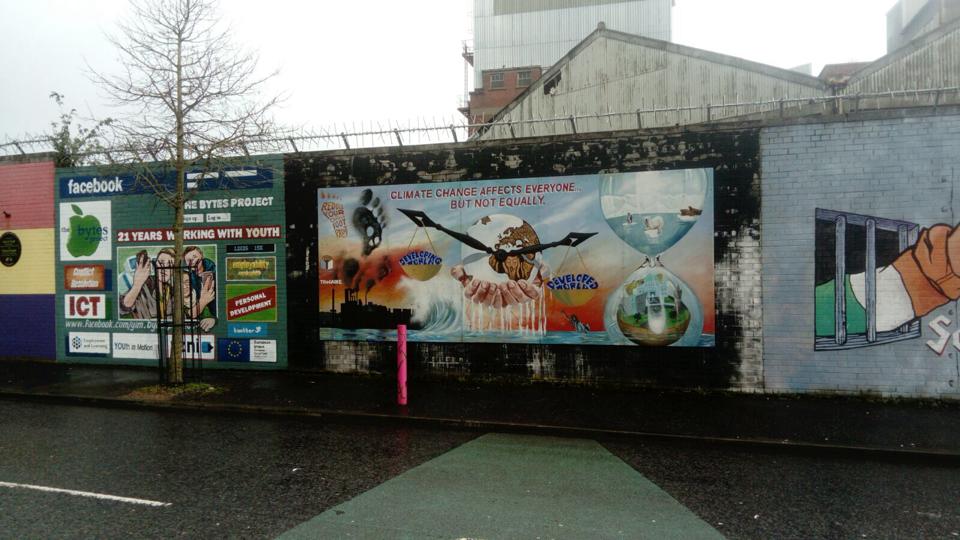
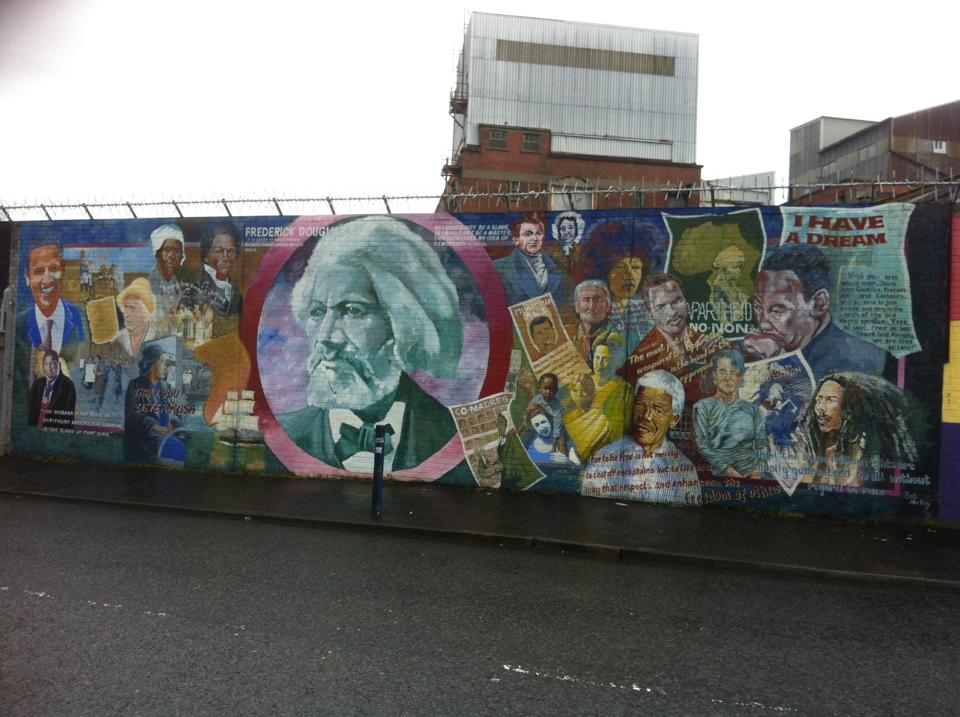
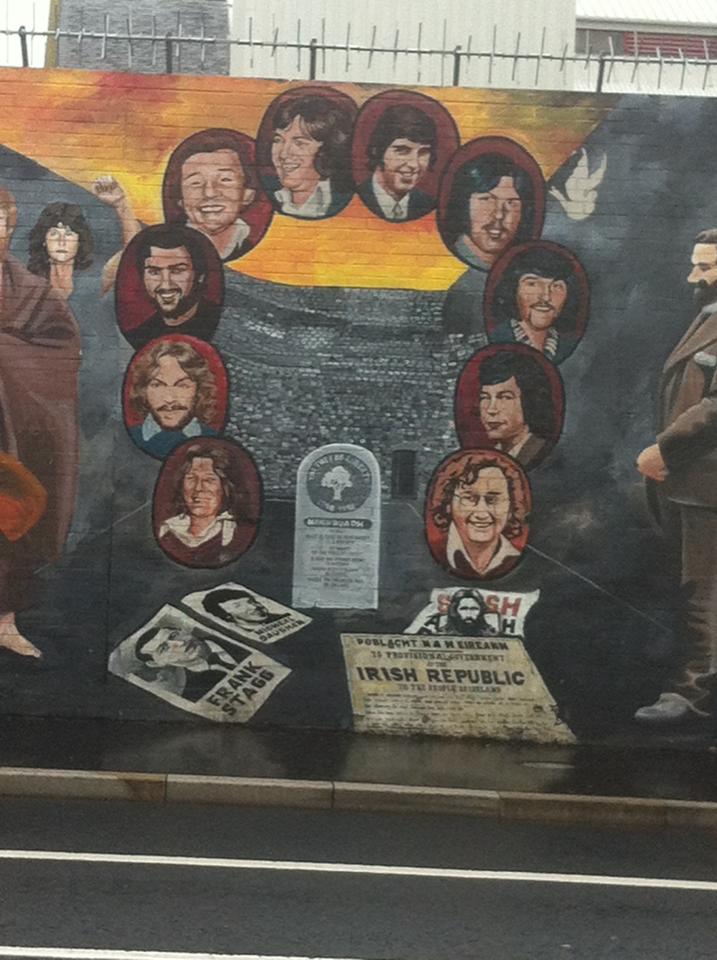
Belfast is a city where history is visible and tangible. Political murals aren't hidden but painted on buildings throughout certain areas. Peace walls remain in some locations. Yet the city is also vibrant and forward-looking — new developments, restaurants, bars and cultural venues have emerged. It's a place where conflict and reconciliation, history and contemporary life, exist simultaneously and create something distinctive.
From settlement to industrial powerhouse to contemporary city
Belfast's history spans centuries but the city's transformation as an industrial powerhouse came in the 19th century. The development of the shipbuilding industry — particularly Harland & Wolff — made Belfast one of the world's major industrial cities. Ships were built here and shipped worldwide. This wealth funded Victorian and Edwardian development that characterises much of central Belfast's architecture.
The 20th century brought profound change. Northern Ireland's partition in 1921 made Belfast the capital of a new political entity. The subsequent decades saw industrial decline as shipbuilding moved elsewhere. More significantly, from the late 1960s onwards, Belfast became the focal point of "the Troubles" — a period of violent conflict between nationalist/republican and unionist/loyalist communities, with complex political dimensions reflecting broader Irish history. The conflict lasted roughly three decades until the Good Friday Agreement in 1998 brought a peace settlement.
Contemporary Belfast is a city in transition — moving beyond conflict, developing economically, engaging with difficult history, building shared cultural spaces. The process is ongoing and imperfect but genuinely happening.
Understanding Belfast through community perspectives
Black Cab tours are a distinctive Belfast experience. Local taxi drivers, often with personal connections to communities affected by the Troubles, drive small groups through areas like Falls Road and Shankill Road, explaining history, pointing out murals, and providing perspective on political divisions and community identity. The tours help visitors understand Belfast's complexity in ways that academic reading cannot.
We took a Black Cab political tour through the Falls Road and Shankill Road areas. Seeing the murals while hearing the historical context gave us a clearer sense of how community identity and recent history are reflected in the city. Individual tours and guides vary, so the exact route and emphasis can differ.
For visitors interested in Belfast's recent history, these tours can provide useful context when approached respectfully and with an awareness that perspectives can differ.
Murals, walls and visible history
The Falls Road (predominantly nationalist/republican) and Shankill Road (predominantly unionist/loyalist) neighbourhoods are where Belfast's political murals are most visible and concentrated. Murals depict political figures, commemorate historical events, express community identity and sometimes memorialize individuals killed during the Troubles. The murals are public art expressing community values and historical memory.
Peace walls — barriers erected to separate communities — remain in some locations. These physical structures are tangible evidence of division. Some walls have been partly dismantled; others remain. Some barriers remain, while wider efforts around shared space and reconciliation continue.
Visiting these areas is most meaningful through guided tours where drivers/guides can explain context, point out specific murals and their significance, and help visitors understand the complexity beyond visual appearance. Black Cab tours provide this context naturally.
Belfast built the Titanic
The Titanic was built in Belfast's Harland & Wolff shipyard between 1909 and 1911. The shipyard was one of the world's largest and most advanced, capable of building massive ocean liners. The Titanic's construction was a massive undertaking — thousands of workers, cutting-edge technology, and resources.
The ship's sinking in 1912 remains the most famous maritime disaster. The connection to Belfast gives the city prominence in Titanic history. Harland & Wolff's cranes remain iconic elements of Belfast's skyline — massive industrial structures that dominate the city's approach from the water and represent the city's industrial past.
Belfast's shipbuilding story
Beyond the Titanic, Belfast's shipbuilding industry built thousands of vessels. The industry was central to Belfast's economy and identity for over a century. As shipbuilding declined, Belfast's economy and identity shifted. The visible remnants — the shipyard landscape, the cranes, the industrial buildings — are now heritage and tourism attractions rather than active industrial sites.
Understanding Belfast's Titanic connection and broader shipbuilding heritage adds depth to visiting the city. The industrial architecture and landscape tell stories of a city built on making ships.
Civic centre and architectural landmark
Belfast City Hall sits in Donegall Square in the city centre — an ornate Edwardian Baroque building that represents civic pride and urban importance. Built in 1906, the building is architecturally impressive and remains the seat of Belfast City Council. The building and square represent Belfast's prosperous Edwardian period when the city was wealthy and confident from industrial success.
The City Hall has exhibition spaces that sometimes display Belfast-focused exhibitions. The exterior is worth seeing and photographing. The square itself is a pleasant public space with green areas and surrounding architecture.
Arts, restaurants and nightlife
The Cathedral Quarter (around St Anne's Cathedral) has become Belfast's primary arts and restaurant district. Street art, galleries, independent shops, restaurants and bars have transformed what was previously a neglected area. The neighbourhood represents contemporary Belfast — young, creative, forward-looking. It's where much of Belfast's contemporary cultural energy concentrates.
The Cathedral Quarter is worth walking through to experience modern Belfast culture and where to find food, drink and entertainment. The street art reflects contemporary artistic expression rather than political messaging.
Historic market and local experience
St George's Market is a Victorian covered market building in the city centre. The market hosts food and craft vendors, particularly on weekends. It's an active community space where locals shop alongside tourists. The building is architecturally interesting and the market atmosphere is genuine — not a tourist museum but an actual local gathering place.
Telling Belfast's stories
Ulster Museum: Comprehensive museum covering natural history, art and cultural history with strong focus on Irish and Northern Irish content. Well-curated and genuinely interesting for understanding the region.
Crumlin Road Gaol: Historic 19th century prison that has been preserved as a museum. Tours explain the building's history and role in Irish political history. The building itself is architecturally striking.
Titanic Belfast: Museum dedicated to the Titanic and Belfast's shipbuilding heritage. Architecturally distinctive building with exhibitions exploring the ship's construction, the disaster and the broader shipbuilding industry.
St Anne's Cathedral: Anglican cathedral with architectural interest and historical significance.
Belfast Castle: Victorian castle overlooking the city with gardens and views. While not a medieval fortress, the building and location offer perspective on the city.
Botanic Gardens: Victorian gardens in South Belfast with greenhouses and pleasant walking. Active community space for locals.
Book Belfast experiences
Tours, museums, market visits and activities across Belfast.
Disclosure: If you book through these links we may earn a small commission at no extra cost to you.
Explore Northern Ireland with TourRadar
If you'd prefer to explore Belfast and Northern Ireland as part of a guided tour, TourRadar has options ranging from city-focused tours to multi-day Northern Ireland explorations that include Belfast alongside other destinations like the Causeway Coast.
Disclosure: Affiliate link — we may earn a small commission if you book.
One day in Belfast
Morning: Start in central Belfast. Visit the City Hall area and Donegall Square. Walk through some of the city centre to get oriented.
Midday: Take a Black Cab political tour through Falls Road and Shankill Road to understand Belfast's political geography and community identities. This is the most distinctive Belfast experience.
Afternoon: Visit Cathedral Quarter to explore contemporary Belfast — restaurants, street art, independent shops and galleries. Have lunch or coffee in this area.
Evening: Walk along the River Lagan waterfront or visit a market if timing aligns. Have dinner in Cathedral Quarter or another neighbourhood restaurant.
Two or three days in Belfast
With more time, you can explore museums (Ulster Museum, Crumlin Road Gaol, Titanic Belfast), visit St George's Market, explore Botanic Gardens, walk more extensively through different neighbourhoods, experience Belfast's restaurant and bar culture more thoroughly, and take time to absorb the city's atmosphere. A longer stay lets you understand Belfast more deeply as an actual city where people live and work rather than just hitting major attractions.
Minimum: A half-day works if you're doing a Black Cab tour and walking the city centre. It's rushed but captures the main distinctive Belfast experience.
Ideal: One full day in Belfast lets you take a Black Cab tour, explore the city centre and Cathedral Quarter, visit at least one major attraction, and experience Belfast without constant rushing. A day feels satisfying.
Extended: Two or three nights in Belfast lets you explore thoroughly, visit multiple museums, experience different neighbourhoods, visit St George's Market, walk green spaces, and engage with Belfast's cultural scene more deeply.
Belfast by season
Spring (March-May): Pleasant weather, flowers blooming, fewer crowds than summer. Good time with comfortable temperatures and spring atmosphere.
Summer (June-August): Typically the warmest and one of the busier periods, with more events and visitors. Booking accommodation and major attractions ahead can be useful.
Autumn (September-October): Can be a pleasant time for a city break, with cooler temperatures and fewer summer crowds.
Winter (November-February): Cooler, darker and often wetter, but generally quieter outside major events. Check seasonal opening times before travelling.
Transport to Belfast
By train: Belfast Grand Central Station is the city's main rail and bus hub. Rail services connect Belfast with Dublin and destinations across Northern Ireland. Check current Translink and Irish Rail schedules for journey times and service details.
By bus: Coach services connect Belfast with Dublin and other destinations. Journey times and fares vary, so check current operators before travelling.
By plane: Belfast International Airport and George Best Belfast City Airport both serve the city. Routes change over time, so check current destinations and ground-transport options before booking.
By car: Belfast is straightforward to reach by road from elsewhere on the island of Ireland. City-centre parking can be limited or costly, while having a car is useful if you plan to explore beyond Belfast.
Transport within the city
On foot: Central Belfast is walkable. Main attractions like City Hall, Cathedral Quarter and the city centre are within reasonable walking distance. The River Lagan waterfront is accessible via walking routes.
Buses: Belfast has a comprehensive bus network. Buses are efficient and reasonably priced. They're useful for reaching areas beyond easy walking distance or for hop-on/hop-off convenience.
Black Cab taxis: Regular taxis are available for point-to-point travel. Black Cab tours are distinctive and recommended for understanding the city's political geography.
Walking tours: Various walking tour companies operate in Belfast covering city history, Cathedral Quarter, murals and other themes. Good way to explore with local knowledge.
Cycling: Belfast has some bike paths and is reasonably cycle-friendly in parts. Bike hire is available if you want to explore by bicycle.
Take a virtual drive around Belfast
Want to get a feel for Belfast before your trip — or revisit the city from home? Drive From Home lets you virtually drive around Belfast and explore its streets and surroundings from your screen.
Find your Belfast accommodation
Hotels, guesthouses and apartments across central Belfast and surrounding areas.
Disclosure: If you book through these links we may earn a small commission at no extra cost to you.
Choosing where to stay
City centre: Most convenient for attractions and nightlife. Walking distance to City Hall, Cathedral Quarter and shopping. Can be busier and noisier.
Cathedral Quarter: Vibrant contemporary area with restaurants, bars and galleries. Pleasant for experiencing modern Belfast. Close enough to city centre.
South Belfast (University area): More residential and quieter. Good for experiencing local Belfast life. Slightly less convenient but good value and character.
Budget: Belfast has accommodation at various price points. Peak season (summer and holidays) books up and prices rise. Off-season offers better value.
Eating in Belfast
Irish and Northern Irish cuisine: Restaurants emphasise local ingredients, traditional dishes and contemporary interpretations. Seafood, beef and potato-based dishes are common.
Restaurants and cafes: Belfast has diverse dining from casual cafes to more elaborate restaurants. Cathedral Quarter in particular has numerous restaurants and cafes.
Pubs: Traditional Irish pubs serve real ale and pub food. Good for experiencing local atmosphere and where to hear music and conversation.
Markets: St George's Market has food vendors and is good for casual eating. Independent shops and delis offer quality local products.
Weather and what to expect
Belfast weather is typical Irish/Northern Irish — changeable, often grey and potentially rainy, but rarely extreme. Spring and autumn are most pleasant. Summer can be warm. Winter is cold. The waterfront can be windy. Layering and waterproof jackets are wise year-round.
Money and costs
Belfast uses British Pounds Sterling (£). Belfast uses British Pounds Sterling (£). Costs vary depending on attractions, tours, meals and accommodation, so check current prices when planning.
Belfast packing essentials
Belfast involves urban exploration and potentially tours through different neighbourhoods. Comfortable shoes and layered clothing are essential.
You'll be walking city streets and potentially exploring different areas. Good supportive shoes are essential.
Irish weather is changeable. A compact waterproof is essential for rain and is lightweight to carry.
A sweater or fleece for variable temperatures. Indoor attractions can be cool, outdoor areas may be windy.
Hands-free bag for essentials while exploring. Useful for Black Cab tours and walking tours.
Belfast's murals, architecture and waterfront are visually interesting. Photography opportunities are abundant.
Card payment is widespread but carry some cash for markets, smaller shops and tipping. Uses British Pounds.
Common questions
Belfast FAQ
Ready to explore Belfast?
Belfast is where Northern Irish history, industrial heritage and contemporary energy converge. A city genuinely transforming while engaging honestly with difficult history. Political murals form part of Belfast's visible recent history, while today's city also has a strong cultural, food and waterfront scene. A guided political-history tour can add useful context for visitors who want to understand more.