St Petersburg —
one of the most beautiful cities on earth
St Petersburg stopped us in our tracks. Three days exploring what is genuinely one of the most jaw-droppingly beautiful cities in the world — the Hermitage Museum, Peterhof's Grand Palace, St Isaac's Cathedral, the Neva River canals, the Church of the Bleeding Saviour, the architecture along every street and the sheer imperial grandeur of what Peter the Great built. We walked around with our mouths open for three days. Venice of the North? St Petersburg doesn't do itself justice.
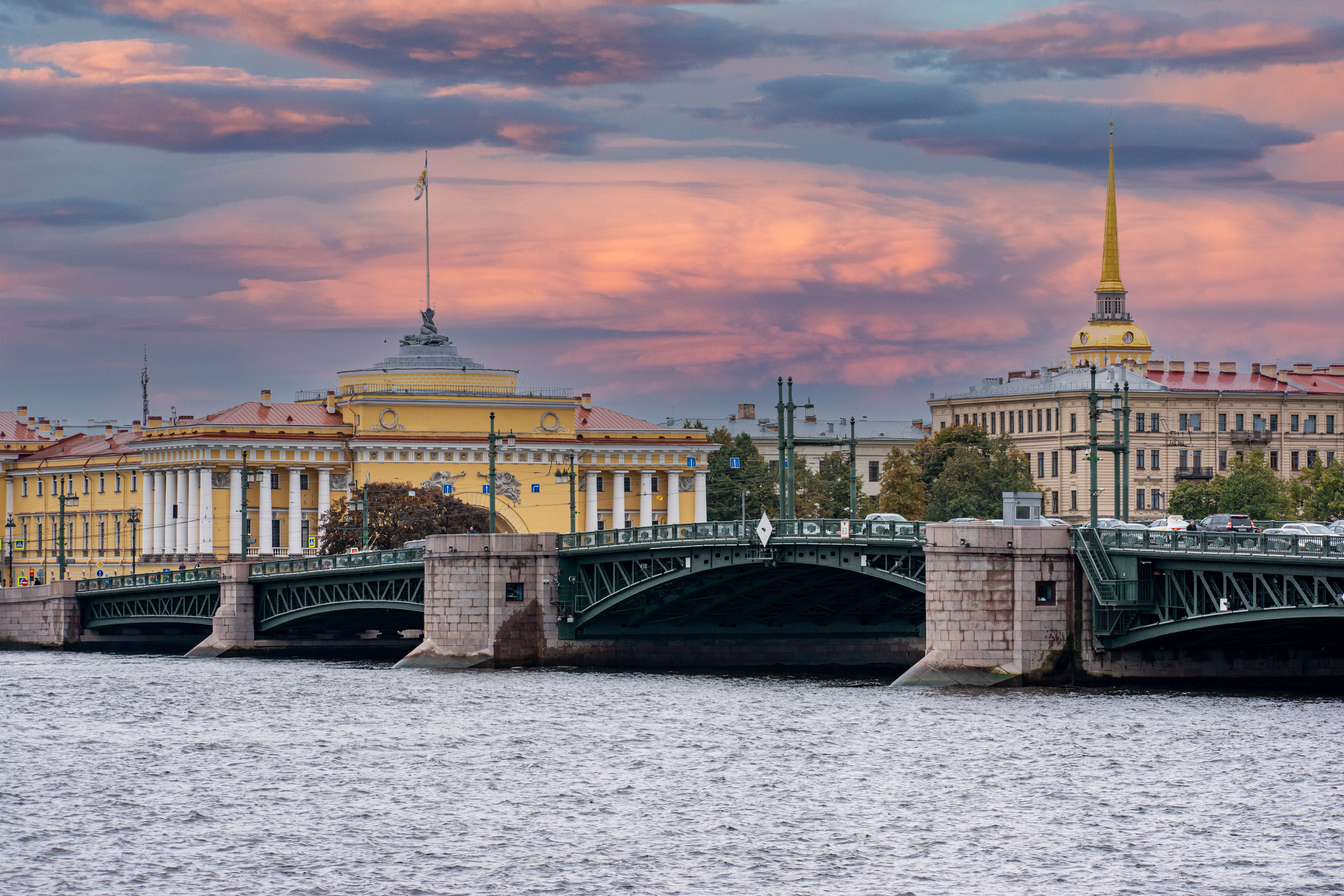
St Petersburg in the evening light — a city that completely won us over.
First impressions of a truly extraordinary city
We arrived in St Petersburg in the late afternoon after crossing the border from Finland and stopping in Vyborg. Pulling into the city, the first glimpses of the Neva River and the grand architecture along its banks gave us our first hint of what was coming. We checked into Hotel Sokos Vasilievsky on Vasilievsky Island and stepped out into our first evening in Russia's most beautiful city.
That first evening walk set the tone for everything that followed. This was clearly not just another city. The sheer ambition of Peter the Great's vision was written into every street, every palace, every waterfront. By the time we returned to our hotel that evening, we knew we were somewhere genuinely special.
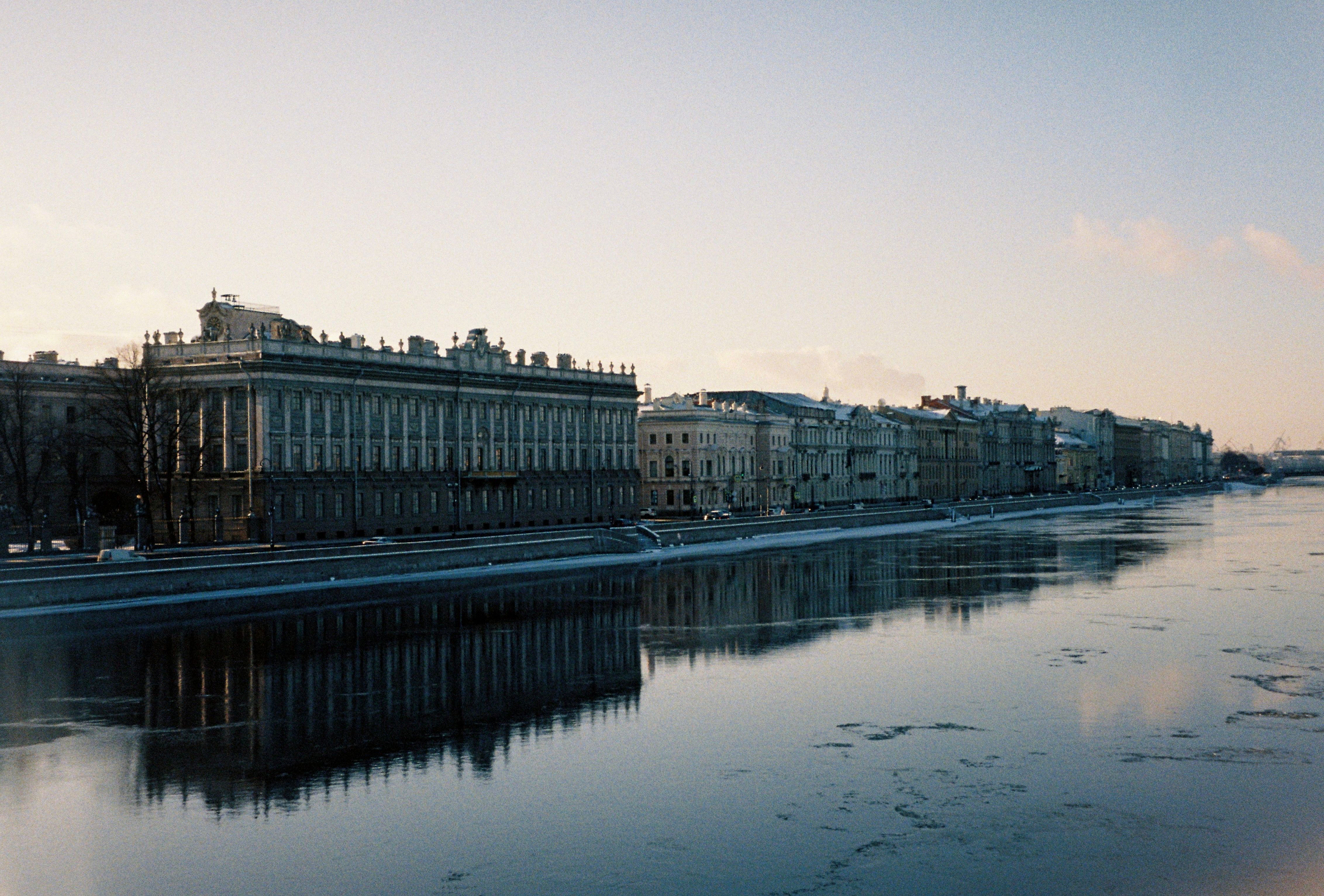
Three days of imperial splendour
St Petersburg's greatest hits
Peter-Paul Fortress
The heart of St Petersburg's history — the fortress where Peter the Great established his city in 1703. The golden spire of the Peter and Paul Cathedral is one of the most iconic sights in the city, visible across the Neva. Walking the fortress walls and exploring the cathedral is an essential first day stop.
The Winter Palace & St Isaac's Cathedral
Two of the most stunning buildings in the world. St Isaac's Cathedral is breathtaking from the outside — the massive golden dome catching the summer light — and equally extraordinary inside. The Winter Palace, home to the Romanovs and now part of the Hermitage complex, dominates Palace Square and is simply one of the most beautiful palaces on earth.
Church of the Bleeding Saviour (Church of the Saviour on Blood)
An absolutely stunning church with extraordinary ornate interiors — perhaps the most ornately decorated church in the entire city. Built on the site where Alexander II was assassinated, it has a haunting beauty and is worth a dedicated visit.
Nevsky Convent
A peaceful, spiritual sanctuary in the heart of the city. The convent feels like a world removed from the bustle of central St Petersburg — quiet gardens, beautiful churches and a sense of calm. It's a wonderful contrast to the grandeur of the palaces.
Neva River Canals
St Petersburg truly is the Venice of the North. The network of canals and waterways are absolutely central to the beauty of the city. Walking along the canal banks, seeing the bridges, the reflections of buildings in the water, the boats and the summer light — it's one of the great urban experiences in the world. An optional canal cruise is highly recommended.
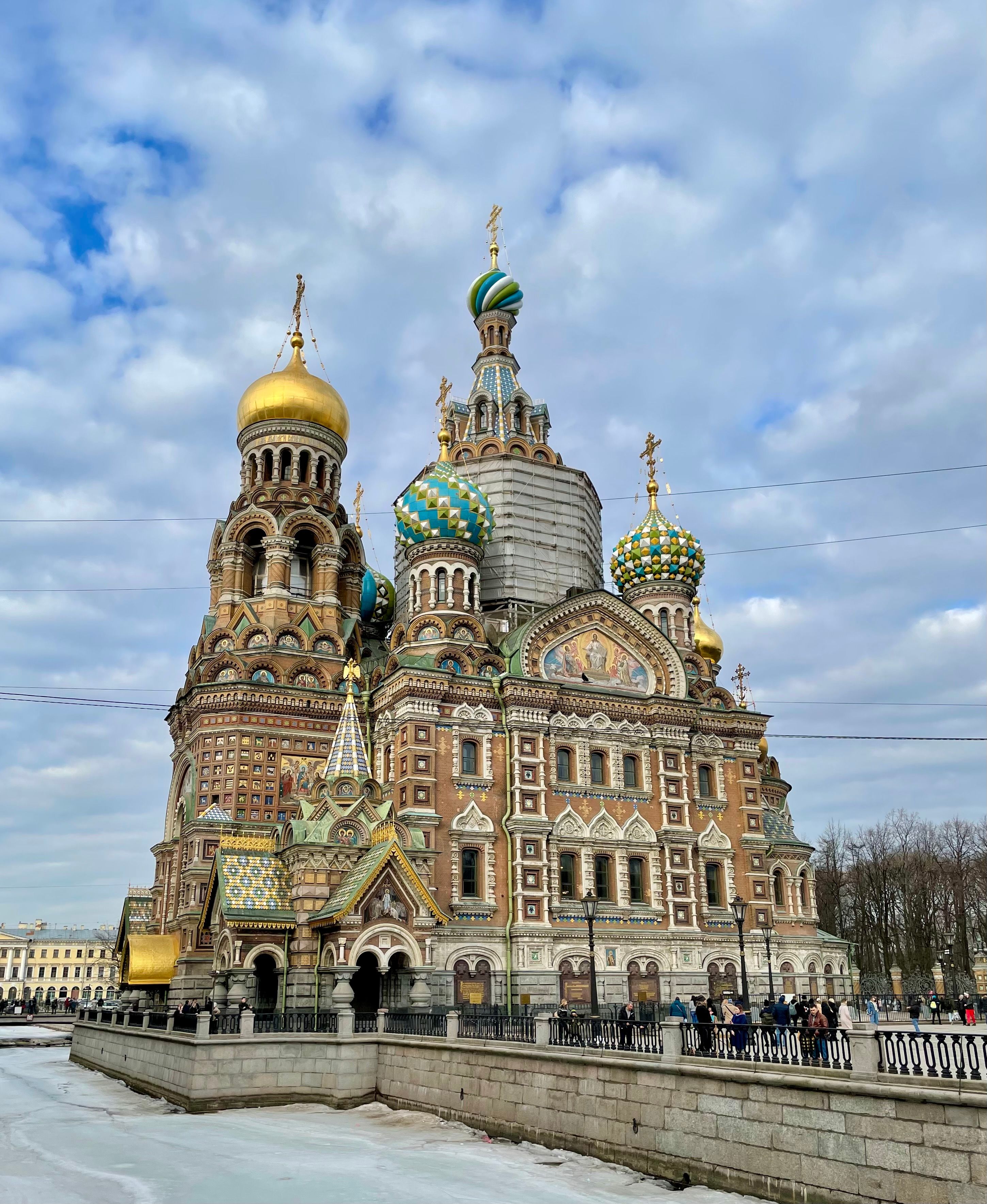
The extraordinary Church of the Saviour on Spilled Blood.
The Hermitage — one of the world's greatest museums
The Hermitage deserves its own section. It's genuinely one of the greatest art museums on earth — housed in the stunning Winter Palace on the banks of the Neva River, the building itself is as impressive as anything inside it. The collection is almost incomprehensibly vast.
We spent three hours there, which barely scratches the surface but gives you the highlights. The amount of time you spend here depends on how deep your art history interest runs — but even if you're not a dedicated art lover, the building alone is worth the visit, and there's enough world-class art on display to make a full day very easy.
We had around three hours inside. It was enough to take in some of the highlights, but nowhere near enough to comprehend the scale of the place — you could lose an entire day here very easily.
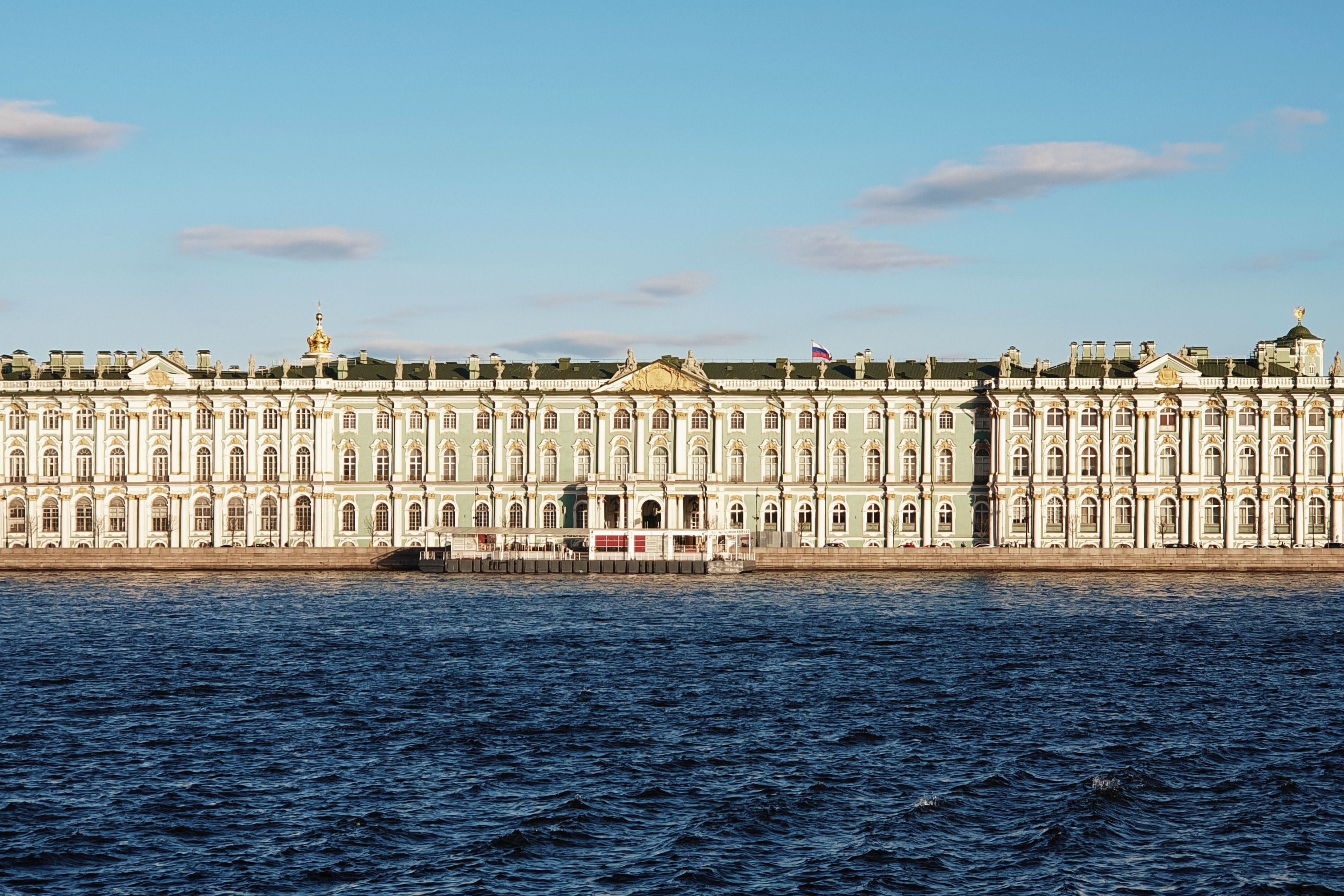
The Winter Palace — home of the Hermitage Museum — stretching along the Neva.
Peterhof — Peter the Great's Grand Palace
A day trip from St Petersburg to one of the most impressive royal residences in all of Europe. Peterhof sits on the Gulf of Finland west of the city, and it's an absolutely essential excursion. Peter the Great built this as his answer to Versailles — and it holds its own.
The Grand Palace is stunning, but the real showstopper is the Grand Cascade of fountains — hundreds of jets of water cascading down from the palace to the canal system below. There's nothing quite like it. The landscaped gardens stretch out across the gulf-facing grounds, and you could easily spend a full day exploring.
The most common way to get there is by hydrofoil boat from St Petersburg (a journey in itself), or by tour bus. Either way, Peterhof is worth the journey — it's one of those sights that genuinely lives up to its reputation.
Hotel Sokos Vasilievsky
We stayed at the Hotel Sokos Vasilievsky on Vasilievsky Island, which is a great location in St Petersburg. It's a comfortable, well-run hotel in a quieter area of the city while still being within easy walking distance of the main attractions across the river. Vasilievsky Island itself is worth exploring — it has its own character separate from the central imperial grandeur.
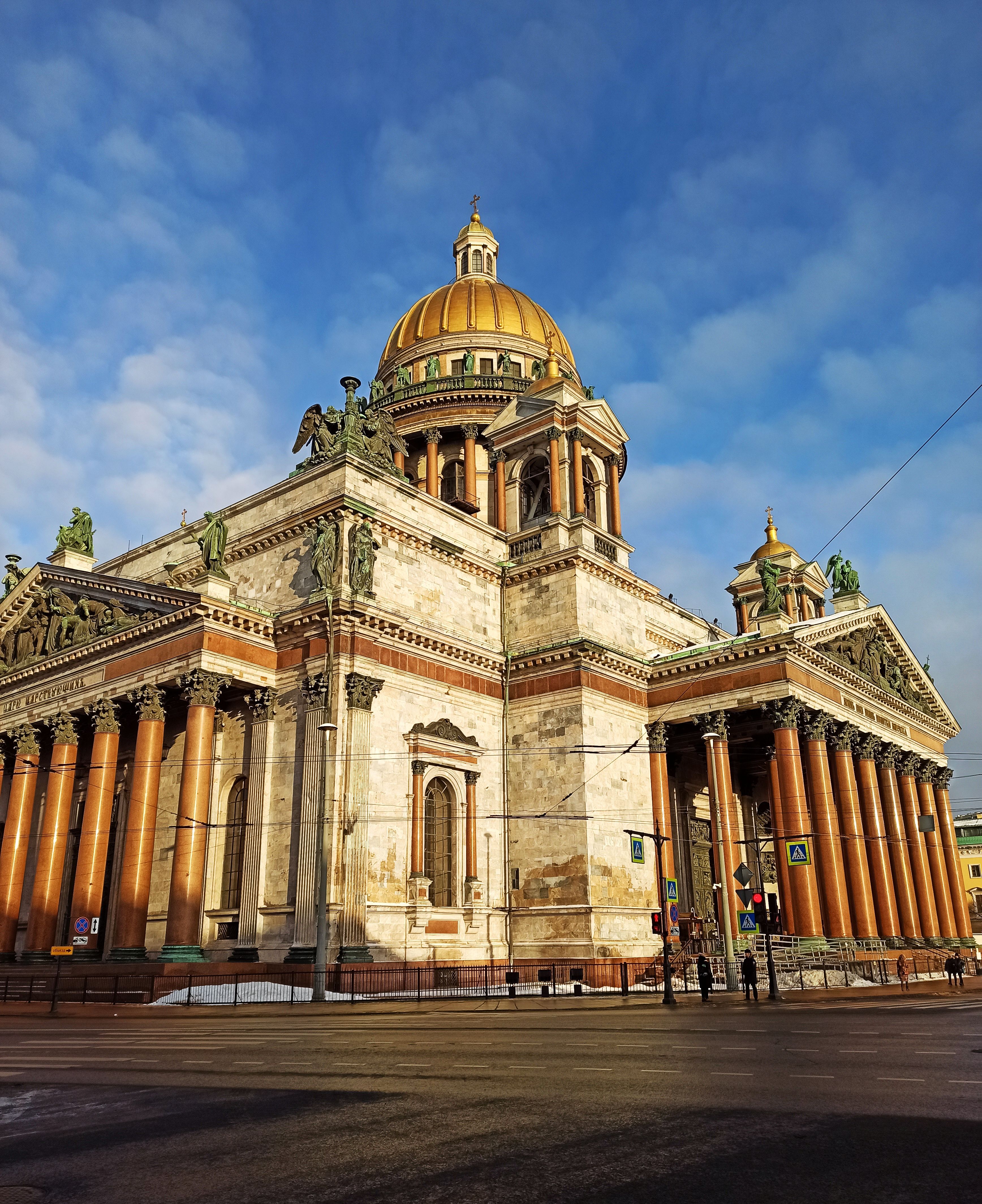
St Isaac’s Cathedral — monumental even by St Petersburg standards.
Why St Petersburg genuinely is one of the most beautiful cities on earth
St Petersburg is unique among world cities. The sheer architectural ambition — the scale of the palaces, the width of the boulevards, the density of beautiful buildings, the way the canals reflect the light of the buildings, the golden domes, the ornate facades — it creates an atmosphere unlike anywhere else.
This isn't a city that grew organically. It was Peter the Great's vision imposed on a marshland, built with extraordinary imperial ambition and backed by vast resources. You feel that in every street. The city was designed to impress, and 300 years later it absolutely succeeds.
Walking the city — particularly along the Neva, up Nevsky Prospect, around the palaces and canals — you spend three days with your jaw slightly open at the beauty of what surrounds you.
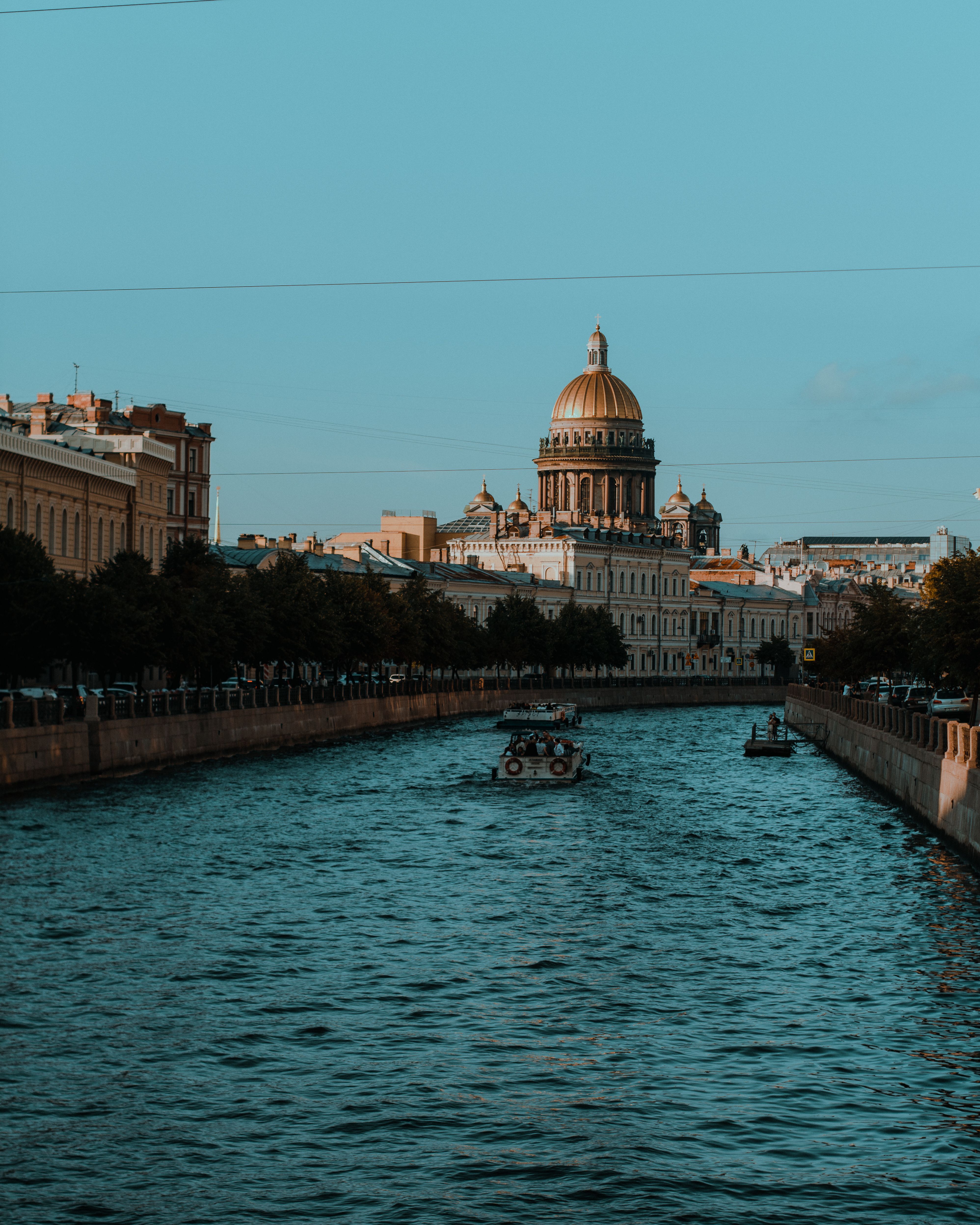
Water, domes and grand facades — the St Petersburg atmosphere we remember.
An optional morning canal cruise, then on to Moscow
Our final morning in St Petersburg included an optional canal cruise — a wonderful way to see more of the city's waterways and get a different perspective on all the palaces and buildings we'd already visited from land level.
Then it was off to Moscow Railway Station to board the Sapsan — Russia's high-speed train. The four-hour journey to Moscow is a journey in itself. Smooth, comfortable, fast, with fascinating Russian landscapes rolling past the window. It's a much more civilized way to travel between the two cities than flying.
By the time we arrived in Moscow, we already felt like seasoned Russia travellers. St Petersburg had changed how we saw the country — and Moscow was about to deliver a completely different kind of grandeur.
Day 1 — Arrival & First Impressions
Arrival in late afternoon from Vyborg. Hotel check-in at Hotel Sokos Vasilievsky. Evening walk around the Vasilievsky Island and the Neva River. First glimpses of the imperial grandeur of St Petersburg.
Day 2 — Central St Petersburg
Full sightseeing tour: Peter-Paul Fortress, Winter Palace, St Isaac's Cathedral, Church of the Bleeding Saviour and Nevsky Convent. Three separate world-class sites in one day. Afternoon canal exploration.
Day 3 — Peterhof & the Hermitage
Morning excursion to Peterhof Palace — Peter the Great's Grand Palace with the Grand Cascade of fountains and stunning parkland. Afternoon visit to the Hermitage Museum — three hours exploring one of the world's greatest art collections in the stunning Winter Palace.
Day 4 — Moscow Journey
Optional morning canal cruise through St Petersburg's waterways. Afternoon departure by Sapsan high-speed train to Moscow (four hours). Arrival in Moscow in the evening.
What would we do differently? Not much
- Give the Hermitage proper time. We had around three hours and still only scratched the surface.
- See the city from the water if your itinerary allows. The canals and the Neva are such a huge part of St Petersburg's character.
- Wear good walking shoes. This is a city made for wandering, and some of our strongest memories are simply of walking among the palaces, canals and grand streets.
- Leave room to take it in. The famous sights are extraordinary, but the atmosphere and architecture between them are a huge part of why we loved St Petersburg.
- Don't rush it. We spent several days here and still came away feeling there was far more to see.
Explore St Petersburg from home
Want another look around St Petersburg? Our friends at Drive From Home let you explore the city virtually — perfect for revisiting places you've been or getting a feel for somewhere before you travel.
Common questions
St Petersburg Travel FAQ
Continue exploring Russia
Explore the rest of Russia
A city we still talk about
We visited St Petersburg in 2018, and it remains one of the places that made the biggest impression on us. The palaces and churches are spectacular, but it was the whole atmosphere — the waterways, the grand streets, the history and the people we met — that made us love it. Whatever has changed since, those memories are ours, and St Petersburg remains one of our favourite cities.