County Limerick —
Castles, Culture & a Bit of Character
Medieval drama, riverside wanderings and a whole lot more than rugby.
Limerick sometimes gets overlooked in favour of Ireland's more famous tourist counties, and that's a pity, because there's a surprising amount to discover here.
From King John's Castle on the Shannon to the postcard-pretty streets of Adare, Limerick mixes fascinating history with lovely countryside and plenty of local character. Throw in ancient archaeological sites, one of Ireland's most unusual aviation museums, picturesque villages and some great walking routes, and you've the makings of a proper adventure.
Whether you've a day in the city or time to head out into the county, Limerick deserves more attention than it gets.
🏰 King John's Castle
Limerick's most iconic landmark stands on King's Island, guarding the River Shannon. This medieval fortress tells a story of centuries of sieges, conflict and shifting power.
Its exhibitions and surviving castle walls make an engaging introduction to Limerick's past, and the riverside view of the castle is one of the best-known sights in the city.
Why visit? Medieval history, architecture and family days out.
⛪ St Mary's Cathedral
Founded in the 12th century, St Mary's is one of Limerick's most important historic buildings. Its ancient stonework and monuments reflect centuries of history.
The peaceful interior is a lovely contrast to the bustle of the streets outside.
Why visit? Religious heritage, architecture and history.
🖼️ The Hunt Museum
In a historic building beside the Shannon, the Hunt Museum holds a wide-ranging collection of art, antiques and archaeological objects from many periods and cultures.
It's a rewarding stop for art and history lovers, and a great plan B when the weather isn't playing ball.
Why visit? Art, archaeology and rainy days.
🧺 The Milk Market
One of the city's favourite gathering places. The covered market hosts traders selling food, local produce and much more on market days, and it's the best place to feel Limerick's buzz.
Why visit? Food lovers, local produce and city life.
🏉 Thomond Park
Home of Munster Rugby and one of Ireland's most famous sporting venues. Even if you can't get to a match, there's a guided museum and stadium tour.
Why visit? Rugby fans and sporting heritage.
🏡 Adare
With its thatched cottages, historic buildings and attractive main street, Adare is one of Ireland's best-known heritage villages.
It's perfect for a relaxed stroll, some photos and a café stop, and the village has some interesting medieval and church landmarks too.
Why visit? Pretty villages, architecture, heritage and photography.
🪨 Lough Gur
Lough Gur is one of Ireland's most important prehistoric landscapes, with archaeology around the lake going back thousands of years.
Nearby, the Grange Stone Circle is the largest stone circle in Ireland and one of the area's best-known monuments. Come for the history and stay for the peaceful lakeside walks.
Why visit? Prehistory, archaeology and outdoor walks.
✈️ Foynes Flying Boat & Maritime Museum
In the flying-boat era, the little Shannon-side town of Foynes became a key stopping point for transatlantic air travel. The museum brings that remarkable chapter to life.
It's also where Irish coffee was famously invented. More on that in the legends section below.
Why visit? Aviation, maritime heritage and unusual Irish history.
🌳 Curraghchase Forest Park
Extensive woodland, walking trails and historic estate features make Curraghchase a lovely spot for a peaceful walk or a family afternoon. It's associated with the poet Aubrey de Vere, whose family estate it was.
Why visit? Woodland walks, nature and picnics.
🚵 The Ballyhoura Mountains
The Ballyhoura region offers some of County Limerick's best outdoor adventures, with forests, hills and big networks of walking and mountain-bike trails.
Why visit? Hiking, cycling, forests and active escapes.
A mix of free outdoor places and ticketed attractions, labelled so you can plan around them.
🔔 Glenstal Abbey
A Benedictine monastery near Murroe in beautiful wooded grounds. Day visitors can walk the avenues, visit the gift shop and attend services in the Abbey Church. The icon chapel can be seen on a guided visit.
🏰 Desmond Castle, Newcastle West
An important medieval site linked to the powerful Earls of Desmond. Its banqueting hall, with a restored oak minstrels' gallery, once hosted lavish feasts.
⛵ Glin
An attractive village on the Shannon Estuary, with maritime history and lovely surroundings.
🏚️ Askeaton
A historic town with impressive medieval remains, including Askeaton Castle and a Franciscan friary.
🌷 People's Park
A green and pleasant public park in Limerick city, ideal for a breather between sights.
🌉 The Three Bridges Walk
A riverside walking route that links several of Limerick's bridges, with great views of the Shannon and King John's Castle.
🎣 Castleconnell
A picturesque village on the River Shannon, known for its riverside setting and local heritage.
🧚 Knockfierna
A hill with walking routes, local folklore and poignant links to the Great Famine. It's also traditionally said to be home to the fairy king Donn Fírinne. See the legends section.
💎 Love this kind of find?
Our Hidden Ireland collection is where we keep the places most visitors drive straight past.
We've kept history and legend clearly labelled, because the best Irish stories are usually a bit of both.
⚔️ The Sieges of Limerick and the Treaty Stone
Limerick was at the centre of the Williamite War, withstanding sieges in 1690 and 1691. The war ended with the Treaty of Limerick in 1691, one of the defining moments in the city's history.
Tradition says the treaty was signed on the Treaty Stone, which now stands on a plinth across the river from King John's Castle. It's a small stone with a very big story.
🧚 The fairies of Knockfierna
Knockfierna is steeped in fairy lore. Local tradition says it's the home of Donn Fírinne, a fairy king of the otherworld, and stories of the 'good people' on the hill were passed down for generations.
We'd file these firmly under folklore, but it's a wonderful example of how landscape and storytelling go hand in hand in rural Ireland.
☕ How Irish coffee began
During the flying-boat era, Foynes was a busy stop on transatlantic routes. As the story goes, in the 1940s chef Joe Sheridan served cold, weary passengers coffee laced with Irish whiskey and topped with cream. When asked if it was Brazilian coffee, he reportedly replied, "No, that's Irish coffee."
It's a lovely reminder that a small Irish town played a part in international travel history.
👻 Fancy more Irish legends?
Our Friday Night Frights series explores ghost stories, myths and folklore from all over Ireland.
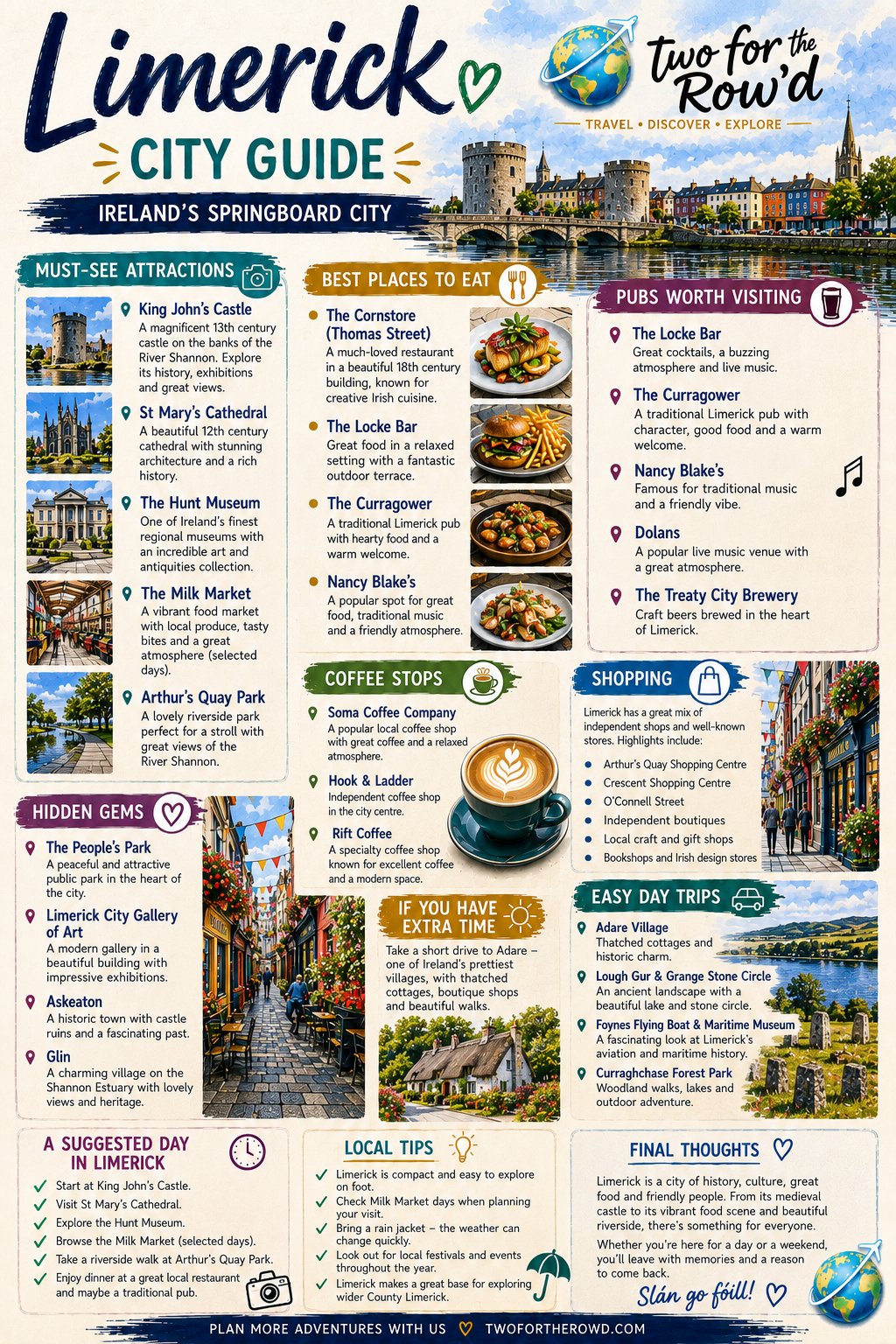
📋 Our Limerick city guide
Prefer everything on one page? Our Limerick city guide brings together the big sights, places to eat, pubs, coffee stops, shopping, hidden gems and easy day trips.
Tap the guide to open it full size, so you can save it to your phone or print it.
Three realistic days out, each focused on one part of the county.
🏰 Limerick city history day
- Morning: King John's Castle, then the Treaty Stone across the river.
- Late morning: St Mary's Cathedral.
- Afternoon: the Hunt Museum, then a riverside walk such as the Three Bridges.
- Bonus: fit in the Milk Market if you're there on a market day.
🏡 Adare and West Limerick
- Morning: Adare village.
- Midday: a walk in Curraghchase Forest Park.
- Afternoon: on to Newcastle West. Desmond Castle opens in summer only.
- Tip: allow time to enjoy each stop rather than rushing.
🪨 Ancient Limerick
- Morning: Lough Gur and its lakeside walks.
- Midday: the Grange Stone Circle nearby.
- Afternoon: continue south to the Ballyhoura countryside for a forest walk.
Prefer a guide, a ready-made tour or someone else to do the driving? These are good places to start:
Search current Limerick experiences, from castle visits to historical walking tours.
Organised trips that take in the west and mid-west, so you can leave the planning to someone else.
Disclosure: GetYourGuide, Klook and TourRadar links are affiliate links. If you book through them, we may earn a commission at no extra cost to you. Tours on TourRadar are our picks, not trips we've taken ourselves. Availability and prices change, so always check the provider's page before booking.
Castles, local history, rugby, archaeological sites, pretty villages and countryside.
Limerick city is walkable. A car is useful for Adare, Lough Gur, Foynes and the rural attractions.
One day for the city highlights; two to three days to mix city and county.
Spring to autumn for outdoor exploring, but the city's attractions work all year round.
Riverside walks, People's Park, the Treaty Stone, village wanders and woodland walks.
The Hunt Museum, King John's Castle's exhibitions and the Foynes museum.
Opening times, seasons and access arrangements change, so please check official websites before you travel. For general visitor information, see Limerick.ie and Discover Ireland.
Limerick sits right between the west and the south, so it's easy to combine with:
Slán go fóill, and safe travels! — Nicola & Podge