Budapest —
grand old Europe, thermal baths and ruin bars
We spent three nights in Budapest and it immediately became one of our favourite European city breaks. A city of extraordinary grandeur split in two by the Danube — the grand boulevards and energy of Pest on one side, the castle hill and quiet elegance of Buda on the other. The Parliament building lit up at night, Buda Castle glowing from the hill, the Chain Bridge, Fisherman's Bastion, the Gellért thermal baths, ruin bars that felt like nowhere else in Europe, food that was brilliant and cost almost nothing. Budapest in 2009 had a faded elegance that was completely intoxicating.
.jpg)
.jpg)
.jpg)
.jpg)
.jpg)
Faded elegance, cheap beer and one of Europe's great cities
Budapest in 2009 was at a particular moment — Eastern Europe had joined the EU, cheap flights had opened it up to Irish and British weekend trippers, and the city had this extraordinary quality of being simultaneously grand and slightly rough around the edges. The communist era had left its marks on the outer districts but the centre was magnificent — Austro-Hungarian imperial architecture on a scale that rivalled Vienna, thermal baths that had been functioning for centuries, a river that split the city into two completely different personalities.
We stayed on the Pest side, which is where most visitors naturally gravitate — the flat, busy, commercial heart of the city with its grand boulevards, the famous ruin bars, the restaurants and the nightlife. Buda across the river felt quieter, more residential, more atmospheric at night — the castle on the hill above, the narrow streets below, the funicular creaking up the steep slope.
And the price of everything. In 2009, Budapest was almost absurdly affordable for Irish visitors. Enormous portions of goulash soup for almost nothing. Beer cheaper than at home by a factor of three or four. Dinner for two including wine for less than the price of a round of drinks in Dublin. The combination of extraordinary beauty, fascinating history and genuinely cheap living made it one of the best value city breaks in Europe.
Budapest's unmissable landmarks
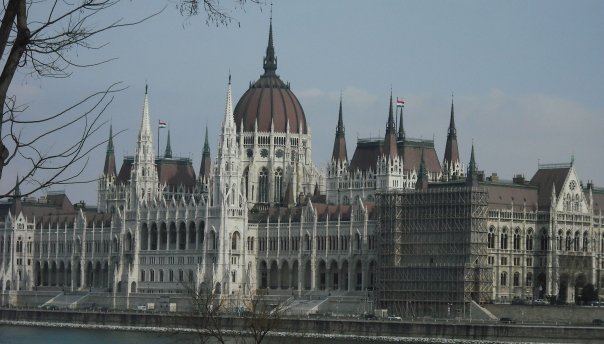
The Hungarian Parliament Building is simply one of the most extraordinary buildings in the world — a neo-Gothic masterpiece on the Pest bank of the Danube, 268 metres long, topped with a central dome and 96 towers, built between 1885 and 1904 and still the third-largest parliament building on earth. From across the river on the Buda side it is genuinely breath-taking — and at night, lit up and reflected in the Danube, it is one of the most beautiful urban views in all of Europe. Everyone photographs it. No photograph does it justice.
The Széchenyi Chain Bridge is Budapest's most famous bridge and one of the most recognisable bridges in Europe — a beautiful suspension bridge connecting Pest to the foot of Castle Hill in Buda, opened in 1849 and rebuilt after the Second World War. Walking across it gives you the full sense of the Danube's width and the extraordinary views in both directions — the Parliament upstream, the castle hill behind you. At night, lit up, it is magnificent.
Buda Castle sits on a hill above the Danube and the historic Castle District around it is one of the most atmospheric areas in the city — cobbled streets, baroque townhouses, little restaurants and the sense of a medieval city that survived everything the 20th century threw at it. You can walk up via steep paths from the Chain Bridge end or take the historic Castle Hill Funicular — a short but very fun ride that deposits you at the top with views already opening up over Pest below.
Fisherman's Bastion is one of those places that looks almost too pretty to be real — a neo-Romanesque terrace of white towers and walkways on the Buda hill, built at the turn of the 20th century as a decorative viewing platform. The views from it over the Danube, the Chain Bridge and the Parliament on the opposite bank are extraordinary — especially at sunrise or in the blue hour before dark. It is genuinely one of the most beautiful viewpoints in Europe.
St Stephen's Basilica is the largest church in Budapest — a grand neoclassical building that took 54 years to complete and can hold 8,500 people. The dome offers brilliant views over central Pest. The streets around it — Andrássy Avenue, the grand boulevard that runs from the centre to Heroes' Square — are lined with extraordinary Austro-Hungarian architecture, now filled with restaurants, cafés and shops.
The Danube at night — one of Europe's great views
Budapest at night is something else entirely. The Parliament building lit up from the water, Buda Castle glowing gold on the hillside above, the Chain Bridge illuminated against the dark sky — the whole city transforms after sunset into one of the most beautiful and atmospheric urban landscapes in Europe.
We spent one evening simply wandering the Danube promenade on the Pest side — the long riverside walk with views across to the illuminated Buda hillside — and it was one of the most memorable evenings of the trip. No particular destination, no agenda, just walking along the river as the city glowed around us.
The Danube evening cruise was one of the signature Budapest experiences even back then — typically a couple of hours on the water with a drink included, sailing past the Parliament, under the bridges and back, seeing the whole illuminated panorama from the river. The view of the Parliament from the water at night is extraordinary — and the cruise is excellent value.
Budapest's thermal baths — a 2,000-year-old tradition
Budapest sits on a geological fault line with over 120 natural hot springs beneath the city — a fact that the Romans discovered and the Ottomans developed into the bathing culture that still defines the city today. Visiting at least one of Budapest's thermal baths is not optional — it is the single most uniquely Budapest experience available and something you will find nowhere else in Europe on this scale.
The Gellért Baths are housed in the extraordinary Art Nouveau Gellért Hotel at the foot of Gellért Hill — one of the most beautiful buildings in Budapest — and the baths themselves match the grandeur of the exterior. The main indoor pool is stunning — high vaulted ceilings, ornate tilework, columns and the warm geothermal water filling a space that looks more like a cathedral than a swimming pool. The outdoor terraces and wave pool add to the experience. Going to the Gellért Baths is one of those genuinely special experiences that stays with you for years.
The thermal bath experience in Budapest is about more than just swimming — it is about soaking in water that has been rising through limestone from deep underground for thousands of years, in buildings designed to celebrate that fact, surrounded by locals who have been doing exactly this for generations. It is slower, more meditative and more memorable than any spa anywhere in Western Europe.
Budapest's ruin bars — nothing like them anywhere in the world
Budapest's ruin bars are one of the most genuinely creative and original nightlife concepts in the world — bars built in abandoned buildings and derelict courtyards in the Jewish Quarter of the Pest 7th district, furnished with salvaged furniture, decorated with mismatched art and random objects, and somehow more atmospheric and more enjoyable than any polished cocktail bar in any city you have ever visited.
The scene began in the early 2000s as genuine grassroots creativity — young Hungarians taking spaces that had been abandoned since the communist era and turning them into something completely their own. By 2009, when we visited, it was becoming known across Europe but was still raw and genuinely alternative. Random chairs from different decades. Old bicycles hanging from ceilings. Graffiti covering every surface. A bar stocking every Hungarian spirit you have never heard of. And a courtyard full of people from every country in Europe having the time of their lives.
Szimpla Kert was the most famous even then — the original and still the best. But the whole neighbourhood had bars in similar styles and wandering between them was one of the great Budapest experiences.
Heroes' Square, City Park and more of Budapest
Heroes' Square at the end of Andrássy Avenue is one of the grandest public spaces in Europe — a vast plaza dominated by the Millennium Monument, a 36-metre column topped by the Archangel Gabriel, flanked by colonnades featuring statues of Hungarian chieftains and kings spanning a thousand years of history. It was built to celebrate Hungary's 1,000th anniversary in 1896 and it delivers the grandeur that occasion demanded.
Just behind Heroes' Square in City Park, Vajdahunyad Castle is one of Budapest's most charming surprises — a romantic lakeside castle that looks like it was lifted from a Transylvanian valley and placed in a park. It was built for the 1896 millennium exhibition, incorporating architectural styles from different periods of Hungarian history in one extraordinary building. Reflected in the park lake it is genuinely beautiful.
The Shoes on the Danube Bank is one of the most powerful and moving memorials we have encountered anywhere in Europe — sixty pairs of iron shoes placed on the edge of the Danube bank, marking the spot where Jewish people were forced to remove their shoes before being shot into the river by Arrow Cross militiamen in 1944 and 1945. Simple, quiet and devastating. Stand there for a few minutes and it stays with you for a very long time.
The Central Market Hall is Budapest's largest and most famous market — a stunning late-19th century building filled with food stalls, vegetable sellers, butchers, spice merchants and, on the upper floor, Hungarian folk art and souvenir stalls. The paprika display alone is worth the visit — every variety and shade of Hungary's most important spice, sold in beautifully designed tins and packets. Brilliant for food shopping, brilliant for atmosphere.
Hungarian food — hearty, paprika-rich and brilliantly cheap
Budapest in 2009 was extraordinarily affordable by Irish standards — and the food was not just cheap but genuinely brilliant. Hungarian cuisine is hearty, warming and built around a handful of extraordinary ingredients — paprika above all, but also sour cream, beef, pork and the flavours of Central European cooking that you simply don't find anywhere else.
Hungary's national dish — rich paprika beef soup. Warming, deeply flavoured and completely delicious.
Chicken in a creamy paprika sauce, usually served with egg noodles. One of the great Hungarian comfort dishes.
Kürtőskalács — spiral pastry coated in sugar and cinnamon, cooked over charcoal. Budapest's essential street food.
Enormous breaded cutlets — Central European schnitzel culture at its finest, served with pickles and potato.
Cheap, cold and plentiful. In 2009 a pint cost a fraction of the price at home. Some things have changed less than others.
Hungary produces the world's finest paprika — it appears in almost everything and the market hall sells it in beautiful tins.
The moments that stood out most
From the Buda bank or from the river on an evening cruise — the Hungarian Parliament lit up and reflected in the Danube is one of the most beautiful urban views in all of Europe. Nothing prepares you for the scale and the grandeur of it.
White towers, fairy-tale architecture, views over the Danube and the Parliament below. One of those places that looks like it was designed to be photographed — and is even better in person than in any photograph.
Soaking in geothermal water in an Art Nouveau masterpiece. One of the most uniquely Budapest experiences available and something you will find nowhere else in Europe on this scale.
Mismatched furniture, graffiti walls, abandoned courtyards turned into extraordinary bars. The Budapest ruin bar scene in 2009 was raw, creative and completely unlike anything in Western Europe.
Sixty pairs of iron shoes on the riverbank — a simple, devastating memorial to the victims of 1944. One of the most moving memorials we have encountered anywhere in Europe.
Seeing the whole illuminated Budapest panorama from the river — Parliament, Buda Castle, the Chain Bridge — is the signature Budapest experience. On a warm evening with a drink in hand it is genuinely magical.
Take a virtual drive around Budapest
Want to revisit Budapest — or get a feel for the Hungarian capital before you go? Drive From Home lets you virtually explore the streets of Budapest and see the city from the road, from its grand architecture and Danube views to the neighbourhoods beyond the main sights. It's a brilliant companion to our own Budapest memories and travel guide.
Book a Budapest tour through TourRadar
Budapest rewards proper exploration — the Jewish Quarter, the communist history, the castle district and the thermal bath culture all have depth that a good guide brings to life completely. TourRadar has brilliant Budapest and Hungary options, from weekend city breaks to longer Central European itineraries.
Disclosure: This is an affiliate link. If you book through it we may earn a small commission at no extra cost to you.
Book Budapest activities — GetYourGuide
Danube evening cruises, thermal bath entry with skip-the-line, Buda Castle guided tours, communist history walking tours, ruin bar pub crawls, Parliament building tours and Heroes' Square excursions — book in advance, especially the Parliament tour and thermal baths.
Disclosure: If you book through this link we may earn a small commission at no extra cost to you.
Book Budapest activities on Klook
Klook has a great range of Budapest day tours, thermal bath packages, river cruises and city experiences — brilliant for booking individual activities around your stay.
Disclosure: This is an affiliate link. If you book through it we may earn a small commission at no extra cost to you.
Common questions
Budapest FAQ
What to pack for Budapest
Budapest packing essentials
City walking, thermal baths, evening cruises and ruin bars — Budapest is a city break destination that rewards comfortable, practical packing.
Hungary uses EU roaming rules for EU visitors but an eSIM gives you seamless data for maps and navigation across the city.
View on Amazon →Budapest involves enormous amounts of walking — cobblestones in the castle district, long promenade walks and the Andrássy Avenue boulevard. Good shoes are essential.
View on Amazon →You cannot visit Budapest without going to at least one thermal bath — bring swimwear, a towel and a lock for the changing room locker.
View on Amazon →Long days out across Buda and Pest — keep your phone charged for navigation, photos and finding the right ruin bar.
View on Amazon →For city days — castle district, market hall, river cruise. Keep your essentials close and your hands free for chimney cakes.
View on Amazon →Hungary uses European two-pin plugs — a universal adaptor covers all your devices.
View on Amazon →Disclosure: These are Amazon affiliate links. If you buy through them we may earn a small commission at no extra cost to you.
More of our Central European guides
Budapest sits at the heart of one of Europe's most rewarding travel regions — read our other nearby guides below.
Ten days in the City of a Hundred Spires — robotic bar, ice bar, beer bath, medieval dinner and Prague Castle.
Read the Prague guide →Mozart, mountains and music — Vienna and Salzburg share Budapest's Austro-Hungarian imperial heritage.
Read the Austria guide →Bran Castle, Peleș Castle, thermal spas and brilliant value — another Central European city that surprises everyone.
Read the Bucharest guide →Planning your own Budapest trip?
Book the Parliament tour, go to the Gellért Baths, take the evening cruise, eat goulash soup until you can't move and find Szimpla Kert after dark. Budapest will absolutely not disappoint.
Affiliate disclosure: if you book through our links we may earn a small commission at no cost to you. We only recommend experiences we've done ourselves.