Oxford —
England's most iconic university city where centuries of academic heritage, stunning architecture and literary legacy create an unmistakable atmosphere
Oxford is one of the world's most famous university cities and arguably England's most intellectually significant location. The University of Oxford is not a single campus but a collegiate university with 39 constituent colleges, each with its own character, history and architecture. The city centre is dominated by university buildings — medieval colleges, grand libraries, ornate quadrangles and countless spires creating a landscape unlike anywhere else. The Bodleian Library is one of Europe's most significant libraries. The Radcliffe Camera is an architectural masterpiece. Christ Church is both architecturally stunning and famous for Harry Potter filming. The covered market offers character and practicality. Beyond academia, Oxford is a centre of literary heritage — J.R.R. Tolkien, C.S. Lewis and Lewis Carroll all had deep connections to the city. Punting on the rivers offers a quintessentially Oxford experience. The city is compact and walkable with the historic centre easily explored on foot. Oxford works as a day trip from London (roughly an hour by train) or as a destination in its own right for deeper exploration. Whether you're interested in academia, architecture, literary history or simply experiencing one of England's most distinctive cities, Oxford rewards thorough exploration.
We have visited Oxford as part of our travels through England. While our specific memories of which colleges, attractions or restaurants we explored have faded — the detail of those experiences isn't sharp enough to reliably recount — the sense of Oxford's distinctive character and architectural grandeur remains with us. It's a city that stays with you once you've been there. This guide draws on comprehensive research and knowledge of Oxford rather than detailed personal recollection of specific experiences. We recommend exploring the city thoroughly with the information below as your guide.
From Saxon settlement to world university
Oxford began as a Saxon settlement at the crossing of the Thames and Cherwell rivers. The city's strategic location made it important for commerce and defence. The Norman Conquest brought significant development. During medieval times, Oxford became increasingly important.
The University of Oxford developed gradually. The earliest evidence of teaching at Oxford dates to around 1096. By the 12th century, organized teaching was occurring. The university developed as an association of scholars and teachers rather than as a single institution — this collegiate structure has been fundamental to Oxford's character ever since. University College traces its foundation to 1249, though colleges became increasingly important over subsequent centuries.
By the medieval period, Oxford was established as one of Europe's most significant intellectual centres alongside Paris and Bologna. The university attracted scholars from across Europe. Over centuries, Oxford continued to develop — new colleges were founded, libraries expanded, and the city's physical landscape was continuously shaped by university building and development.
The modern era has continued Oxford's evolution. The city expanded beyond the medieval core while preserving historic areas. Today, Oxford balances its role as a historic university city with contemporary academic research at the highest level.
A federation of colleges, not a single campus
A crucial thing to understand about Oxford is that it's not a single unified campus like many modern universities. Instead, the University of Oxford is a collegiate university with 39 constituent colleges, each with its own governance, facilities, accommodation and character. Students are members of their individual college as well as the university.
Historically, the collegiate system was essential — students lived in colleges, received some teaching within colleges, and attended lectures at the university. This structure has been preserved over centuries and remains central to Oxford's identity and operations.
For visitors, this means that exploring Oxford isn't one experience but many — each college offers different architecture, different atmospheres, different histories. Some colleges welcome visitors and allow access to courtyards and chapels; others are more restricted. Many of Oxford's most famous and architecturally significant buildings belong to individual colleges rather than to the university as a whole.
Notable colleges worth exploring
With 39 colleges, comprehensive coverage is impossible in a guide. However, several colleges are particularly significant architecturally, historically or for visitor interest:
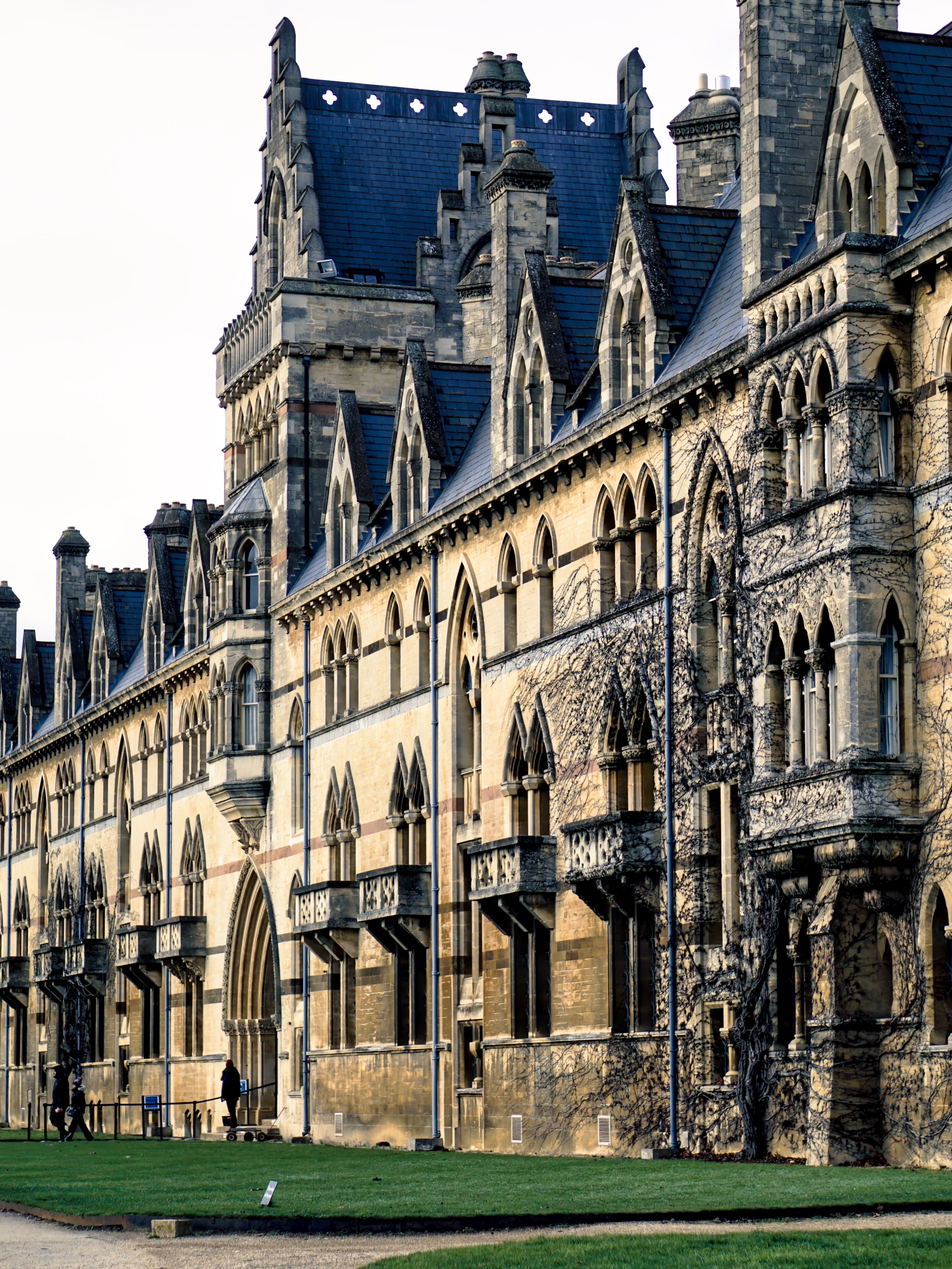
Christ Church: One of Oxford's most famous and visually striking colleges. Founded 1546, Christ Church features impressive architecture, a grand quadrangle (Tom Quad) and a cathedral. Harry Potter was filmed in various Christ Church locations including the staircases and dining hall (though the fictional Hogwarts was not literally filmed exclusively in one location).
Magdalen College: Founded 1458, Magdalen features a distinctive tower (Magdalen Tower) which is iconic in Oxford's skyline. The college sits on the banks of the Cherwell and offers beautiful gardens and river views.
Balliol College: One of Oxford's oldest colleges, Balliol was founded in the 13th century. The college has educated numerous famous alumni. Balliol features a classic Oxford courtyard and architectural elements from various periods.
Trinity College: Founded 1554, Trinity has a beautiful garden and compact layout. The college's garden is notable for its scale and beauty.
Brasenose College: Founded 1509, Brasenose sits near Radcliffe Camera and features classic Oxford architecture.
Merton College: One of Oxford's oldest colleges, founded 1264. Merton has a historic library and the college is known for its academic tradition.
Many colleges have restrictions on public access — some allow visiting at certain times or certain areas, others have limited visiting. Checking current visiting information is essential before planning specific college visits.
Oxford's most iconic building
The Radcliffe Camera is Oxford's most instantly recognizable building and one of England's most significant architectural achievements. Built between 1737-1749, the Radcliffe Camera is an extraordinary example of English Palladian architecture. The building is circular with a distinctive dome, creating an unmistakable silhouette.
The building was designed as a library and originally housed scientific works. Today the Radcliffe Camera is part of the Bodleian Library system and functions as a reading room for scholars. The building's exterior is accessible for viewing and photography; entry to the interior typically requires academic or library access.
The Radcliffe Camera sits at the heart of Oxford's historic core and is surrounded by other significant buildings. The building is best appreciated from the surrounding streets and squares — views from Catte Street and Radcliffe Square are particularly striking.
One of Europe's greatest libraries
The Bodleian Library is one of Europe's most significant research libraries and one of Oxford's most important institutions. The library was founded in 1602 by Sir Thomas Bodley and has grown continuously since. The Bodleian Libraries hold vast collections of books, manuscripts and other materials and form one of the UK's major research-library systems.
The Bodleian Library's historic buildings are impressive — the Old Schools Quadrangle features the original library buildings and is architecturally significant. The Clarendon Building and various other structures house the library's collections.
Visitors can join official tours of selected historic Bodleian spaces; working reading rooms are primarily for registered readers. A tour of the library provides insight into Oxford's academic importance and the library's history. The library's exhibitions often showcase important manuscripts and historic works.
Distinctive Venetian-inspired bridge
The Bridge of Sighs is one of Oxford's most photographed landmarks. The bridge connects two buildings of Hertford College over New College Lane. Built in 1914, the bridge is designed in a Venetian style (inspired by the famous Bridge of Sighs in Venice). The name evokes the romantic notion of sighing students, though the historical accuracy of this name is disputed.
The bridge is best viewed and photographed from below in New College Lane. The surrounding area is picturesque and the bridge fits perfectly within Oxford's architectural landscape despite being relatively modern compared to other colleges.
Oxford's most famous college
Christ Church is one of Oxford's best-known colleges. Founded in 1546 by King Henry VIII, The college is architecturally stunning, featuring Tom Quad (one of Oxford's largest and most impressive courtyards), the Cathedral, and numerous grand buildings.
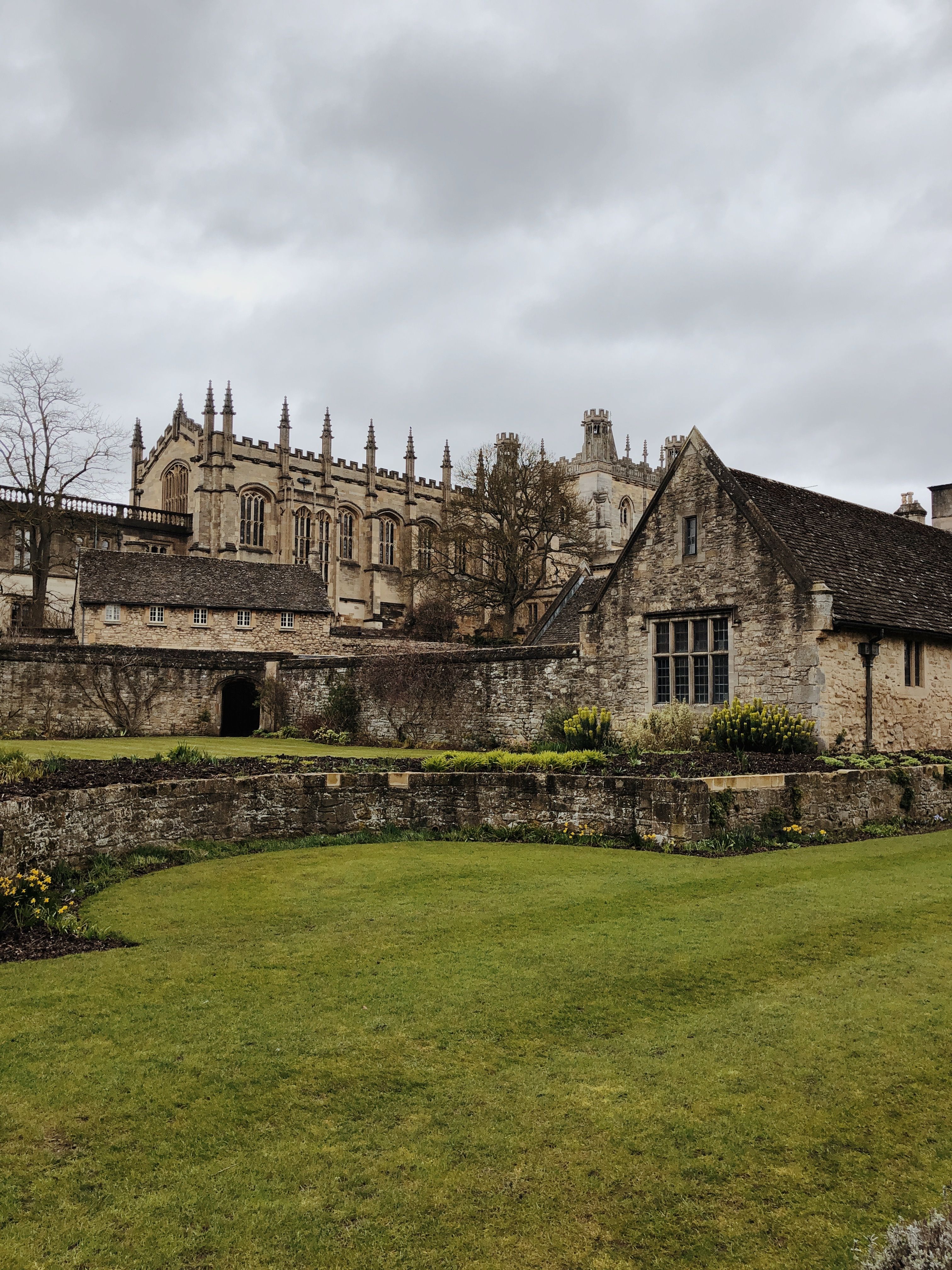
Christ Church Cathedral is one of England's smaller cathedrals and combines Christ Church's chapel and the cathedral in a unique arrangement. The cathedral features impressive architecture and stained glass.
Harry Potter filming: Various Harry Potter films used locations at Christ Church for filming. The staircase at Christ Church was used in the films, while its Great Hall helped inspire the look of Hogwarts' Great Hall rather than serving as the principal filming set for it. However, Hogwarts as depicted in the films was not filmed in a single location — various Oxford and other locations were used. Christ Church's connection to Harry Potter has made the college one of the most visited tourist sites in Oxford, though visitors should be respectful of the college's primary function as an active academic institution.
Christ Church allows visitor access to certain areas (quadrangle, cathedral) during designated hours. Access details and pricing vary — checking current information is essential.
Oxford's most important museum
The Ashmolean Museum is Oxford's most significant museum and one of England's most important. Founded in 1683, the Ashmolean is one of the world's oldest museums. The museum holds extensive collections of archaeology, classical antiquities, Islamic art, East Asian art, paintings and decorative arts.
The museum's building is impressive — the current building dates from the 19th century and features grand architecture. The collections are remarkable — Egyptian mummies, classical sculptures, Renaissance paintings, and objects from across human history and geography.
The Ashmolean is free to enter (though donations are welcome) and offers comprehensive overview of human cultural heritage. A single visit cannot cover everything — focusing on particular areas of interest or periods is sensible.
Medieval castle and historic prison
Oxford Castle dates from 1071 and represents one of the oldest structures in Oxford. The castle was built by Norman forces after the Norman Conquest. Over centuries, the castle served various functions — military fortification, royal residence, and eventually a prison.
The castle grounds are now open to visitors. The site includes remains of the original Norman structures, medieval towers, and later buildings. The castle offers views across Oxford from elevated positions. The prison area provides interpretation of Oxford's legal and penal history.
Historic marketplace and contemporary gathering place
Oxford's Covered Market dates from 1774 and remains a functioning market and gathering place. The market is covered (hence the name) and features numerous stalls selling food, crafts, flowers and various goods. The market is vibrant and popular with both locals and tourists.
The Covered Market is an excellent place to experience Oxford's contemporary daily life rather than exclusively tourist sightseeing. Various food vendors, cafes and restaurants operate within the market. The market's covered structure provides shelter and creates a distinctive atmosphere.
Walking Oxford's streets
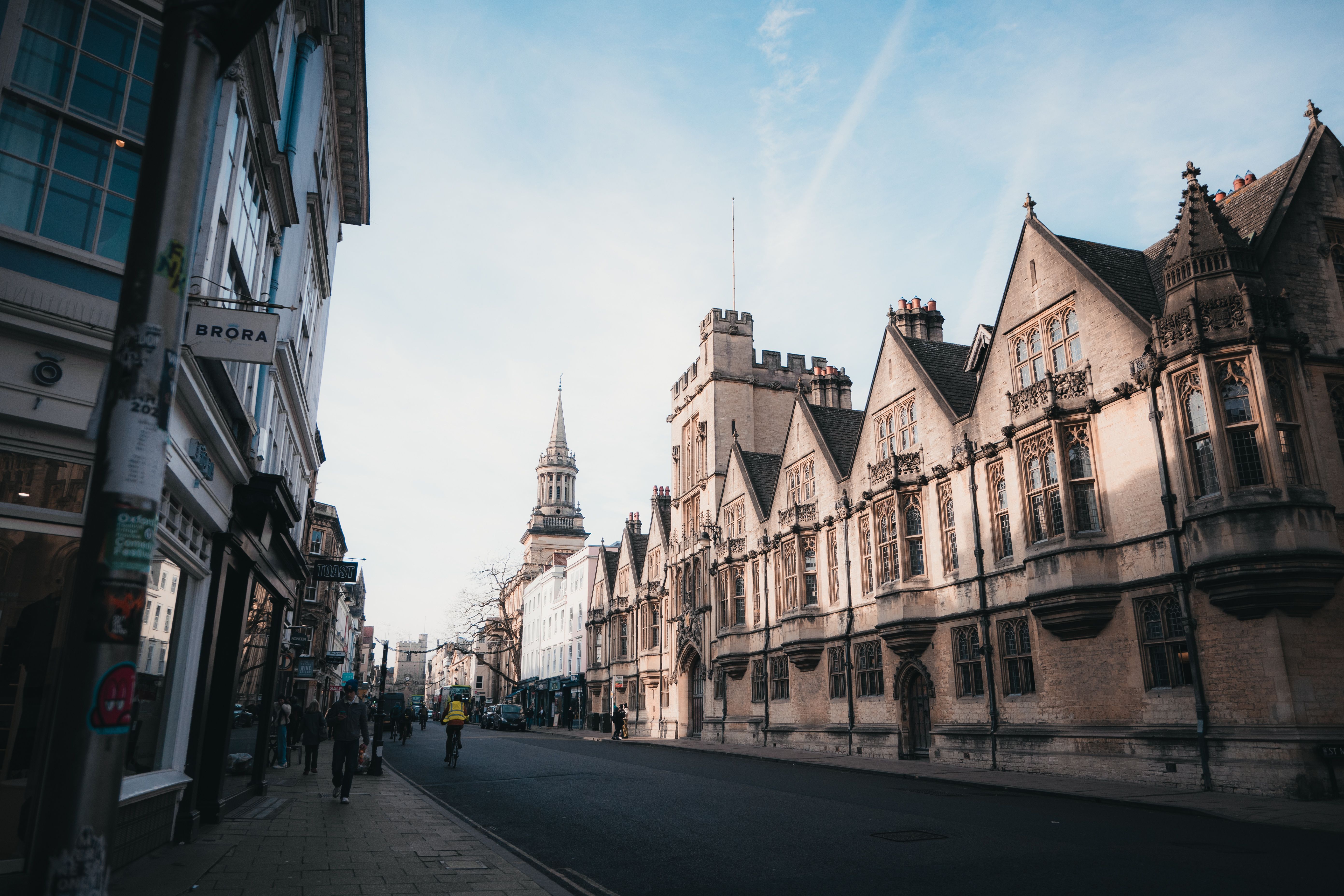
Beyond specific attractions, Oxford's greatest appeal is its overall architectural character and atmosphere. The historic city centre is relatively compact and best explored on foot. Walking through Oxford's streets reveals constantly changing views — medieval lanes, grand university buildings, courtyards, squares and unexpected gardens.
Key streets and squares for walking include: Catte Street (featuring Radcliffe Camera and other buildings), Broad Street (with its historic buildings and shops), High Street (one of England's most famous streets with continuously interesting architecture), and various lanes and alleys connecting the main thoroughfares.
The architecture spans centuries — medieval buildings, Renaissance expansions, Georgian development, Victorian institutional buildings, and modern additions blend throughout. This layering of periods creates Oxford's distinctive character.
A city that inspired famous authors
J.R.R. Tolkien: Tolkien studied at Oxford and later taught at the university for decades. His time in Oxford influenced his work — the city's architecture, particularly the Bodleian Library and various colleges, influenced the imagined worlds of Middle-earth. Tolkien was a fellow at Pembroke College and later Merton College. Tolkien groups (called the Inklings) met in Oxford pubs and discussed literary work. Tolkien's papers are held at Bodleian Library.
C.S. Lewis: Lewis studied at Oxford and later taught at the university. Lewis was a fellow at Magdalen College where he lived for many years. Lewis' time in Oxford influenced his literary work including the Chronicles of Narnia. Lewis was part of the Inklings group with Tolkien and other Oxford writers and academics.
Lewis Carroll: Carroll (Charles Dodgson) studied at Oxford and was a fellow of Christ Church for decades. He lived and worked in Oxford. Carroll's connection to Christ Church is particularly strong — he taught mathematics there. While the factual connection between Oxford and Alice in Wonderland is debated (Carroll invented many elements), his Oxford surroundings influenced his work and the city's appearance in Victorian Oxford connects to the fantastical nature of Carroll's imagination.
Other Oxford connections include Philip Pullman (author of His Dark Materials, whose fictional Oxford parallels are influenced by the real city), Dorothy L. Sayers, and many others. Oxford's role in English literary history is profound — the city has inspired, shaped and been inhabited by significant writers across centuries.
Filming locations and inspiration
Oxford has genuine connections to Harry Potter filming. Various films used Oxford locations, particularly Christ Church (staircases, dining hall, courtyards) and the Bodleian Library (cloisters, exteriors). However, it's important to note that Hogwarts as depicted in the films was not filmed in a single location — various film sets, studios, and multiple real-world locations across England and Scotland were used.
Oxford's real appeal for Harry Potter fans is experiencing the architecture and settings that influenced the visual aesthetic of the films. The Gothic architecture, the colleges, the library, the courtyards and the overall atmosphere of Oxford clearly influenced how the filmmakers depicted a magical university.
Visiting film locations at Oxford is worthwhile for the architecture and history rather than expecting to see "Hogwarts" — the real Oxford is more interesting than any fictional version.
A quintessential Oxford experience
Punting is quintessentially Oxford — propelling a flat-bottomed boat using a pole along the rivers (Cherwell and Thames). Punting is a traditional Oxford activity with historical roots in the city's river geography. Various punt rental companies operate from different locations, primarily around the Botanic Garden and University Parks.
Punting is accessible for visitors — rental operators provide instruction for beginners. The activity is peaceful and offers a different perspective on the city. The rivers pass under bridges, alongside meadows and through scenic areas. Popular punting destinations include the Botanic Garden (south of the city centre), Magdalen Bridge area and upstream toward Godstow.
Punting is weather-dependent — suitable for spring and summer. The activity is moderately physical (propelling the pole requires technique and strength) though recreational and leisurely. Competitive punting and racing (traditional among Oxford students) is a different activity primarily of academic interest.
Book Oxford experiences
Museums, tours, colleges and activities across Oxford.
Disclosure: If you book through these links we may earn a small commission at no extra cost to you.
Explore Oxford and England with TourRadar
If you'd prefer to explore Oxford as part of a guided tour, TourRadar has options ranging from focused Oxford tours to multi-day England explorations that include Oxford alongside other destinations.
Disclosure: Affiliate link — we may earn a small commission if you book.
Virtual driving and travel experience
Drive From Home offers a virtual driving experience through Oxford, allowing you to explore the city's streets, colleges, historic buildings and surrounding areas from home. This is an excellent way to familiarize yourself with Oxford's layout before visiting or to experience the city virtually if travel isn't possible.
One day in Oxford (possible as a day trip from London)
Morning: Arrive in Oxford by train from London (roughly 1 hour). Head to Radcliffe Camera and surrounding area. Explore the Bodleian Library exterior and Old Schools Quadrangle. Walk through historic streets to Christ Church, exploring the quadrangle and cathedral if access is available.
Midday: Visit the Ashmolean Museum or explore additional colleges (Magdalen, Balliol or Trinity depending on interest). Have lunch at Covered Market or a local restaurant.
Afternoon: Punt on the Cherwell if time and interest allow, or continue exploring colleges and streets. Visit Bridge of Sighs at Hertford College. Explore High Street and surrounding lanes.
Evening: Depart by train to London or have dinner in Oxford before returning. A single day captures Oxford's essential character but feels rushed — staying overnight is preferable.
Two days in Oxford
With two days, you can explore colleges thoroughly, visit the Ashmolean Museum properly, experience punting on the rivers, walk Oxford's various streets and discover quieter areas beyond tourist focus. Two days allows staying in Oxford without constant rushing and experiencing the city's character more deeply. Evening walks and visiting local pubs or bookshops provides authentic Oxford experience.
Minimum: A single day from London (roughly 6-8 hours) works for capturing Oxford's essential highlights — Radcliffe Camera, Bodleian, Christ Church, a walk through the historic streets. It's rushed but feasible.
Ideal: Two nights/two days in Oxford allows comfortable exploration without constant rushing. You can visit colleges, museums, punt on the rivers, experience the city's atmosphere and genuinely understand Oxford's character. This feels like a complete Oxford visit.
Extended: Three or more days in Oxford lets you explore beyond tourist focus, visit quieter colleges, experience Oxford's contemporary life (music venues, bookshops, pubs), take longer walks along the rivers, visit nearby attractions, and develop real understanding of Oxford as a living city rather than a museum.
Oxford by season
Spring (March-May): Pleasant weather, flowers blooming, fewer crowds than summer. Academic term is occurring (students are present) creating authentic Oxford atmosphere. Generally good time for comfortable exploration.
Summer (June-August): Warmest, busiest and most crowded. Academic term ends and tourists peak. Weather can still be changeable. Punting is especially popular in the warmer months. Peak season pricing applies. Streets and colleges are crowded.
Autumn (September-October): Often considered ideal. Weather pleasant, crowds thin out after summer. Academic term begins (students return, creating authentic atmosphere). Visitor levels may ease after the summer peak, although prices vary. Good balance of weather, tourism levels and academic activity.
Winter (November-February): Cold and wet. Very quiet with fewer tourists. Academic term occurs but shorter hours/less activity. Atmospheric in an austere way. Accommodation can sometimes be cheaper outside peak periods, although rates vary. Historical architecture looks particularly dramatic in winter light.
Transport options
From London: Oxford is roughly 60 miles northwest of London. Train is the most convenient option — direct trains from London Paddington station take roughly 1 hour. Trains run frequently throughout the day. This is the ideal way to reach Oxford from London for a day trip.
By coach: Long-distance coaches connect London to Oxford and other UK cities. Generally cheaper than trains but slower.
By car: Oxford is accessible via major roads from London (M40 motorway). Driving from London takes roughly 1-1.5 hours depending on traffic. Parking in Oxford is available but can be expensive and limited during peak times.
By air: Oxford has limited air connections. Nearest major airports are London (Heathrow, Gatwick, Stansted — all roughly 1-2 hours by car/train/coach) or Birmingham Airport. Most visitors fly to London and travel to Oxford.
Transport within the city
On foot: This is the best way to explore Oxford. The historic city centre is compact and most attractions are within walking distance. Walking reveals the city's layered character and allows discovering quieter areas. Comfortable shoes are essential.
Buses: Local buses connect different areas and outlying neighborhoods. Reasonable coverage and affordable fares. Useful for reaching areas beyond the walking city centre.
Taxis: Available for point-to-point travel. Useful if carrying luggage or reaching specific accommodations.
Parking: Car parking in central Oxford is limited and can be expensive. Park-and-ride facilities exist outside the city centre if arriving by car. Walking/public transport is more practical than driving within the city.
Punting: Accessible from various riverside locations. Traditional Oxford activity offering unique perspective on the city and countryside.
Find your Oxford accommodation
Hotels, guest houses and apartments across Oxford.
Disclosure: If you book through these links we may earn a small commission at no extra cost to you.
Choosing where to stay
City centre/near High Street: Most convenient for exploring Oxford's attractions. Walking distance to colleges, Radcliffe Camera, Bodleian, Ashmolean. Can be noisier with street activity. Premium pricing.
Covered Market area: Central location with market character. Good for experiencing Oxford's daily life. Close to attractions.
Botanic Garden/south of centre: Quieter area with access to River Cherwell and Botanic Garden. Still walkable to city centre but offers quieter atmosphere.
Outside city centre: Various neighborhoods offer local character and better value. Bus access to city centre is convenient. Better for experiencing Oxford beyond tourist focus.
Budget: Oxford's accommodation is moderately to expensively priced. University city and popular tourist destination mean prices are higher than many English cities. Summer and weekends command premium pricing. Off-season (winter, weekdays) offers better rates.
Eating in Oxford
Traditional pubs: Oxford has numerous pubs offering real ale and pub food. Many pubs have historical significance — some have longstanding connections with university life. Good for experiencing local atmosphere.
Covered Market: Various food vendors, cafes and restaurants operate within the market. Diverse cuisine options from fish and chips to international food.
Fine dining: Various restaurants offer higher-end dining experiences. Oxford has award-winning restaurants and chefs.
Cafes and tea rooms: Various cafes offer tea, coffee and light meals. Popular for breaks while exploring.
University tradition: Formal dining at college hall is traditionally part of Oxford student life. College dining is primarily part of university life; visitor access varies, so check individual colleges rather than assuming formal dinners are publicly available.
Weather and what to expect
Oxford weather is typical English — changeable, potentially rainy, but rarely extreme. Spring can be wet. Summer is generally warm but can be rainy. Autumn is often pleasant. Winter is cool and wet. Layering and waterproof jackets are sensible year-round. The city is compact and easily explored despite weather, though heavy rain makes walking less enjoyable.
Money and costs
Oxford uses British Pounds Sterling (£). Costs are moderate to high. Attractions have admission fees — some colleges require payment, the Bodleian charges for tours, the Ashmolean is free but donations encouraged. Food and dining varies depending on where you choose — cafes are inexpensive, fine dining is expensive. Accommodation is moderately to expensively priced. Daily costs vary considerably depending on accommodation, college admissions, transport and dining choices.
Common questions
Oxford FAQ
Ready to explore Oxford?
Oxford is England's most iconic university city — a destination where centuries of academic heritage, stunning medieval architecture and literary legacy create an unmistakable atmosphere. The university's 39 colleges each offer distinct character and history. The Bodleian Library and Radcliffe Camera represent some of England's finest buildings. Christ Church combines architectural beauty with Harry Potter filming connections. Literary figures like Tolkien, Lewis and Carroll shaped the city and drew inspiration from it. The compact walkable historic centre, the rivers perfect for punting, and the surrounding English countryside complete the Oxford experience. Whether visiting as a day trip from London or staying overnight for deeper exploration, Oxford rewards engagement and reveals why it remains one of the world's most celebrated university cities.