Butrint —
an ancient city between lake and sea
Our guide to Albania's greatest archaeological site — how to visit from Sarandë.
Butrint sits on a peninsula between Lake Butrint and the Vivari Channel, about 20 kilometres south of Sarandë. It's Albania's first UNESCO World Heritage Site — a layered ancient city where Greek, Roman, Byzantine and Venetian remains sit inside a wild wetland landscape. We visited on our 2018 guided day trip from Corfu and it stopped us in our tracks. This is everything we'd tell a friend heading down for the day.
Ruins in a landscape you don't expect
Butrint was one of the anchors of our 2018 day trip out of Sarandë. We joined a guided tour that morning after crossing over from Corfu, and Butrint was our first proper stop of the day. The drive down along the coast is beautiful in itself, past Ksamil and along the water, and then the ruins appear on a peninsula wrapped in green.
What surprised us most was how alive the site felt — not in a manicured, roped-off way, but in the sense of a place that people had been walking through for thousands of years and were still walking through. The Roman theatre, the traces of the baptistery, the layers of walls where you can see where the Byzantines picked up what the Romans left behind, and then the Venetians did the same later — it all feels remarkably close to the surface.
We climbed up to the small acropolis at the top of the hill where there's a museum and one of the best views of the whole peninsula. The panorama over Lake Butrint on one side and the channel on the other is genuinely one of the most beautiful archaeology-plus-landscape combinations we've seen anywhere.
Practical note: we were on a guided tour, so a lot of the timing and logistics got taken care of. If you're going independently, factor in more time — Butrint is a walk-around site rather than a quick photo stop.
Albania's first UNESCO site — and it earns it
Butrint was inscribed on the UNESCO World Heritage List in 1992 — the first archaeological site from Albania to be recognised. The listing was later extended to include the wider landscape, and today the surrounding Butrint National Park acts as a buffer zone protecting both the ruins and the natural environment around them. The Butrint wetlands are also recognised as a Ramsar Wetland of International Importance.
What makes Butrint stand out isn't any single monument. It's the layering. Most great Mediterranean archaeological sites belong to a single civilisation — this one is Greek, or that one is Roman. Butrint is nearly all of them, in the same place, on top of each other. It grew as a Greek colony, expanded as a Roman city, kept going as a Byzantine bishopric, was later occupied briefly by the Venetians, and eventually declined and was gradually reclaimed by the marshes around it. That gradual, non-violent decline is part of why the archaeology has survived so well.
And uniquely for a Mediterranean site of this scale, Butrint has never been swallowed by modern development. The setting — water, wetland and forest — is a huge part of what makes it feel the way it does.
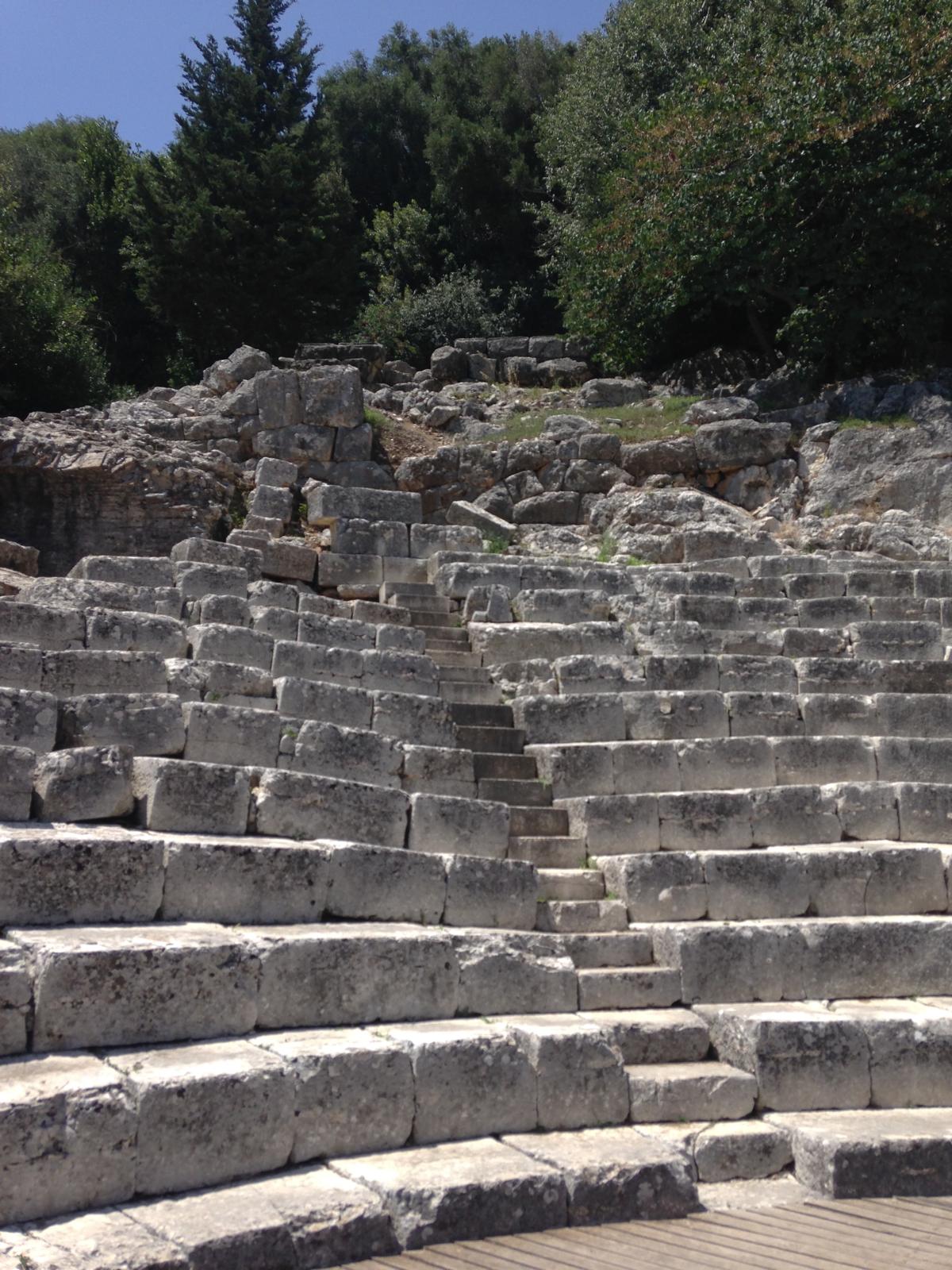
The centrepiece of the site — a beautifully preserved Roman theatre carved into the hillside, often with a pool of water at its base. One of the most photographed spots at Butrint.
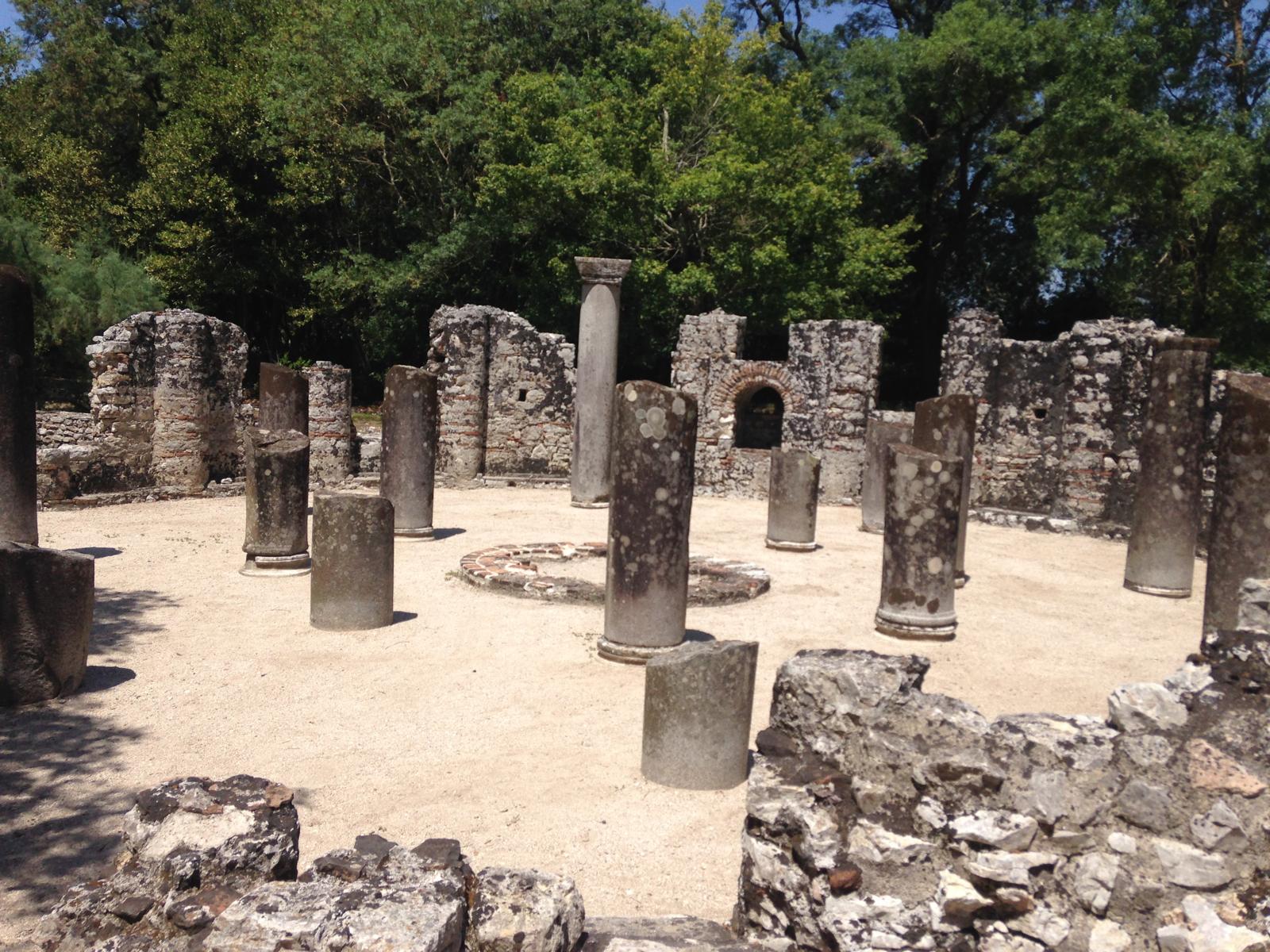
Traces of Butrint's early Christian era, including a baptistery known for its intricate mosaic floor (often covered for protection) and the ruins of a large basilica.
A stone gateway named for a striking carved relief above it — a lion attacking a bull. Part of the ancient city's fortifications.
At the top of the hill, a Venetian-era fortress houses a small archaeological museum — well worth the climb for both the artefacts and the panoramic views.
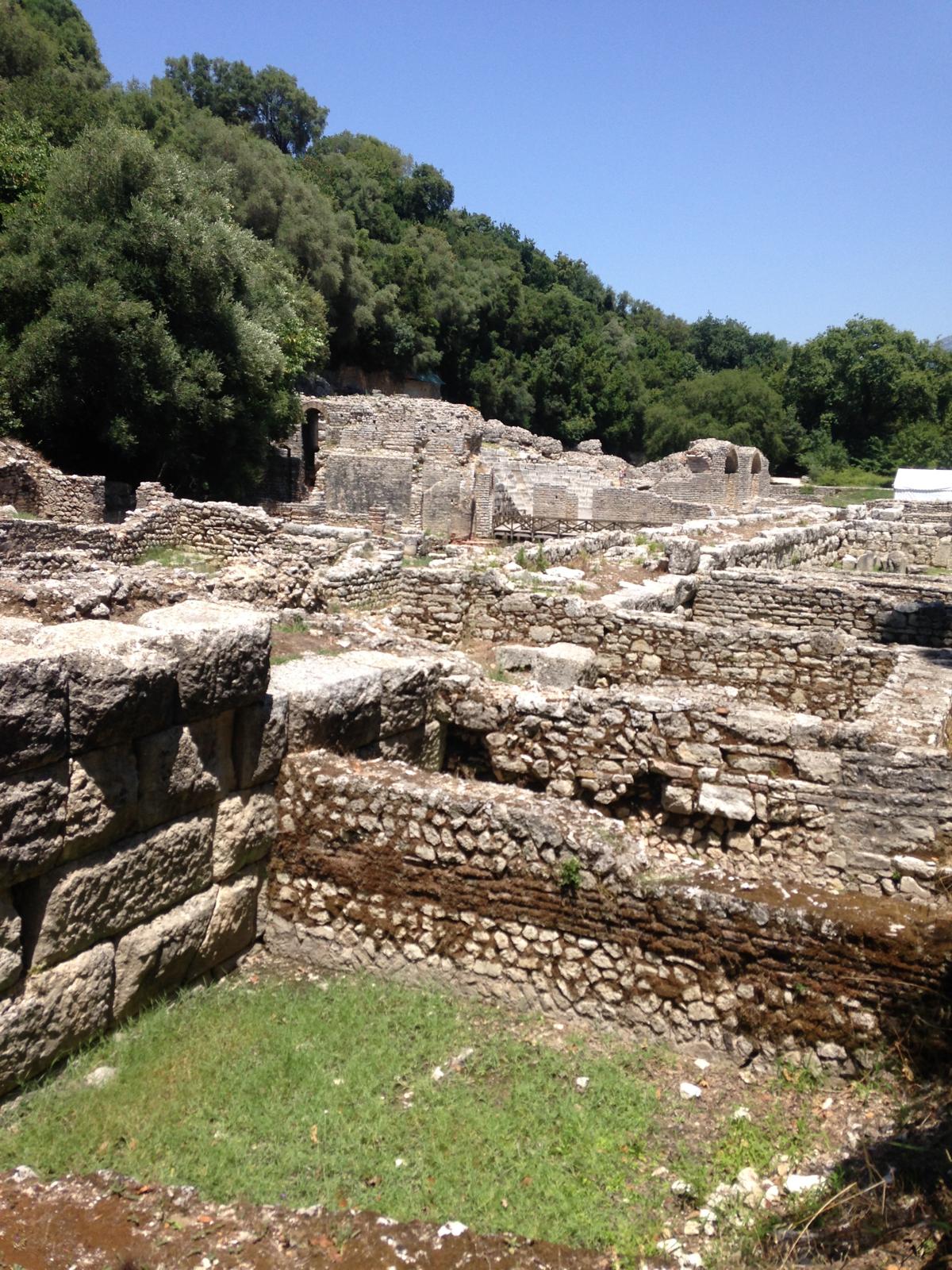
Walking the paths, you'll see how successive civilisations reused and built on top of each other — Greek foundations, Roman upper courses, Byzantine and later additions.
Butrint isn't just a ruins site — it's a landscape. Between the ancient stones you're surrounded by forest, water and birdlife, which is part of what earned the wider Ramsar wetland status.
Butrint's story stretches over two and a half thousand years. Very briefly:
- Ancient Greek period: Butrint began as a Greek colony, growing into a small but strategically important settlement on the trade routes between the Adriatic and Ionian.
- Roman city: Under Roman rule the town expanded significantly — the Roman theatre and much of the surviving urban fabric dates from this era.
- Byzantine bishopric: After the fall of Rome, Butrint continued as a Byzantine centre of some importance, and this is the era of the basilica and baptistery.
- Venetian occupation: The Venetians took control in the medieval period, adding fortifications including the acropolis fortress at the top of the site.
- Decline & rediscovery: Butrint was gradually abandoned as the surrounding land turned to marsh. That slow retreat is part of why so much has survived — the site was never demolished for later cities. Modern excavation and conservation has continued into the present day.
Four ways to do it, plus a note on timing
Bus: There's a direct local bus from Sarandë to Butrint, running roughly every hour, that stops in Ksamil along the way. Cheap and easy — the go-to option for independent travellers.
Guided tour: This is what we did — a guided tour from Sarandë (or from Corfu) that typically pairs Butrint with Ksamil and/or the Blue Eye. Least stressful, especially if you only have one day.
Taxi: Fine for a small group. Agree the price and any return/wait arrangement before you get in the car.
Hire car: Gives you the most freedom — Butrint is easy to combine with Ksamil beaches and stops along the coast.
💡 When to arrive
Butrint gets very busy in summer, especially with tour groups arriving from Corfu on the mid-morning ferries. If you're on the ground independently, going early in the morning or later in the afternoon makes for a much calmer visit and better light for photos. Bring water — there's not a lot of shade in the height of summer.
Most visitors base themselves in Sarandë when visiting Butrint — the drive down to the archaeological site is only about 20km. Here's an option that specifically leans into the Butrint experience, bookable through Klook.
Hotel Saranda Butrinti — Affiliated by Meliá ⭐⭐⭐⭐
Best for: A Butrint-focused stay with a recognisable brand
A Meliá-affiliated hotel positioned for visitors focused on the Butrint / Sarandë combination — a comfortable 4-star base in the area with the familiar Meliá brand standards behind it. A good option if you want to lean into a proper "Butrint trip" rather than treating the site as one stop on a longer Sarandë holiday.
Book Hotel Saranda Butrinti on Klook →Looking for more Sarandë-area hotels? See our Sarandë guide for two more options in town.
Disclosure: This is a Klook affiliate link. If you book through it we may earn a small commission at no extra cost to you.
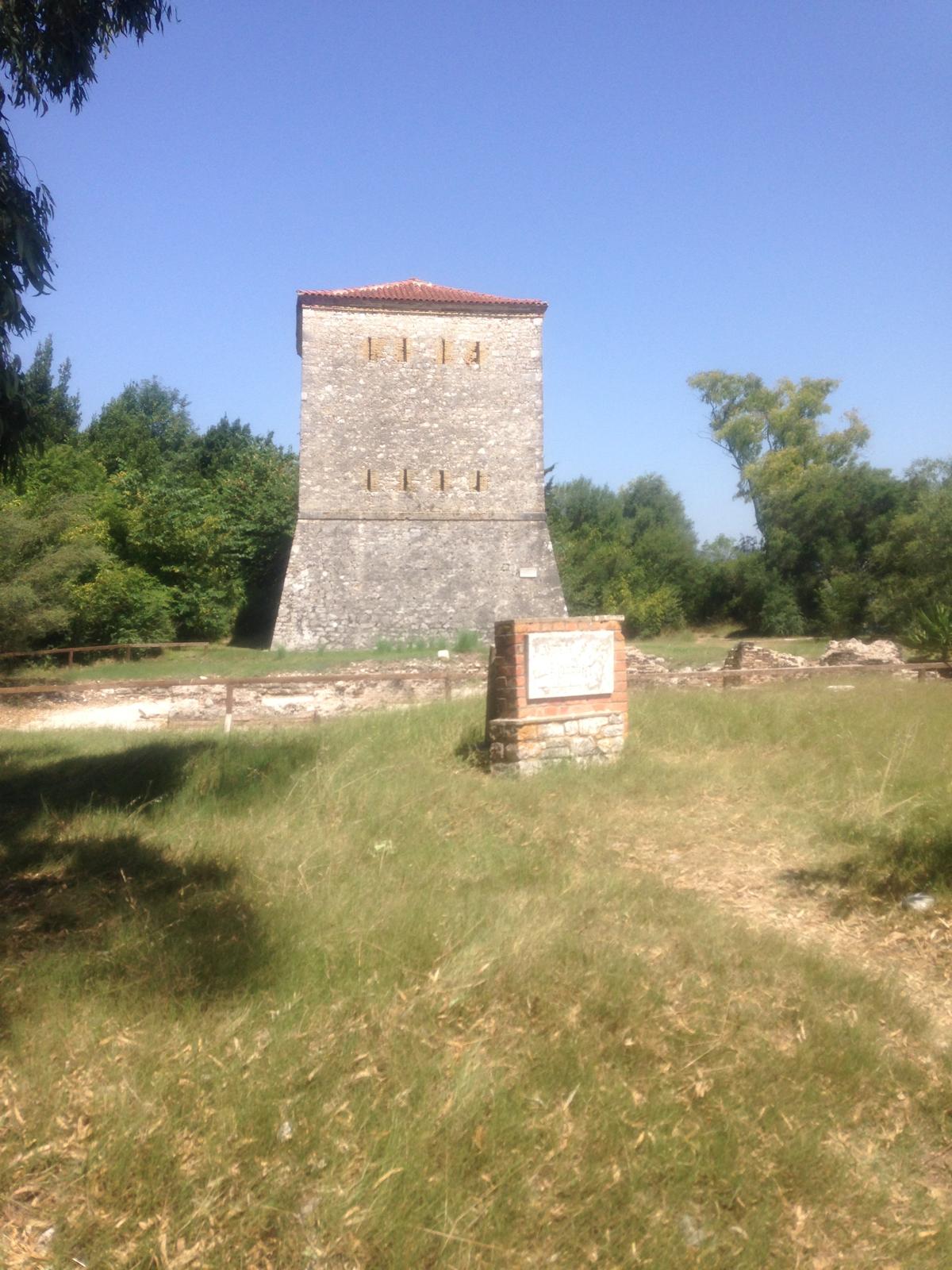
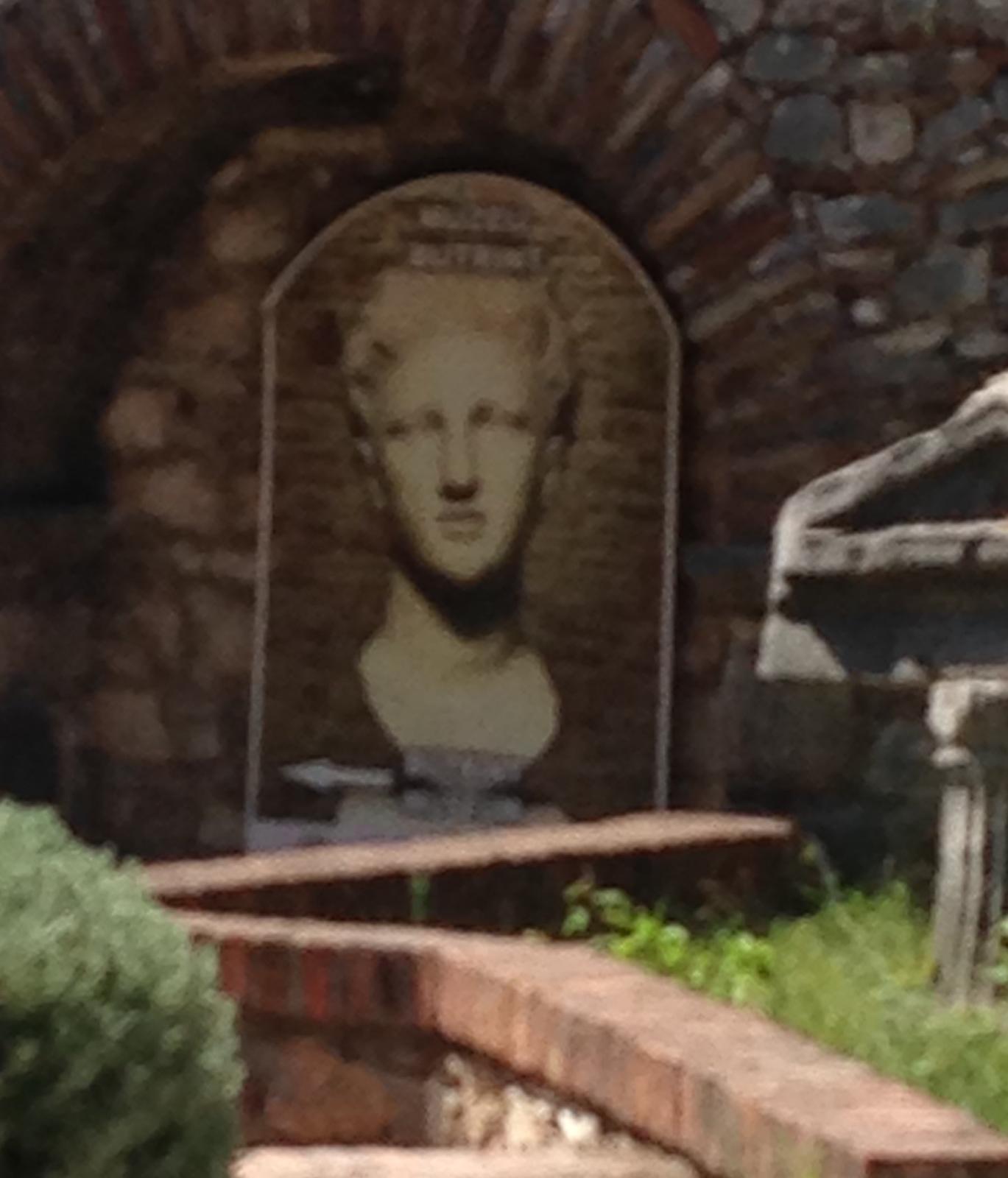
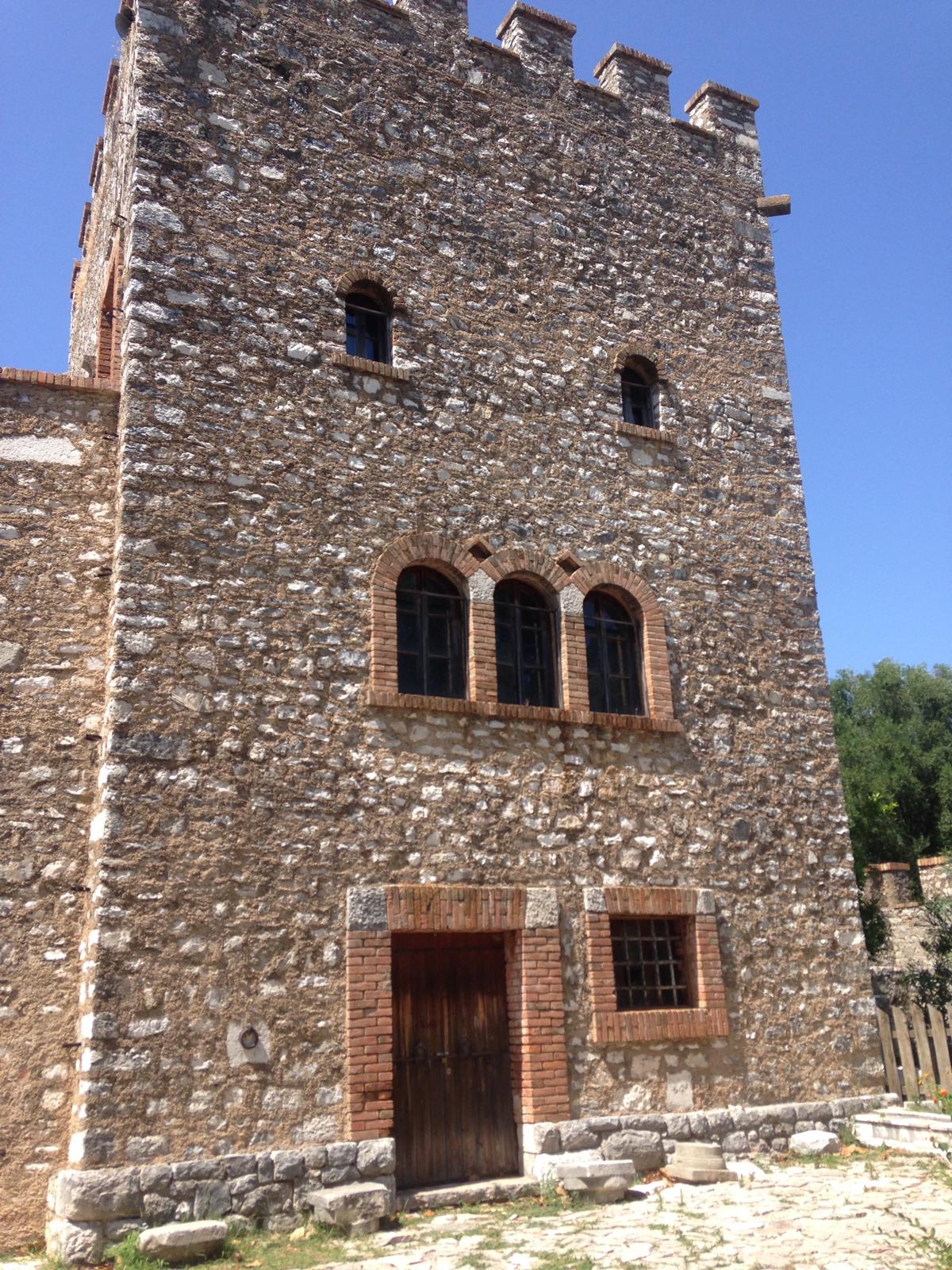
Frames from our 2018 walk around the site — theatre, columns, tower and hilltop views.
Book a Butrint tour with GetYourGuide
Guided tours from Sarandë, day trips from Corfu that include Butrint, and combined Butrint + Ksamil + Blue Eye options:
Disclosure: If you book through these links we may earn a small commission at no extra cost to you.
Butrint is a walk-around site in summer heat. Keep it simple:
Uneven paths
Limited shade
Bring plenty
Exposed sections
For tickets & extras
Take a virtual drive through Albania
Our own Albania trip was focused on the south, around Sarandë, Butrint and the Blue Eye. Through our collaboration with Drive From Home, you can also explore three Albanian cities we haven't visited yet — Tirana, Durrës and Korçë — from your sofa.
These are virtual city experiences from Drive From Home. We have not personally visited Tirana, Durrës or Korçë yet.
Our southern Albania hub — the ferry from Corfu and the day that changed how we felt about the country.
Read the Albania hub →The coastal city that's your base for Butrint — waterfront, ferry from Corfu and a full day trip itinerary.
Read the Sarandë guide →Syri i Kaltër — the extraordinary natural spring in the forest and a classic pairing with Butrint on a day trip.
Read the Blue Eye guide →Planning your visit to Butrint?
Pair it with the Blue Eye and, if you have time, a stop in Ksamil for turquoise water and beaches on the way back. Wear proper shoes, bring water, and give yourself the time this place deserves.