Rome in 2005
Nicola's first encounter with the Italian capital included the major Roman sights, proper tours inside the monuments and an extraordinary visit to Vatican City during the final weeks of Pope John Paul II's life.
Nicola first visited Rome in 2005 and returned in 2019. Across two trips she explored the great landmarks and took the classic tours, from the Colosseum and Roman Forum to the Trevi Fountain, Pantheon and Spanish Steps. Rome is enormous, theatrical and layered with history—and one visit was never going to be enough.
A quick practical guide to the Italian capital before you start planning the sightseeing.
Rome was part of Nicola's travels long before Two for the Row'd began. Returning in 2019 meant seeing the Eternal City again with older—and probably slightly more appreciative—eyes.
Nicola's first encounter with the Italian capital included the major Roman sights, proper tours inside the monuments and an extraordinary visit to Vatican City during the final weeks of Pope John Paul II's life.
Fourteen years later, Nicola returned during February and March for another round of Rome's monuments, piazzas and guided visits—and confirmed that this is a city worth seeing more than once.
Rome is one of those places where every ordinary street seems to end at something ridiculous: a two-thousand-year-old ruin, an enormous fountain or a church that would be the headline attraction anywhere else. We did the classic sights properly, went inside rather than merely photographing the façades and walked until our feet had absolutely had enough.
The second visit did not feel like repeating the first. Rome has far too many layers for that. It felt more like picking up a story fourteen years later and noticing all the bits Nicola had been too overwhelmed—or too young—to appreciate the first time around.
Yes, they are the places everyone visits—and there is a reason for that. Rome's headline attractions genuinely live up to their fame.
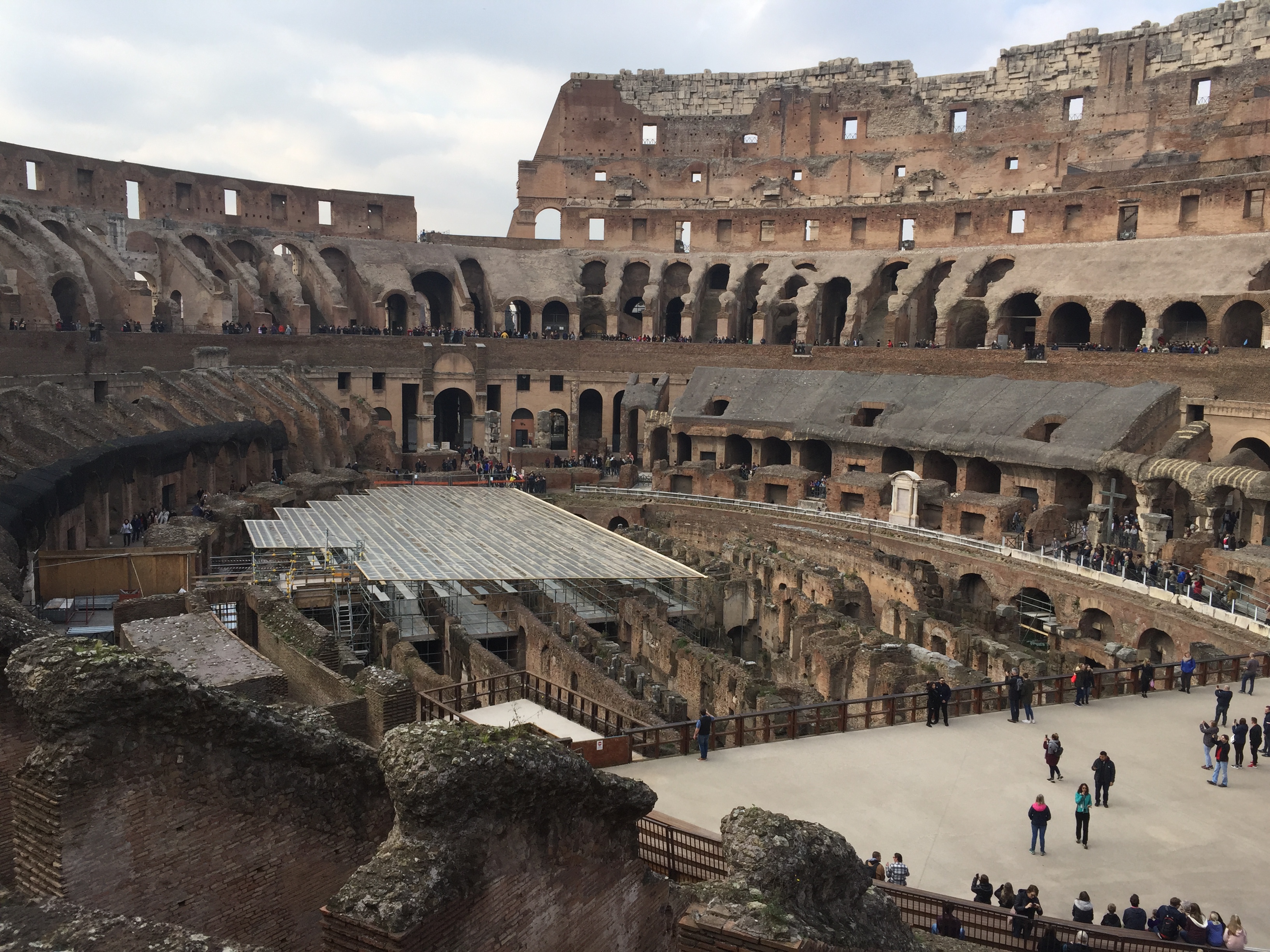
Rome's unmistakable icon and the essential starting point for understanding the scale of the ancient city.
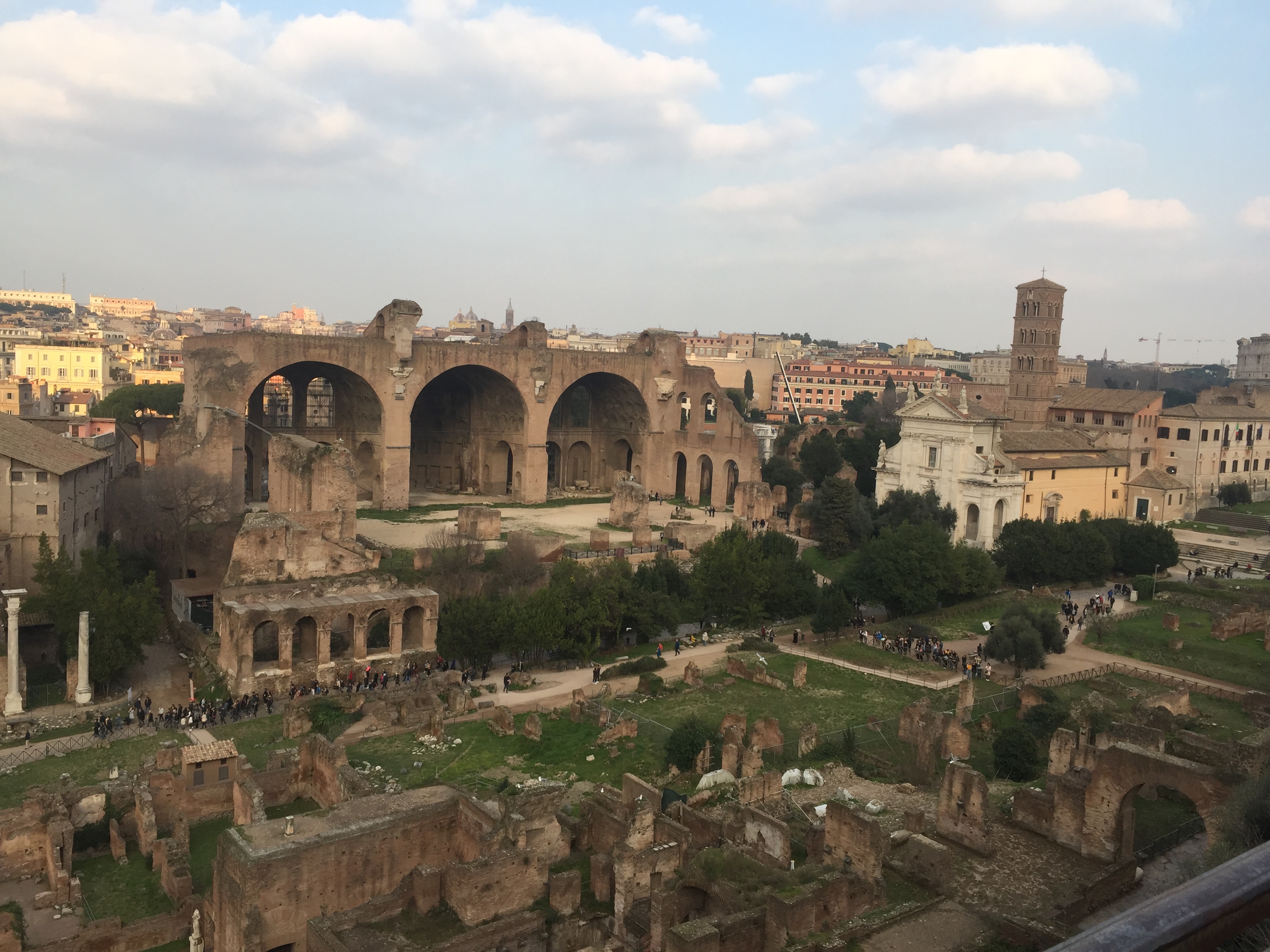
Temples, arches and ruins at what was once the political and social heart of the Roman Empire.
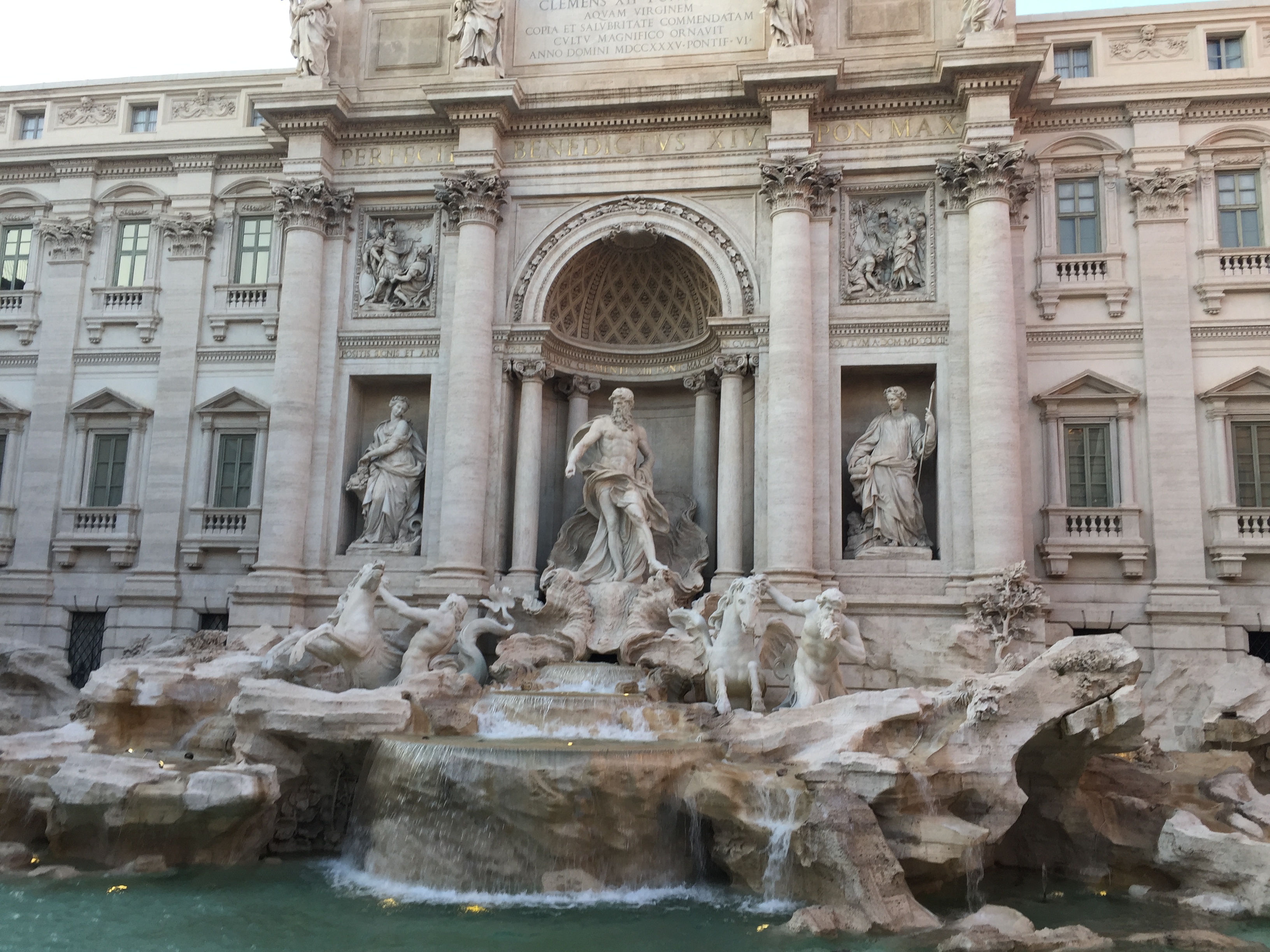
Crowded, extravagant and completely unmissable. Throwing in a coin supposedly guarantees a return to Rome.
An astonishingly preserved Roman building with an extraordinary dome and almost two thousand years of history.
One of Rome's great meeting places, linking Piazza di Spagna with the church of Trinità dei Monti.
A beautiful baroque square built over an ancient stadium and filled with fountains, cafés and street life.
You can see a surprising amount of Rome while wandering for free, but the tours added the history and context that turned famous structures into real places.
Standing inside gives you a much clearer idea of the arena's scale than any photograph can. A tour also cuts through the myths and explains how the building, underground passages and vast crowds actually worked.
Without context, the Forum can look like a beautiful collection of broken columns. With a guide—or a very good audio guide—the temples, political spaces and triumphal arches begin to form an ancient city again.
The collection is almost overwhelming: galleries, sculpture, decorated ceilings and rooms that would each deserve hours. Then comes the Sistine Chapel, a sight so familiar from books that seeing it in person feels strangely unreal.
Its dimensions are difficult to grasp until you are standing inside. It is vast, ornate and deeply impressive, regardless of whether you approach it through faith, history, art or all three.
Our verdict? Rome is not the place to save ten euro by standing outside everything. Choose the sights that matter most to you and go in.
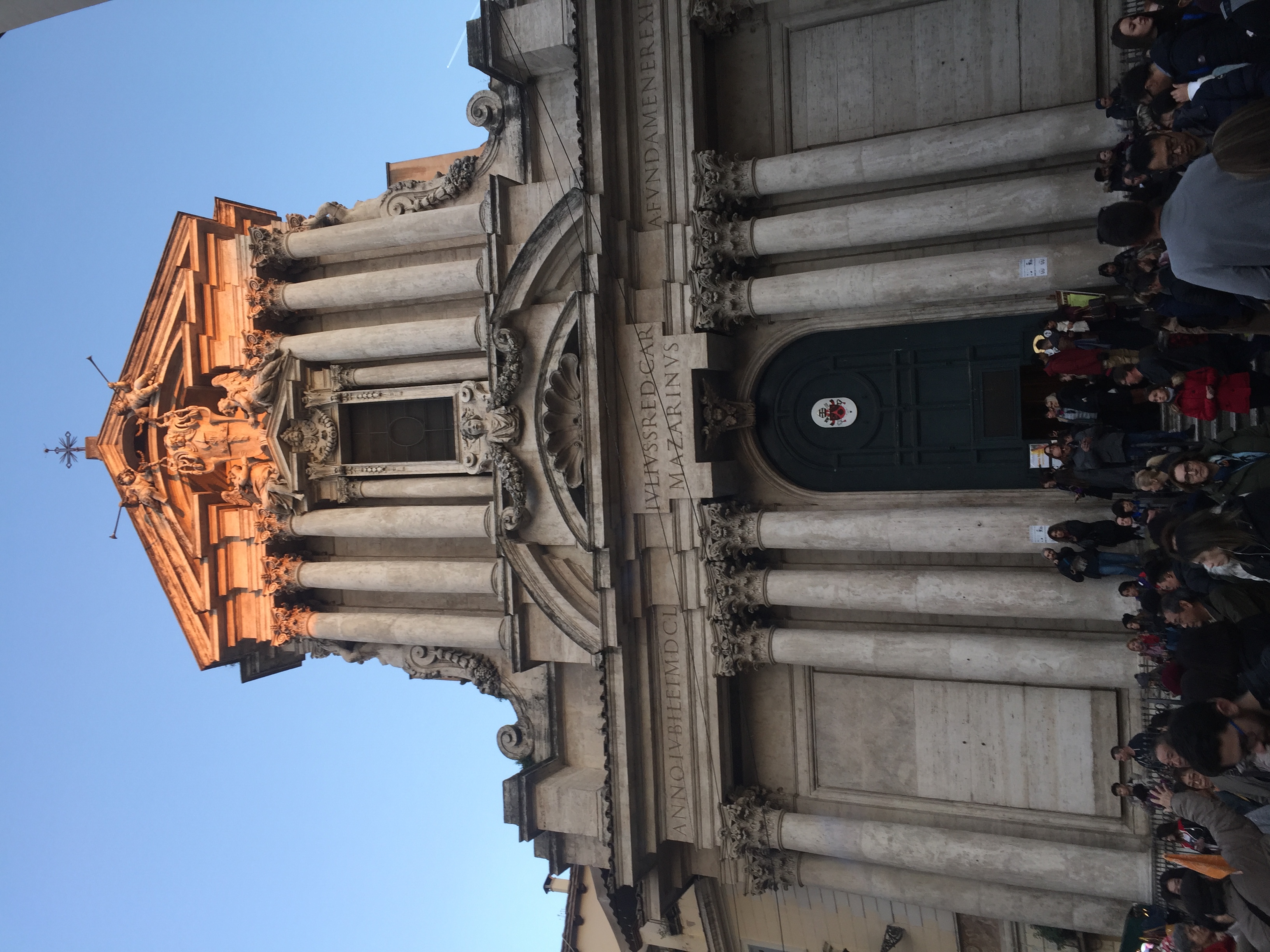
Four photographs that sum up the scale of the city—from an extravagant fountain to the remains of an empire.
The advantage of visiting at the end of winter is that you are not attempting the Forum beneath the full force of a Roman summer sun. The weather can be mixed, but cooler days are much kinder when the plan involves hours of walking and queueing.
Layers are the answer. Mornings and evenings can feel chilly, while a sunny afternoon may be surprisingly pleasant. Bring a light waterproof jacket, genuinely comfortable shoes and something smarter if you want to make an evening meal feel like an occasion.
Timed entry for the Colosseum and Vatican Museums saves uncertainty and helps structure the busiest days.
Rome is walkable, but cobbles, museum corridors and enormous archaeological sites make it more tiring than the map suggests.
The unscheduled walk between two attractions may produce the square, fountain or tiny church you remember most.
Rome rewards regular pauses. Stand at the bar like a local, regroup and then head back into the history.
It is physically surrounded by Rome, but Vatican City is the world's smallest independent state. Nicola's 2005 visit became far more than an ordinary sightseeing stop: she witnessed one of Pope John Paul II's final public appearances shortly before his death.
We have kept that remarkable memory on its own Vatican City page, along with St Peter's Basilica, St Peter's Square and the wider Vatican experience.
Read our Vatican City story →Use the list or map markers to jump around the main sights. Vatican City is included as the natural companion to a Rome visit, while remaining a separate country on our website.
Seven essential stops
Take a virtual drive through Rome, or open the interactive version and decide where the journey goes next.
Return to our Italy hub for Venice, Verona and Turin.
See all our Italy travels →Browse bookable tours, attraction tickets and experiences through GetYourGuide.
Disclosure: Some links are affiliate links. If you book through them, we may earn a small commission at no extra cost to you.
Absolutely. Its combination of ancient ruins, huge churches, theatrical fountains, lively piazzas and brilliant food is unlike anywhere else.
Allow at least three to four full days for the major sights. A longer trip makes it easier to slow down and enjoy the neighbourhoods between the monuments.
Many central sights are walkable, but Rome is larger than it first appears. Comfortable shoes and occasional use of public transport make a considerable difference.
Yes. They are among Europe's busiest attractions, so timed tickets or organised tours are well worth arranging in advance.
Vatican City is surrounded by Rome but is an independent country. It is easy to combine with a Rome trip, and we cover it on a separate destination page.