The Rock
Passing through the Grotto and touching or resting a hand on the rock has become one of the characteristic gestures associated with a Lourdes pilgrimage.
Few French towns have a name as instantly recognisable as Lourdes. At the foot of the Pyrenees, its story changed completely in 1858, when 14-year-old Bernadette Soubirous reported 18 apparitions at the Grotto of Massabielle. Today millions come for faith, reflection, history or simple curiosity — and you don't have to be religious to understand why the atmosphere here is unlike anywhere else.
The Sanctuary of Our Lady of Lourdes grew from the events of 1858 and the Church's recognition of the apparitions in 1862. The Sanctuary today describes its mission as welcoming everyone who comes — organised pilgrims, individual visitors, practising Catholics and people simply passing through.
That openness matters. Even if you aren't visiting for religious reasons, the scale of the site, its history and the sight of pilgrims arriving from all over the world make Lourdes culturally fascinating.
Millions of visitors come to Lourdes, making this small town one of the world's best-known pilgrimage destinations.
The Sanctuary places particular emphasis on accessibility and on welcoming sick and disabled pilgrims, with ramps, lifts and adapted routes across the site.
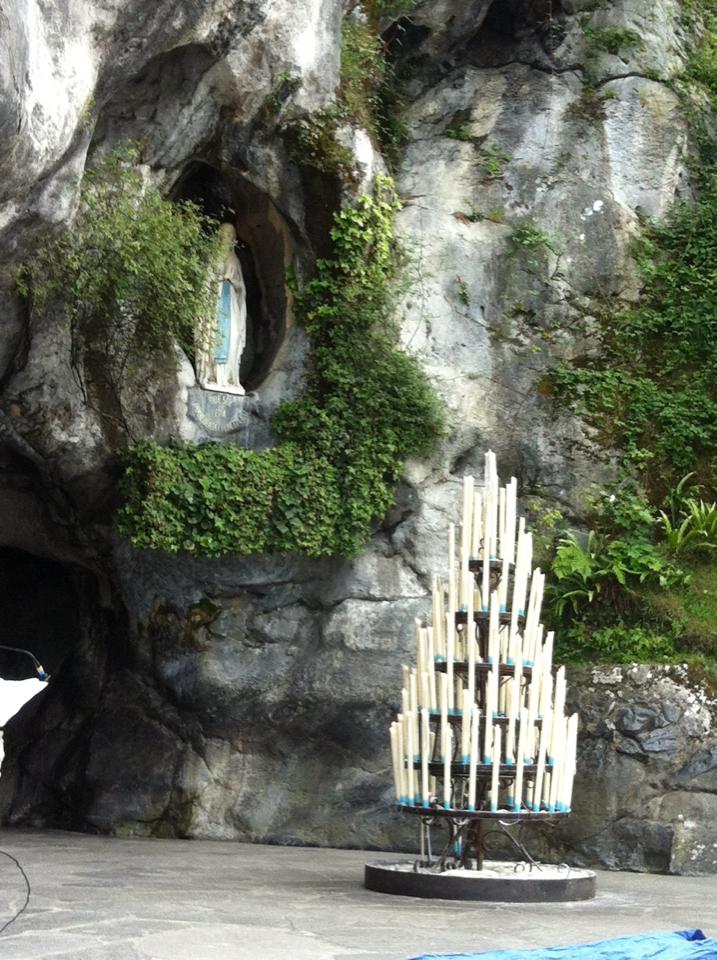
The Grotto of Massabielle is the spiritual centre of Lourdes. This is where Bernadette Soubirous said she experienced the 18 apparitions in 1858 and where the spring associated with Lourdes emerged.
Visitors can spend time quietly in front of the Grotto, pass through it, drink water from the Sanctuary fountains, light candles and attend prayer or Mass. Access to the Grotto itself is free.
Passing through the Grotto and touching or resting a hand on the rock has become one of the characteristic gestures associated with a Lourdes pilgrimage.
The spring discovered during the apparitions remains central to Lourdes. Visitors can drink or collect the water from designated fountains.
Lighting a candle is another longstanding Lourdes tradition, with dedicated candle areas within the Sanctuary.
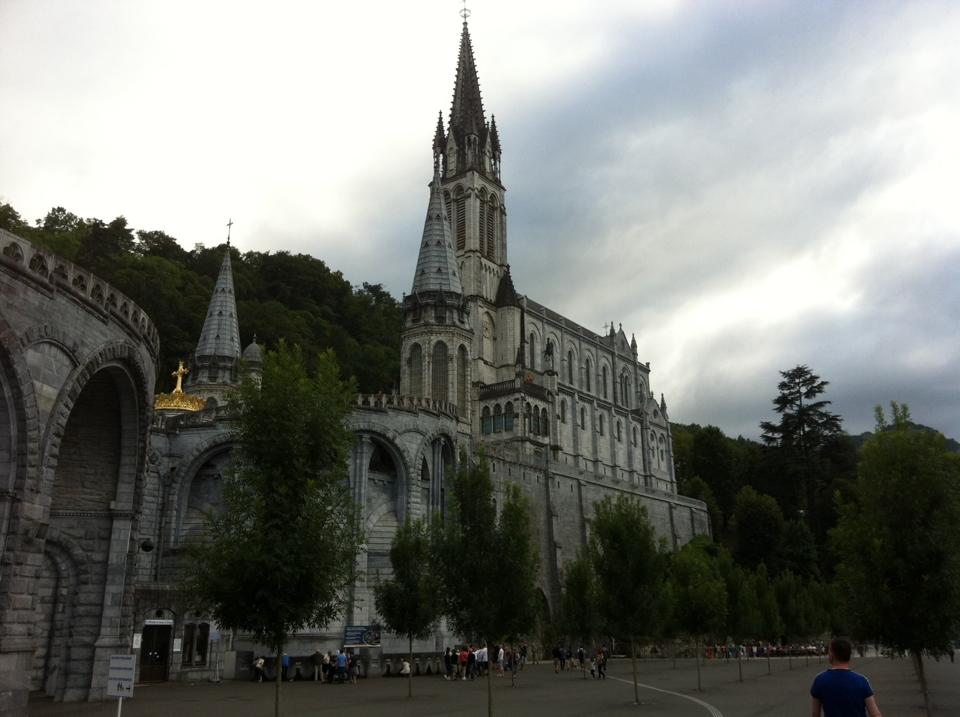
The Sanctuary's three principal basilicas make the site architecturally fascinating as well as spiritually important. They were created at different stages as Lourdes grew into an international pilgrimage centre.
The Upper Basilica rises directly above the Grotto. Built in the nineteenth century, its tall spire is one of the defining images of Lourdes.
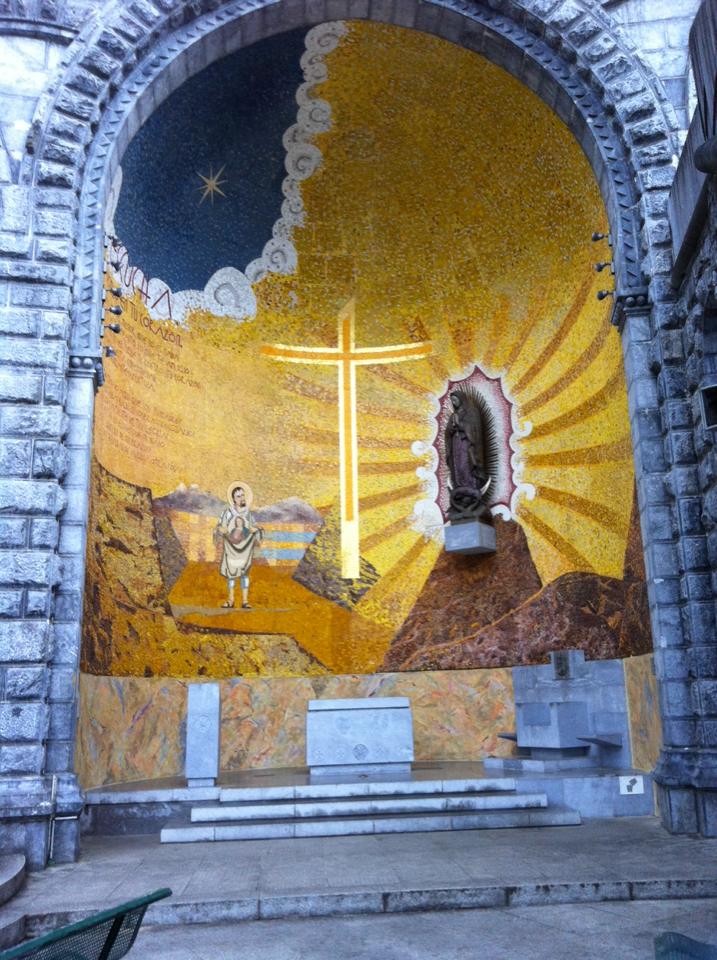
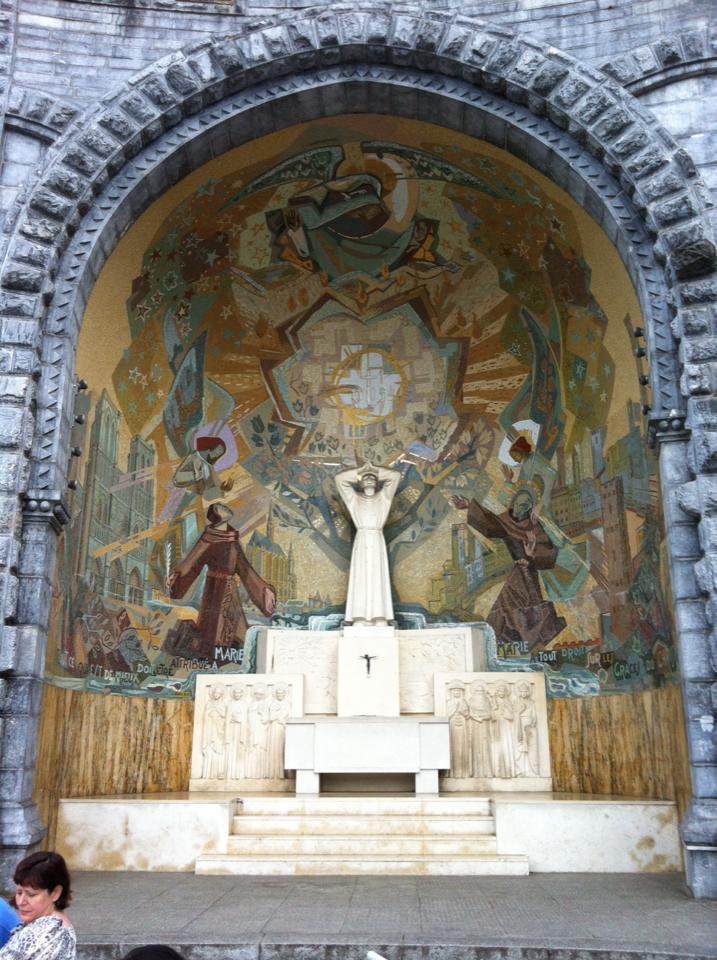
The Romano-Byzantine Basilica of Our Lady of the Rosary is particularly notable for its extensive mosaics.
The enormous Basilica of Saint Pius X is underground — a striking contrast to the historic churches above it and designed for very large gatherings.
One of Lourdes' best-known experiences is the evening Marian torchlight procession. Pilgrims gather carrying candles while prayers and hymns are shared in different languages — a visible reminder of just how international Lourdes has become.
The procession operates during the main pilgrimage season; because schedules can change, it's worth checking the official Sanctuary programme for the dates of your visit.
It's easy to forget that Lourdes existed long before 1858. Above the town stands the Château Fort de Lourdes, a fortress with centuries of history that now houses the Pyrenean Museum.
And then there is the setting itself. Lourdes sits at the foot of the Pyrenees, which means a visit can be combined with mountain scenery and a completely different side of south-western France.
The fortified castle dominates the town from its rocky position and houses collections devoted to the history and cultures of the Pyrenees.
Lourdes isn't isolated from its landscape. The surrounding mountains are part of the destination and give you a reason to look beyond the Sanctuary itself.
Some of our own photos from Lourdes — the Sanctuary, its remarkable religious art, the Grotto area and the basilicas that dominate the pilgrimage site.
Use the widget below to browse current Lourdes and Pyrenees activities. These are planning options and don't imply that we personally took the exact activities displayed.
Disclosure: Some links on this page are affiliate links. If you book through them, we may earn a small commission at no extra cost to you.
Common questions
From wine country and medieval villages to pilgrimage towns beneath the Pyrenees — our France travels have covered an extraordinary range of places.